

The best professional alternatives to “you’re welcome” include “happy to help,” “my pleasure,” “glad I could help,” and “you’re very welcome.” These expressions work well in workplace emails, client messages, and everyday conversations. Choose a phrase that matches your relationship with the recipient and the tone of your conversation.
Key Takeaways
- Use “happy to help” for friendly workplace conversations.
- Choose “my pleasure” for formal emails and client interactions.
- Say “glad I could help” after solving a problem.
- Use “you’re very welcome” to sound warm and respectful.
- Match your response to the situation and the recipient.
What Does “You’re Welcome” Mean?
“You’re welcome” is a polite response to someone who thanks you. It shows that you acknowledge their gratitude and appreciate their kind words.
For example, a coworker might thank you for reviewing a report. You can simply reply, “You’re welcome!”
This expression works in almost any professional setting. However, other phrases can help you sound warmer, friendlier, or more formal.
Why Use Alternatives to “You’re Welcome”?
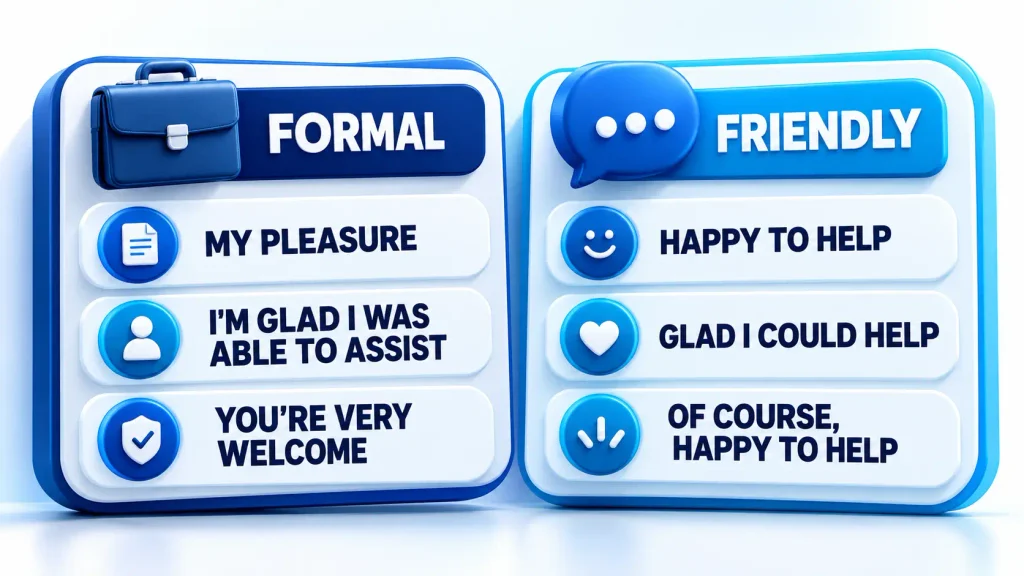
Using different expressions makes your communication sound more natural. It also helps you match your tone to the situation.
Here are a few examples:
- Workplace emails: “Happy to help” sounds friendly and professional.
- Client messages: “My pleasure” shows courtesy and respect.
- Team conversations: “Glad I could help” feels natural and sincere.
- Formal situations: “I’m glad I was able to assist” sounds polished.
- Friendly exchanges: “Anytime” shows that you’re happy to help again.
You don’t need a different response every time. A simple, sincere phrase is often enough. The goal is to sound helpful without making a short exchange feel complicated.
10 Best Alternatives to “You’re Welcome” Professionally

1. Happy to Help
Meaning and Usage
“Happy to help” shows that you were pleased to assist someone. It sounds friendly, positive, and professional.
This phrase works well in both written and spoken communication. It is also a natural choice for everyday workplace conversations.
Best For
- Responding to coworkers
- Writing professional emails
- Helping clients with simple requests
- Communicating with team members
Example Sentences
- “Happy to help! Let me know if you need anything else.”
- “You’re welcome. I’m happy to help with the report.”
- “Happy to help with the presentation. I’m glad we finished it on time.”
Quick Tip
Use this phrase when you want to sound approachable. It is one of the easiest alternatives to use in most workplaces.
2. My Pleasure
Meaning and Usage
“My pleasure” is a polite and polished way to respond to thanks. It shows that you were glad to provide assistance.
This expression works especially well in formal situations. It is also suitable for professional emails and client conversations.
Best For
- Communicating with clients
- Responding to business partners
- Writing formal emails
- Providing customer support
Example Sentences
- “My pleasure. I’m glad I could assist.”
- “It was my pleasure to help with your request.”
- “My pleasure, and thank you for your kind words.”
Quick Tip
Choose “my pleasure” when you want to sound courteous and professional. For casual team chats, “happy to help” may feel more natural.
3. You’re Very Welcome
Meaning and Usage
“You’re very welcome” adds warmth to the usual response. It shows that you appreciate the other person’s thanks.
This phrase is polite without sounding overly formal. It works well in emails, meetings, and everyday conversations.
Best For
- Responding to clients
- Communicating with managers
- Writing professional messages
- Acknowledging sincere gratitude
Example Sentences
- “You’re very welcome! I’m glad the information helped.”
- “You’re very welcome. Please let me know if you have questions.”
- “You’re very welcome, and I appreciate your kind message.”
Quick Tip
Use this phrase when you want to sound warm and respectful. It is a safe choice when you’re unsure which response fits best.
4. Glad I Could Help
Meaning and Usage
“Glad I could help” shows that you’re pleased your assistance made a difference. It sounds sincere and natural.
This phrase is especially useful after answering a question or solving a problem. It works well in emails and workplace chats.
Best For
- Solving workplace problems
- Answering colleagues’ questions
- Sharing useful information
- Following up after completing a task
Example Sentences
- “Glad I could help clarify the process.”
- “I’m glad I could help you prepare for the meeting.”
- “Glad I could help. I hope your presentation goes well.”
Quick Tip
Use this expression when your help has led to a positive result. It feels more personal than a simple “you’re welcome.”

5. Of Course
Meaning and Usage
“Of course” suggests that helping was a natural thing to do. It sounds relaxed, confident, and friendly.
This expression works best with colleagues you know well. However, it may sound too brief in formal situations.
Best For
- Casual workplace conversations
- Team messaging apps
- Responding to familiar colleagues
- Helping with routine tasks
Example Sentences
- “Of course! I’m happy to help.”
- “Of course. Let me know if you have any other questions.”
- “Of course, I’m glad I could support the team.”
Quick Tip
Add a friendly phrase when you want to sound warmer. For example, “Of course, happy to help” feels more welcoming than “Of course” alone.
6. Anytime
Meaning and Usage
“Anytime” tells someone that you’re happy to help again. It creates a friendly tone and encourages future communication.
This phrase is common in informal workplace conversations. However, it may be too casual for some formal emails.
Best For
- Friendly exchanges with colleagues
- Team chats
- Responding to small requests
- Informal professional relationships
Example Sentences
- “Anytime! Let me know if you need help with the next report.”
- “Anytime. I’m happy to share what I know.”
- “You’re welcome! Feel free to ask if you need anything else.”
Quick Tip
Use “anytime” when you’re comfortable helping again. If your availability is limited, choose “happy to help” instead.
7. It Was No Trouble at All
Meaning and Usage
“It was no trouble at all” reassures someone that helping them was not an inconvenience. It sounds considerate and reassuring.
This phrase is useful when someone apologizes for asking you to do something. It can also help put a colleague or client at ease.
Best For
- Helping with small tasks
- Responding to an apology
- Assisting a colleague
- Handling simple client requests
Example Sentences
- “It was no trouble at all. I’m glad we resolved the issue.”
- “It was no trouble at all to send the updated document.”
- “Please don’t worry. It was no trouble at all.”
Quick Tip
Use this phrase when you want to reassure someone. If the task required significant effort, “happy to help” may be more suitable.
8. I’m Glad I Was Able to Assist
Meaning and Usage
“I’m glad I was able to assist” is a formal alternative to “you’re welcome.” It shows that you’re pleased you could provide support.
This phrase works particularly well in business emails. It sounds professional without being overly complicated.
Best For
- Formal business emails
- Client correspondence
- Customer support messages
- Communication with business partners
Example Sentences
- “I’m glad I was able to assist with your application.”
- “I’m glad I was able to help resolve the issue.”
- “Thank you for your feedback. I’m glad I was able to assist.”
Quick Tip
Choose this phrase when writing to clients or external partners. For a quick message to a coworker, “glad I could help” is shorter and more natural.
9. Happy I Could Support You
Meaning and Usage
“Happy I could support you” highlights cooperation and encouragement. It works well when you’ve helped someone through a task or challenge.
This phrase can sound more personal than a standard response. However, “I’m happy I could support you” is a more complete sentence in formal writing.
Best For
- Team projects
- Helping a coworker learn a skill
- Supporting a colleague through a challenge
- Professional development conversations
Example Sentences
- “I’m happy I could support you throughout the project.”
- “I’m glad I could support you as you prepared for the presentation.”
- “I’m happy I could offer some support during the transition.”
Quick Tip
Use this expression when your help involved teamwork or ongoing support. For a small favor, “happy to help” is usually simpler.
10. Don’t Mention It
Meaning and Usage
“Don’t mention it” means the other person doesn’t need to thank you for your help. It sounds modest and relaxed.
This expression is more casual than “my pleasure.” It is best for friendly workplace conversations rather than formal business emails.
Best For
- Casual conversations with coworkers
- Responding to small favors
- Friendly professional messages
- Informal team interactions
Example Sentences
- “Don’t mention it! I’m glad I could help.”
- “Don’t mention it. We’re happy to support each other.”
- “You’re welcome. Don’t mention it!”
Quick Tip
Use “don’t mention it” with colleagues you know well. For clients or senior leaders, “my pleasure” is usually a safer choice.
Comparison Table: Professional Alternatives to “You’re Welcome”
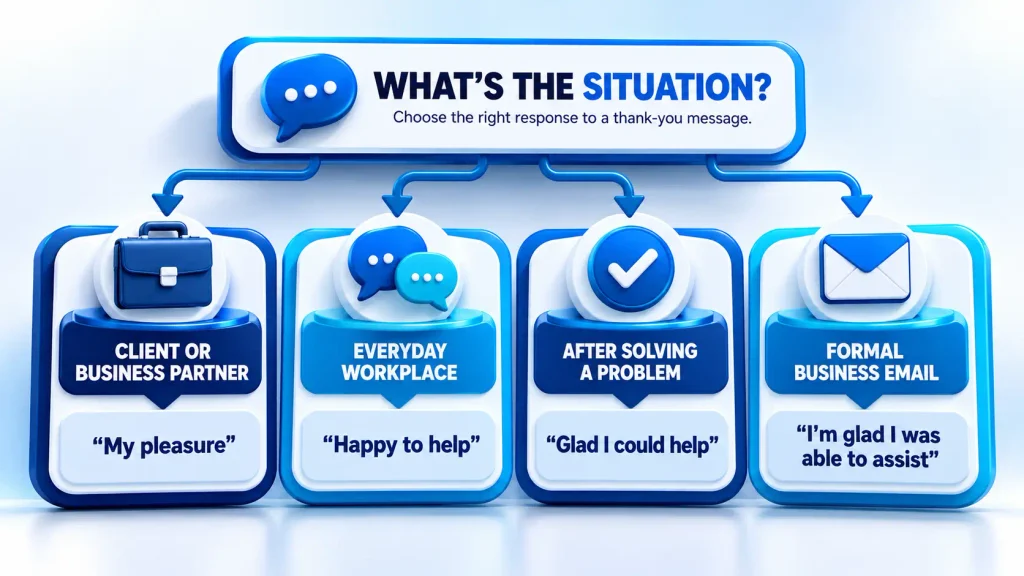
| Alternative phrase | Tone | Best use | Formality |
|---|---|---|---|
| Happy to help | Friendly | Everyday workplace communication | Moderate |
| My pleasure | Polished | Client emails and business meetings | High |
| You’re very welcome | Warm | Emails and conversations | Moderate |
| Glad I could help | Sincere | Solving problems | Moderate |
| Of course | Relaxed | Conversations with colleagues | Low to moderate |
| Anytime | Casual | Team chats and small favors | Low |
| It was no trouble at all | Reassuring | Helping with simple tasks | Moderate |
| I’m glad I was able to assist | Courteous | Formal business emails | High |
| Happy I could support you | Collaborative | Teamwork and mentoring | Moderate |
| Don’t mention it | Casual | Friendly workplace exchanges | Low |
Common Mistakes to Avoid

Choosing the right phrase is important, but the way you use it matters too. Avoid these common mistakes to keep your communication clear and professional.
1. Using overly casual expressions
“No worries” may work well with a teammate. However, a client email may need a more polished response.
Instead of: “No worries, gotcha!”
Try: “You’re very welcome. I’m glad I could assist.”
2. Repeating the same phrase
Using “you’re welcome” every time is perfectly acceptable. Still, varying your responses can make conversations sound more natural.
For example, use “happy to help” after completing a task. Choose “my pleasure” when responding to a client’s thanks.
3. Sounding dismissive
“Don’t mention it” can sound too casual when someone expresses deep gratitude.
Instead of: “Don’t mention it” after helping with an important project.
Try: “You’re very welcome. I’m glad I could support the project.”
4. Promising too much
“Anytime” may suggest that you’re always available. If you have a busy schedule, choose a phrase that doesn’t make an unlimited promise.
Try: “Happy to help whenever my schedule allows.”
5. Making your response too long
A short thank-you exchange rarely needs a long reply. Keep your response clear and direct.
Instead of: “I would like to express that it was my genuine pleasure to provide the assistance you requested.”
Try: “My pleasure. I’m glad I could help.”
6. Ignoring the situation
A phrase that works with a close coworker may not suit a new client. Consider your relationship with the recipient before responding.
When you’re unsure, “you’re very welcome” is a safe and polite choice.
Frequently Asked Questions
What is the most professional way to say “you’re welcome”?
“My pleasure” and “I’m glad I was able to assist” are polished choices for formal situations. For everyday workplace conversations, “happy to help” sounds natural and friendly. Choose the phrase that best matches your relationship with the recipient.
How do you say “you’re welcome” in a professional email?
You can write “you’re very welcome,” “my pleasure,” or “I’m glad I could help.” For example, reply to a client’s thanks with, “You’re very welcome. Please let me know if you need any additional information.”
Is “happy to help” professional?
Yes, “happy to help” is appropriate for most workplace conversations. It works in emails, team chats, and client messages. The phrase sounds friendly without being too casual, so it is a useful choice for everyday professional communication.
Is “my pleasure” more professional than “no problem”?
“My pleasure” usually sounds more polished and courteous. “No problem” is more casual and works well with familiar colleagues. Both expressions are acceptable, but “my pleasure” is often a better choice for formal emails and client communication.
Can I say “anytime” to my boss?
Yes, especially if your workplace has a friendly atmosphere. However, “anytime” may suggest that you’re always available. If you want a more polished response, use “happy to help” or “I’m glad I could assist.”
How should I respond when a client thanks me?
Use a polite phrase such as “my pleasure,” “you’re very welcome,” or “I’m glad I was able to assist.” You can also offer further help by saying, “You’re very welcome. Please let me know if you have any other questions.”
Is “don’t mention it” professional?
It can work in casual conversations with coworkers. However, it may sound too informal when speaking with clients or senior leaders. In these situations, “my pleasure” or “you’re very welcome” is usually more appropriate.
How do I respond to “thank you for your support”?
You could say, “You’re very welcome. I’m glad I could help.” Another option is, “It was my pleasure to support you.” If the task involved teamwork, you could also say, “I’m glad we could work through this together.”
You may also find these guides useful: What to Say Instead of “Feel Free to Reach Out”, How to Say “As We Discussed” More Professionally in Emails and Another Way to Say Attention to Detail in Different Contexts.
Conclusion
Choosing the right alternative to “you’re welcome” helps you sound confident, friendly, and professional. For everyday workplace conversations, “happy to help” and “glad I could help” are natural choices. For client emails and formal situations, “my pleasure” and “I’m glad I was able to assist” sound polished and courteous.
Always consider your relationship with the recipient and the situation. You don’t need a long response to show appreciation. A short, sincere message is often enough. If you’re unsure which phrase to choose, “you’re very welcome” works well in many professional settings. You can also explore these tips on replying to thank-you emails professionally to improve your workplace communication. Over time, using different expressions will help your emails and conversations sound more natural.

The FrontiersPost editorial team writes and reviews every guide to word and phrase alternatives, with clear meanings, tone notes and example sentences for everyday, academic and professional English.




