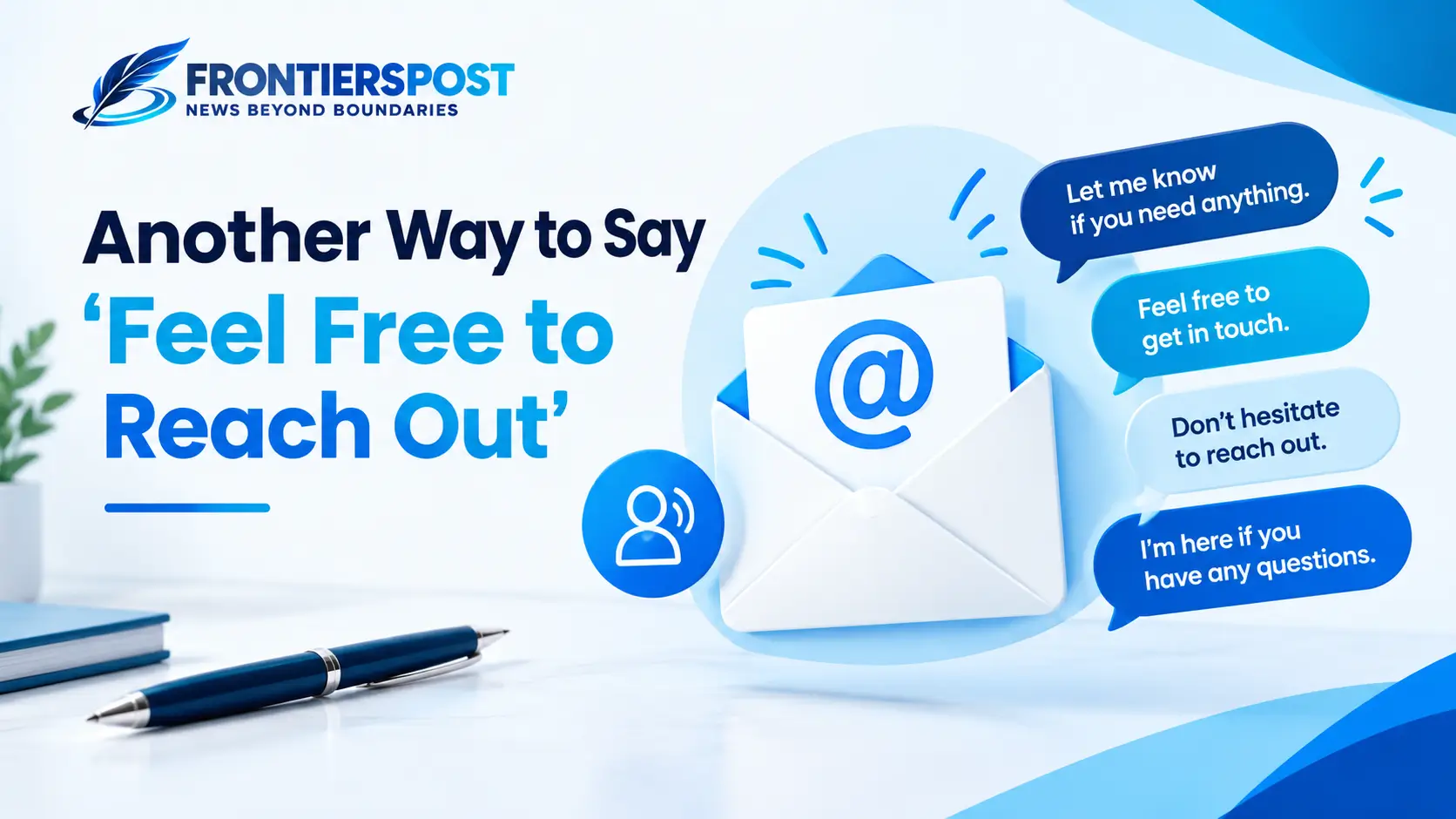
Another way to say “feel free to reach out” includes “please don’t hesitate to contact me,” “I’m happy to help,” “you’re welcome to contact me,” “let me know if you have any questions,” and “I’d be glad to hear from you.” The best choice depends on whether you want to sound professional, formal, friendly, or warm.
Key Takeaways
- “Feel free to reach out” is polite, open, and commonly used in professional communication.
- More formal options include “please don’t hesitate to contact me.”
- Friendly alternatives include “I’m happy to help” and “let me know how I can help.”
- Choose the phrase based on your relationship with the reader and the situation.
- Avoid overly formal wording when a simple, natural phrase works better.
“Feel free to reach out” is a polite way to invite someone to contact you if they need help, have questions, or want to discuss something. It is common in emails, customer service messages, workplace communication, networking, and professional conversations.
The phrase sounds welcoming without putting pressure on the reader. However, using the same expression repeatedly can make your emails sound predictable, so choosing a more specific alternative can make your message more natural.
What Does “Another Way to Say Feel Free to Reach Out” Mean?
“Another way to say feel free to reach out” means finding a different phrase that invites someone to contact you. The alternative can communicate the same basic idea while changing the level of formality, warmth, or friendliness.
For example, “please don’t hesitate to contact me” works well in formal business communication, while “let me know if you need anything” feels more relaxed and conversational.
You might use an alternative when writing:
- Professional emails
- Customer service messages
- Networking messages
- Follow-up emails
- Job-related communication
- Personal or friendly conversations
Why Use Other Ways to Say “Feel Free to Reach Out”?
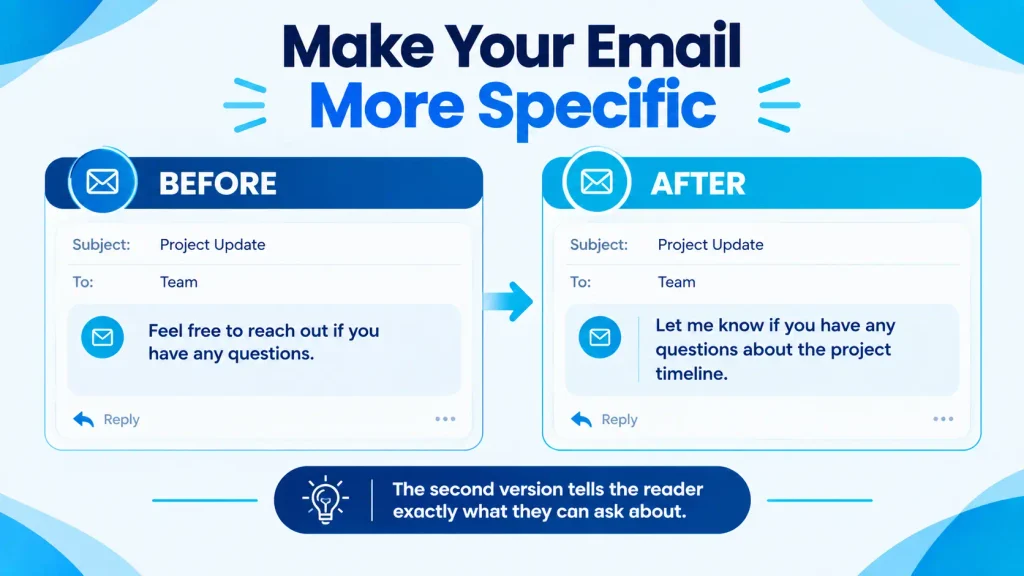
Using different expressions helps you match your wording to the situation and avoid repeating the same phrase. A specific alternative can also make your invitation sound more sincere and useful.
Other benefits include:
- Avoiding repetitive language
- Sounding more natural
- Matching the reader’s expectations
- Making professional emails more polished
- Creating a warmer or friendlier tone
- Clearly explaining what the reader can contact you about
10 Best Other Ways to Say “Feel Free to Reach Out”
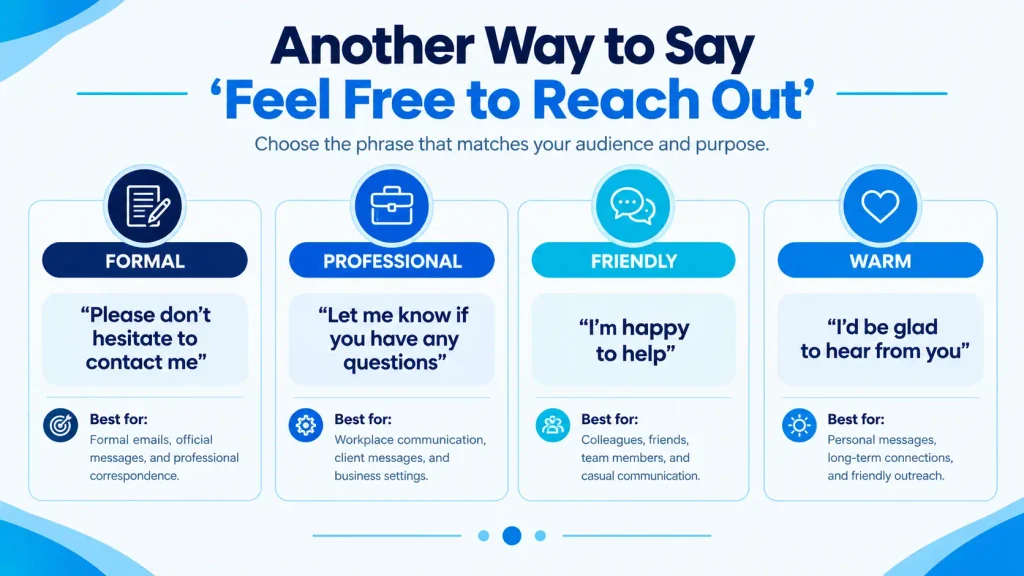
1. Please Don’t Hesitate to Contact Me
Meaning
This phrase invites someone to contact you whenever they need assistance or have questions. It has a professional and reassuring tone without sounding overly stiff.
Best For
- Professional
- Formal
- Polite
Example 1
Please don’t hesitate to contact me if you need additional information about the proposal.
Example 2
If any questions come up before the meeting, please don’t hesitate to contact me.
Quick Tip
Use this option when writing to clients, colleagues, managers, or other professional contacts.
2. Please Feel Welcome to Contact Me
Meaning
This expression tells the reader that you are open to hearing from them. It carries a courteous tone and works especially well when you want to make communication feel easy and comfortable.
Best For
- Professional
- Formal
- Friendly
- Polite
Example 1
Please feel welcome to contact me if you would like to discuss the project further.
Example 2
Please feel welcome to contact me with any questions about the application process.
Quick Tip
Use this when you want to sound welcoming while keeping your message professional.
3. I’m Happy to Help
Meaning
“I’m happy to help” focuses on your willingness to provide assistance rather than simply asking the person to contact you. It sounds positive, approachable, and natural.
Best For
- Professional
- Friendly
- Warm
- Polite
Example 1
If you have trouble accessing the document, I’m happy to help.
Example 2
Let me know if you need clarification on any part of the report. I’m happy to help.
Quick Tip
This is particularly useful when the reader may need assistance with a specific task or problem.
4. Let Me Know If You Have Any Questions
Meaning
This is a straightforward way to invite further communication. It clearly tells the reader when they should contact you, making it more specific than a general invitation.
Best For
- Professional
- Casual
- Friendly
- Polite
Example 1
Let me know if you have any questions about the schedule.
Example 2
I’ve attached the revised document, so let me know if you have any questions.
Quick Tip
Choose this phrase when you want to encourage questions about something you have already discussed.
5. I’d Be Glad to Hear From You
Meaning
“I’d be glad to hear from you” communicates genuine openness to further communication. It has a warm tone and can work well when maintaining a professional relationship.
Best For
- Professional
- Formal
- Warm
- Polite
Example 1
I’d be glad to hear from you if you would like to explore the partnership further.
Example 2
I’d be glad to hear from you when you have had a chance to review the proposal.
Quick Tip
Use this when you want your invitation to sound warmer than a standard business closing.
6. You’re Welcome to Contact Me
Meaning
This phrase gives the reader clear permission to get in touch. It sounds polite and direct without being too formal.
Best For
- Professional
- Friendly
- Polite
- Casual
Example 1
You’re welcome to contact me if you need a copy of the updated schedule.
Example 2
You’re welcome to contact me anytime if you want to discuss the next steps.
Quick Tip
This works well when you want to make the reader feel comfortable contacting you.
7. Let Me Know How I Can Help
Meaning
This expression offers active assistance and encourages the reader to explain what they need. It sounds more personal and helpful than simply inviting contact.
Best For
- Professional
- Friendly
- Warm
- Polite
Example 1
If you run into any issues with the registration process, let me know how I can help.
Example 2
Thanks for reaching out about the event. Let me know how I can help.
Quick Tip
Use this when you want to focus the conversation on solving the reader’s problem.
8. I’m Available If You Need Anything
Meaning
This phrase communicates that you are available to provide support. It has a relaxed and helpful tone, making it suitable for both workplace and personal communication.
Best For
- Casual
- Friendly
- Warm
- Professional
Example 1
I’ll be working from the office tomorrow, but I’m available if you need anything.
Example 2
I’ve sent over the files, and I’m available if you need anything else.
Quick Tip
This is a good choice when you want to sound approachable without using formal business language.
9. I’m Here If You Need Any Assistance
Meaning
This alternative emphasizes your availability and willingness to support the other person. It sounds reassuring and considerate, particularly when someone may need guidance.
Best For
- Professional
- Formal
- Warm
- Polite
Example 1
I’m here if you need any assistance while completing the paperwork.
Example 2
Please review the instructions, and I’m here if you need any assistance.
Quick Tip
Use this wording when the reader may need ongoing support rather than a single answer.
10. Let’s Stay in Touch
Meaning
“Let’s stay in touch” suggests that you want to maintain communication in the future. Unlike some alternatives, it focuses on continuing the relationship rather than asking about a specific question.
Best For
- Casual
- Friendly
- Warm
- Professional
Example 1
It was great meeting you at the conference. Let’s stay in touch.
Example 2
I enjoyed discussing the project with you, and I hope we can work together again. Let’s stay in touch.
Quick Tip
Use this after networking events, meetings, interviews, or other situations where you want to maintain a connection.
Comparison Table
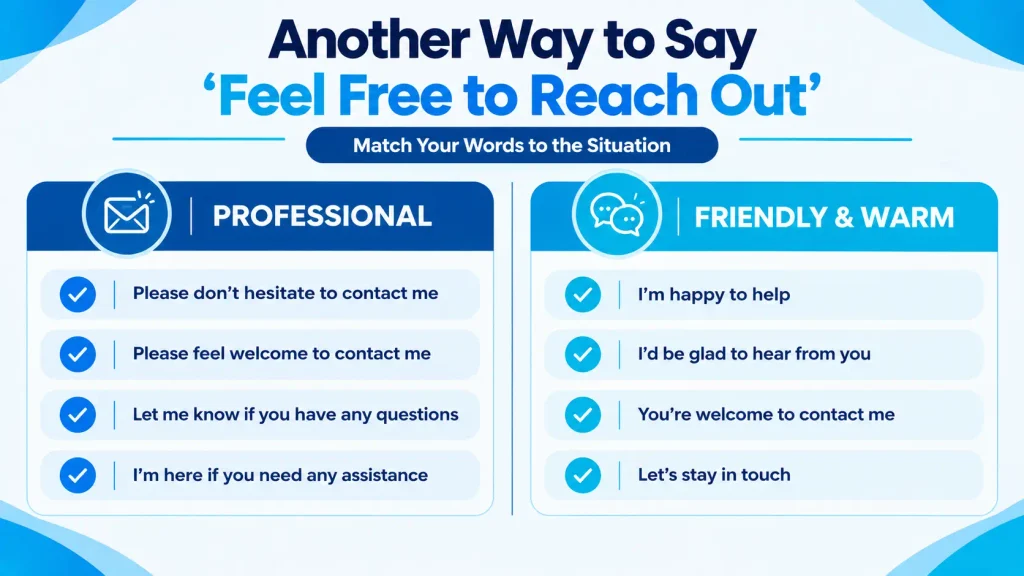
| Alternative | Best Used In | Tone |
| Please Don’t Hesitate to Contact Me | Business emails | Formal, polite |
| Please Feel Welcome to Contact Me | Professional communication | Professional, welcoming |
| I’m Happy to Help | Support and assistance | Friendly, warm |
| Let Me Know If You Have Any Questions | Follow-up emails | Professional, approachable |
| I’d Be Glad to Hear From You | Professional relationships | Warm, polite |
| You’re Welcome to Contact Me | General communication | Friendly, polite |
| Let Me Know How I Can Help | Customer or workplace support | Helpful, warm |
| I’m Available If You Need Anything | Workplace or personal messages | Casual, friendly |
| I’m Here If You Need Any Assistance | Support situations | Professional, reassuring |
| Let’s Stay in Touch | Networking and relationships | Friendly, warm |
Common Mistakes
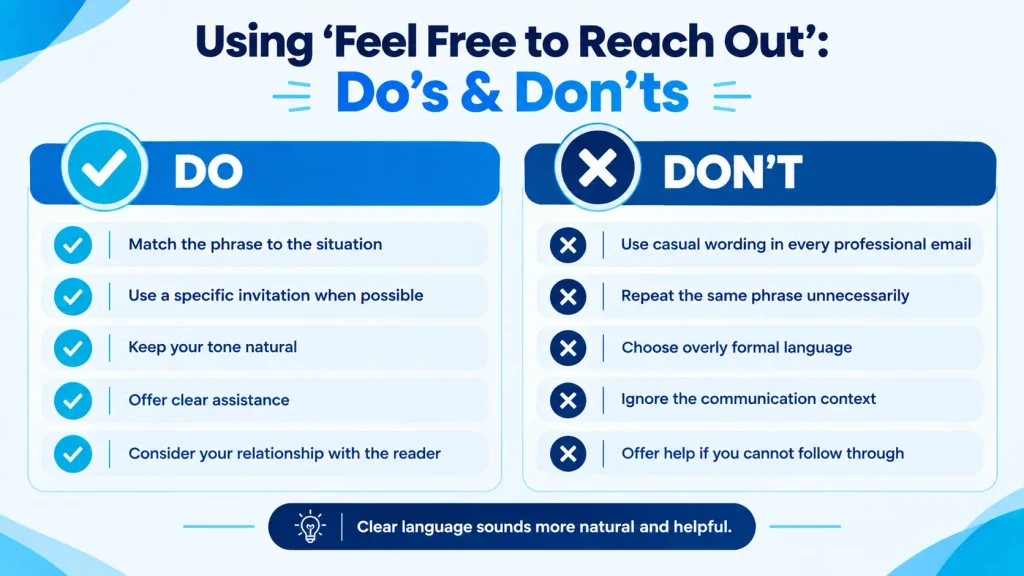
1. Using Casual Phrases in Professional Emails
A phrase that works with a friend may sound too relaxed in a formal business email. Consider the relationship, purpose, and audience before choosing your wording.
2. Choosing Overly Formal Language
Not every professional message needs formal language. Expressions such as “please don’t hesitate to contact me” may be unnecessary when a simple “let me know if you have any questions” would sound more natural.
3. Repeating the Same Phrase
Using “feel free to reach out” in every email can make your writing repetitive. Rotate your wording when appropriate, but always prioritize clarity over variety.
4. Forgetting Context
Some alternatives invite questions, while others encourage ongoing communication. For example, “let’s stay in touch” is better for maintaining a relationship than answering a specific customer question.
5. Sounding Insincere
An invitation to contact you should match your actual willingness to respond. Avoid adding a warm expression if you do not intend to continue the conversation or provide assistance.
Frequently Asked Questions
1. What is a professional way to say “feel free to reach out”?
A professional alternative is “please don’t hesitate to contact me.” It works well in business emails, client communication, and workplace messages. If you want something simpler, “let me know if you have any questions” is also professional and clearly explains why the reader might contact you.
2. What is a friendly way to say “feel free to reach out”?
For a friendly tone, try “I’m happy to help,” “let me know how I can help,” or “you’re welcome to contact me.” These expressions sound approachable without being overly formal. The best choice depends on whether you are offering general support or responding to a specific need.
3. Is “feel free to reach out” professional?
Yes. “Feel free to reach out” is widely used in professional communication, especially in emails, customer service, networking, and workplace conversations. However, it can become repetitive when used frequently. A more specific phrase may sound more natural when you know exactly why the reader might contact you.
4. Is “please don’t hesitate to contact me” too formal?
It can sound somewhat formal, but it is appropriate for many professional situations. It works especially well when communicating with clients, customers, senior colleagues, or people you do not know well. For everyday workplace conversations, “let me know if you have any questions” may feel more natural.
5. How can I say “feel free to reach out” in an email?
You can write “Please don’t hesitate to contact me if you have any questions” or “Let me know if you need anything else.” Both options clearly invite a response. Choose the first for a more formal message and the second for a relaxed professional email.
6. What can I say instead of “feel free to reach out” to a client?
For a client, consider “Please don’t hesitate to contact me,” “I’m happy to assist,” or “Let me know how I can help.” These options make your availability clear while keeping the tone professional. If the client needs a specific type of support, mention that directly.
7. What is another way to say “reach out if you need anything”?
You can say “Let me know if you need anything,” “I’m available if you need assistance,” or “I’m happy to help if anything comes up.” These alternatives are natural in workplace and personal communication. Select the wording that best matches your relationship with the reader.
8. Is “let’s stay in touch” the same as “feel free to reach out”?
The phrases are related but not identical. “Feel free to reach out” invites someone to contact you when they need something, while “let’s stay in touch” suggests that both people should continue communicating. The latter is especially common after networking, meetings, interviews, or professional introductions.
Conclusion
“Feel free to reach out” is a useful and polite phrase, but you do not have to use it in every message. Choosing a more specific alternative can make your communication clearer, more natural, and better suited to the situation.
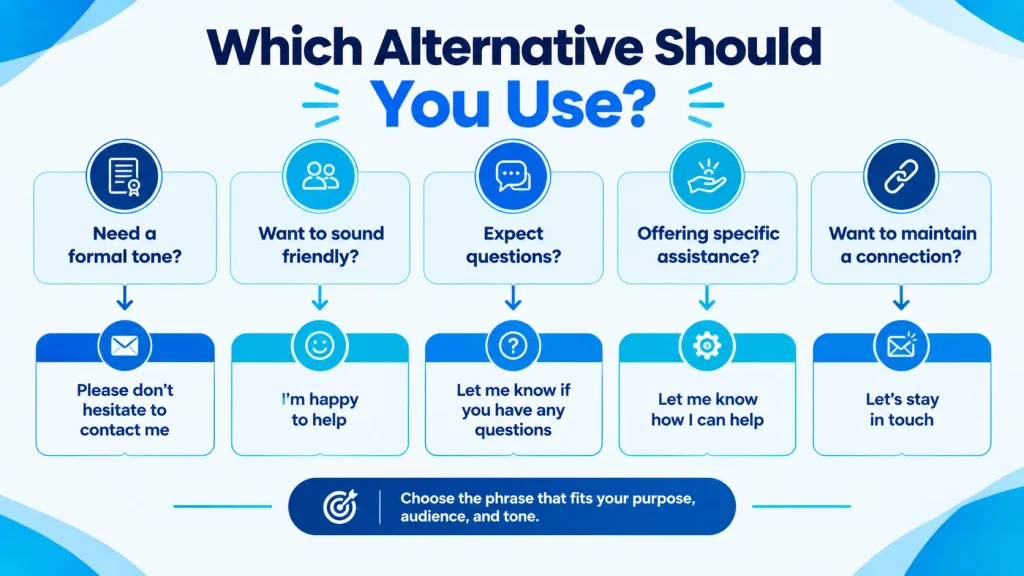
For formal business communication, “please don’t hesitate to contact me” is a reliable choice. For a friendly and helpful tone, “I’m happy to help” or “let me know how I can help” works well. When you expect questions, “let me know if you have any questions” is direct and practical. For networking, “let’s stay in touch” communicates an ongoing connection.
The best alternative is the one that matches your relationship, purpose, and desired tone. When in doubt, keep your wording simple, specific, and genuine. If you want to explore the expression further, see the Cambridge Dictionary’s definition of “reach out”.

Melody Schaefer is the Founder and Editor-in-Chief of FrontiersPost, where she oversees the publication of clear, useful, and thoughtfully researched content for modern readers. Her editorial focus includes language, communication, vocabulary, writing, and practical topics that help readers understand information with greater clarity and confidence.
At FrontiersPost, Melody works with writers and editors to maintain consistent editorial standards, improve content quality, and ensure that published articles are useful, accessible, and easy to understand. She is particularly interested in clear communication and presenting complex or easily confused topics in a straightforward way.
As Editor-in-Chief, she is also responsible for guiding the site’s editorial direction, reviewing content standards, and helping ensure that articles are regularly maintained and improved as information evolves.