

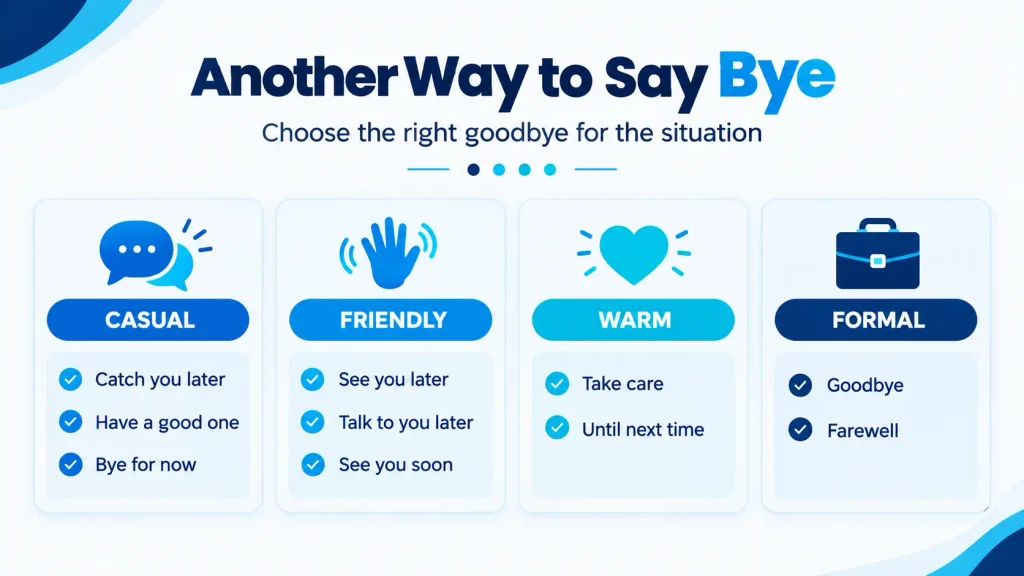
Another way to say bye depends on the situation and tone. Common alternatives include goodbye, see you later, take care, see you soon, have a good one, talk to you later, catch you later, until next time, farewell, and bye for now. Choose a phrase that fits the relationship and setting.
Key Takeaways
- “Goodbye” is a simple, neutral alternative to “bye.”
- Use “see you later” or “talk to you later” for casual conversations.
- “Take care” adds a warm and friendly tone.
- “Farewell” works better in formal or more emotional situations.
- The best alternative depends on your relationship, context, and desired tone.
Saying “bye” is natural, but you may want a different expression depending on who you are talking to. A professional email, a conversation with a friend, and a meaningful farewell can all call for different wording.
Below are 10 natural ways to say bye, with examples and practical tips to help you choose the right phrase.
What Does “Another Way to Say Bye” Mean?
“Another way to say bye” refers to a different word or phrase you can use when ending a conversation, phone call, meeting, visit, or message. Bye is casual and common, but other expressions can sound warmer, more professional, more formal, or more personal.
People often look for alternatives to avoid repetition or to make their goodbye better match the situation. The right expression can communicate friendliness, respect, affection, or a sense of closure.
Why Use Other Ways to Say “Bye”?
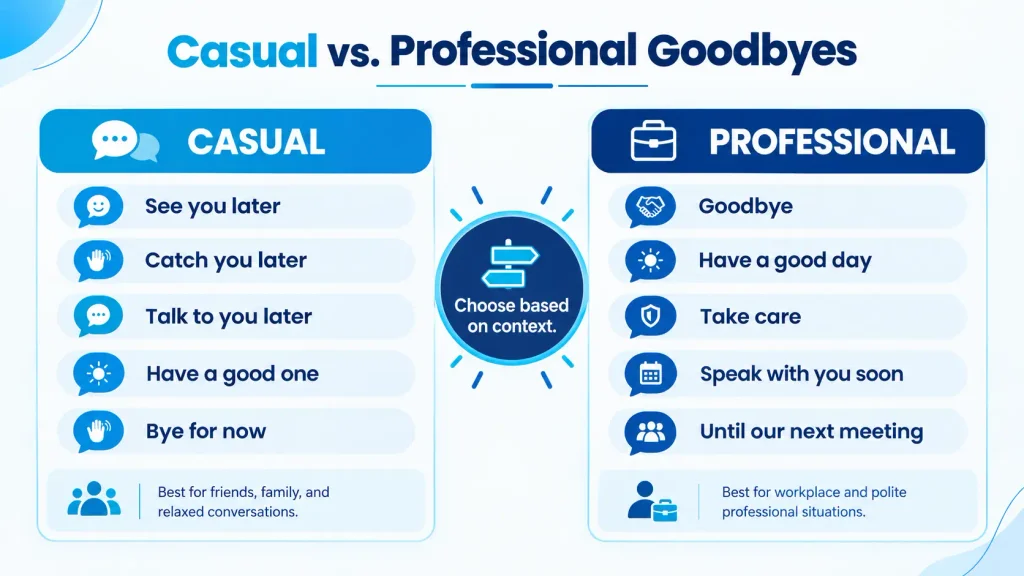
Using alternatives to “bye” gives you more flexibility when ending conversations. While “bye” works in most casual situations, another phrase may communicate your intended tone more clearly.
You might use another expression to:
- Avoid repeating the same phrase.
- Sound more natural and conversational.
- Make a goodbye warmer or friendlier.
- Match a professional or formal setting.
- Express care or goodwill.
- Create a stronger sense of closure.
10 Best Other Ways to Say “Bye”
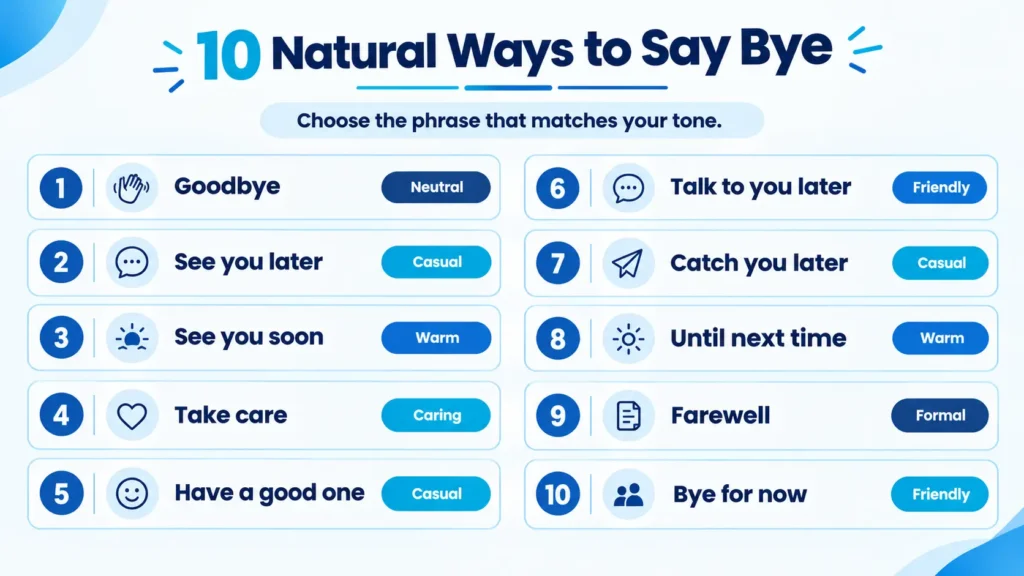
1. Goodbye
Meaning
“Goodbye” is the most direct alternative to “bye.” It is neutral, widely understood, and appropriate when you want to end a conversation clearly without sounding overly casual or formal.
Best For
- Professional
- Formal
- Friendly
- Polite
Example 1
“Thanks for meeting with me today. Goodbye, and I hope you have a great afternoon.”
Example 2
“She smiled, thanked everyone for coming, and said goodbye before leaving.”
Quick Tip
Use “goodbye” when you want a safe, universally appropriate option.
2. See You Later
Meaning
“See you later” is a friendly and relaxed way to end a conversation. It suggests that you expect to see or speak with the person again.
Best For
- Casual
- Friendly
- Warm
Example 1
“I have to get back to work, but I’ll see you later.”
Example 2
“Thanks for hanging out with me. See you later!”
Quick Tip
Use this phrase with people you expect to see again, especially friends, coworkers, or family members.
3. See You Soon
Meaning
“See you soon” is similar to “see you later,” but it emphasizes that another meeting or interaction is expected relatively soon. It has a warm and positive feel.
Best For
- Friendly
- Warm
- Casual
Example 1
“Enjoy your trip, and see you soon when you get back.”
Example 2
“Thanks for stopping by. See you soon!”
Quick Tip
Choose this phrase when you genuinely expect to reconnect in the near future.
4. Take Care
Meaning
“Take care” is a warm way to end a conversation while showing concern or goodwill toward the other person. It can sound more thoughtful than a simple “bye.”
Best For
- Friendly
- Warm
- Polite
Example 1
“I’m glad we got a chance to catch up. Take care!”
Example 2
“Drive safely tonight. Take care, and I’ll talk to you tomorrow.”
Quick Tip
“Take care” works especially well when you want your goodbye to sound caring without being overly emotional.
5. Have a Good One
Meaning
“Have a good one” is a casual American expression that usually means “have a good day” or “have a good time.” It is relaxed and upbeat.
Best For
- Casual
- Friendly
- Polite
Example 1
“Thanks for your help with that. Have a good one!”
Example 2
“I’ll let you get back to your weekend. Have a good one!”
Quick Tip
This phrase is best for informal conversations rather than formal business correspondence.
6. Talk to You Later
Meaning
“Talk to you later” is a natural way to end a phone call, text conversation, or casual discussion. It indicates that you expect to communicate with the person again.
Best For
- Casual
- Friendly
- Warm
Example 1
“I need to finish this assignment, so I’ll talk to you later.”
Example 2
“Thanks for the update. Talk to you later!”
Quick Tip
Use it when another conversation is likely, especially with friends, relatives, and familiar coworkers.
7. Catch You Later
Meaning
“Catch you later” is an informal and upbeat alternative to “see you later.” It is common in relaxed conversations and has a distinctly conversational tone.
Best For
- Casual
- Friendly
Example 1
“I’m heading out to grab some lunch. Catch you later.”
Example 2
“Great talking with you. Catch you later!”
Quick Tip
Keep this phrase for casual situations because it may sound too relaxed in formal professional communication.
8. Until Next Time
Meaning
“Until next time” creates a slightly more thoughtful sense of closure. It suggests that the current interaction is ending but another meeting or conversation will happen eventually.
Best For
- Friendly
- Warm
- Formal
Example 1
“Thanks for joining us tonight. Until next time!”
Example 2
“It was wonderful seeing everyone again. Until next time, take care.”
Quick Tip
Use this expression when you want your goodbye to feel polished, memorable, or slightly sentimental.
9. Farewell
Meaning
“Farewell” is a more formal and traditional way to say goodbye. It can sound serious or emotional, so it is less common in everyday casual conversations.
Best For
- Formal
- Warm
- Polite
Example 1
“We wish you all the best as you begin your new position. Farewell!”
Example 2
“The team gathered to say farewell to their longtime colleague.”
Quick Tip
Use “farewell” when the separation feels significant or when you want a more formal tone.
10. Bye for Now
Meaning
“Bye for now” is a friendly expression that means the goodbye is temporary. It works well when you expect to communicate with the person again later.
Best For
- Casual
- Friendly
- Warm
Example 1
“I have to head into my meeting now. Bye for now!”
Example 2
“Thanks for chatting with me. Bye for now, and I’ll message you tomorrow.”
Quick Tip
Use “bye for now” when you want to make it clear that you are ending the conversation temporarily.
Comparison Table
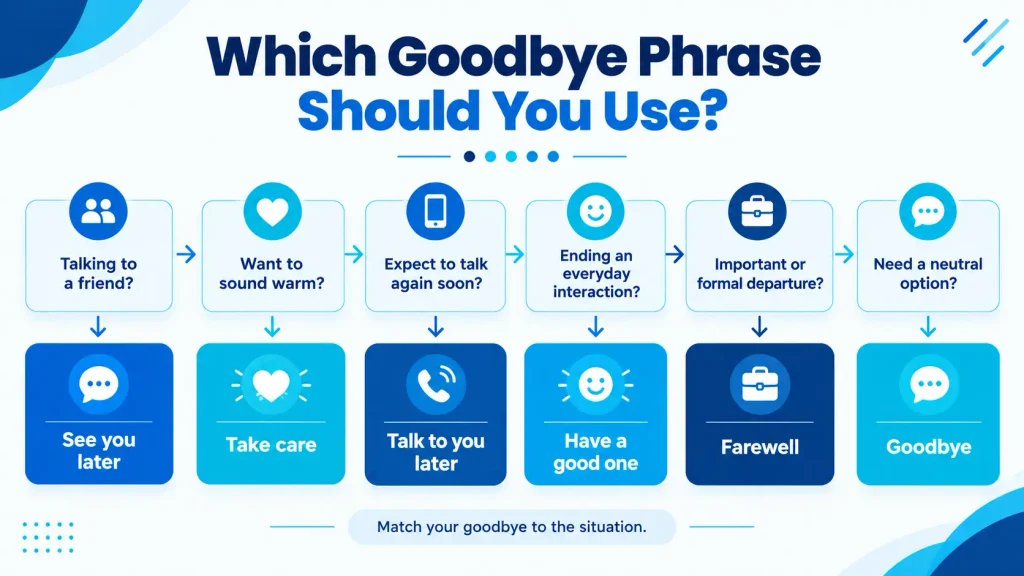
| Alternative | Best Used In | Tone |
| Goodbye | General, professional, formal | Neutral |
| See You Later | Casual conversations | Friendly |
| See You Soon | Friends, family, casual settings | Warm |
| Take Care | Personal and friendly conversations | Caring |
| Have a Good One | Informal everyday situations | Casual |
| Talk to You Later | Texts, calls, casual conversations | Friendly |
| Catch You Later | Informal conversations | Casual |
| Until Next Time | Events, visits, meaningful goodbyes | Warm |
| Farewell | Formal or significant departures | Formal |
| Bye for Now | Temporary goodbyes | Friendly |
Common Mistakes
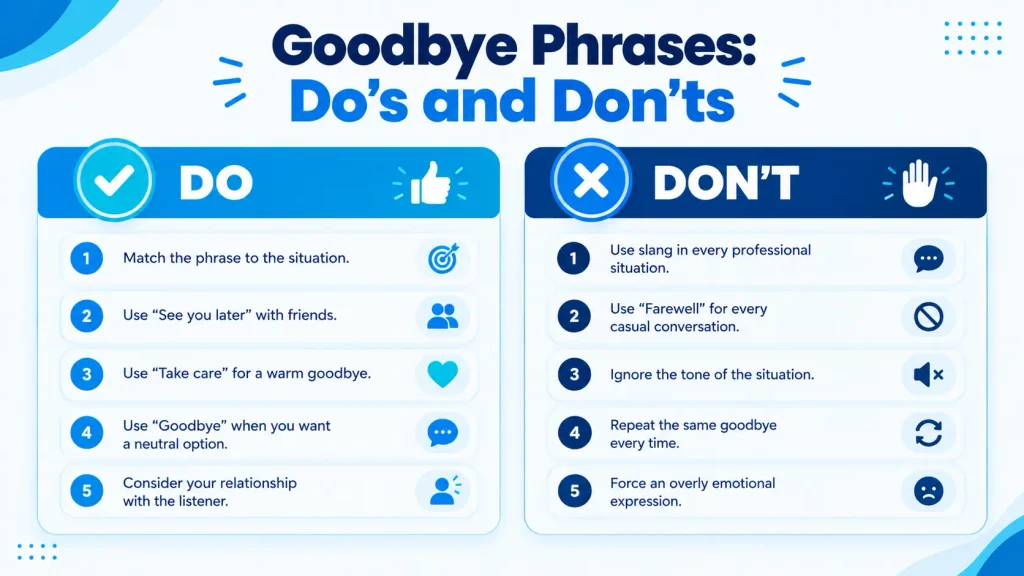
1. Using Casual Phrases in Professional Emails
Expressions such as “catch you later” or “have a good one” can sound too informal in certain workplace messages. For professional communication, “goodbye,” “take care,” or a simple closing may be more suitable.
2. Choosing Overly Formal Language
“Farewell” can sound unnatural in a quick conversation with a friend. Formal wording is not always better, so consider whether the phrase matches the relationship and setting.
3. Repeating the Same Phrase
Using “bye” every time you end a conversation can become repetitive. Having several natural alternatives gives you more flexibility and helps your communication sound less predictable.
4. Forgetting the Context
A phrase that works well with a friend may not work equally well with a manager, client, professor, or new acquaintance. Always consider who you are speaking to before choosing your goodbye.
5. Sounding Insincere
A warm phrase can feel forced if it does not match your relationship with the other person. Choose wording that feels natural rather than using an emotional expression simply because it sounds polite.
Frequently Asked Questions
What is another way to say “bye”?
Common alternatives to “bye” include “goodbye,” “see you later,” “see you soon,” “take care,” “talk to you later,” and “bye for now.” The best option depends on the situation. For a neutral choice, “goodbye” works well, while “take care” adds warmth and “see you later” sounds casual.
What is a friendly way to say goodbye?
“See you later,” “see you soon,” “take care,” and “talk to you later” are friendly ways to say goodbye. These phrases work especially well with friends, family members, classmates, and familiar coworkers. They sound natural without being overly formal or emotional.
What is a professional way to say bye?
“Goodbye” is a straightforward professional alternative, although it is often more natural to close a workplace conversation with phrases such as “Have a great day” or “Take care.” In emails, a professional sign-off such as “Best regards” may be more appropriate than using “bye.”
What is a casual way to say goodbye?
For casual conversations, you can say “see you later,” “catch you later,” “talk to you later,” “have a good one,” or “bye for now.” These expressions sound relaxed and conversational, making them suitable for friends, family, and people you know well.
Is “see you later” the same as “bye”?
“See you later” and “bye” both end a conversation, but they have slightly different implications. “Bye” simply signals that the interaction is ending. “See you later” suggests that you expect to see or communicate with the person again, making it sound more personal and conversational.
What is a warm way to say goodbye?
“Take care,” “see you soon,” and “until next time” can make a goodbye feel warmer. These expressions communicate goodwill while still sounding natural. “Take care” is especially useful when you want to show that you care about the other person’s well-being without making the goodbye overly emotional.
Is “farewell” too formal?
“Farewell” can sound formal, traditional, or emotionally significant in everyday American English. It is not necessarily inappropriate, but it may feel unusual for a quick goodbye between friends. It works better for important departures, farewell events, speeches, or situations where the separation has greater significance.
How do I choose the best alternative to “bye”?
Consider your relationship with the person, the setting, and how you want your goodbye to sound. Use “goodbye” for a neutral option, “see you later” for casual situations, “take care” for warmth, and “farewell” when the departure is more formal or significant.
Conclusion
There are many natural ways to say goodbye besides simply using “bye.” The best choice depends on the situation, your relationship with the other person, and the tone you want to create.
For everyday conversations, “see you later,” “see you soon,” and “talk to you later” sound friendly and natural. If you want to show warmth, “take care” or “until next time” can make your goodbye feel more thoughtful. For a more formal or meaningful departure, “farewell” may be appropriate, while “goodbye” remains a reliable choice in almost any setting.
The key is to match your words to the moment. A simple goodbye can sound more natural and meaningful when you choose an expression that fits the person, purpose, and context.

Sarah Mitchell is a Senior English Editor at FrontiersPost, specializing in English usage, vocabulary, word choice, grammar, and effective communication. She focuses on helping readers understand subtle differences between commonly confused words, phrases, and expressions and use them naturally in everyday, professional, and academic writing.
At FrontiersPost, Sarah researches, writes, and edits educational content with an emphasis on clarity, accuracy, and practical examples. She works closely with the editorial team to ensure that articles are easy to understand while maintaining appropriate context, meaning, and usage.
Her editorial interests include English vocabulary, synonyms, phrasing, professional communication, and the practical nuances that can make written communication more precise and effective.