

Another way to say “deepest condolences” is “my heartfelt sympathies,” “I’m deeply sorry for your loss,” or “please accept my sincere condolences.” These expressions offer comfort to someone grieving. The best phrase depends on your relationship with the person, the situation, and whether you are writing a sympathy card, sending a professional email, or offering personal support.
Key Takeaways
- “My heartfelt sympathies” is a warm and respectful alternative to deepest condolences.
- “I’m deeply sorry for your loss” is a natural choice for personal messages.
- “Please accept my sincere condolences” works well in formal and professional settings.
- “My thoughts are with you and your family” offers gentle emotional support.
- Choose simple, sincere words rather than overly elaborate expressions.
Finding the right words after someone experiences a loss can be difficult. You want to express sympathy, show respect, and offer comfort without sounding distant or insincere.
The phrase “deepest condolences” is appropriate in many situations, but other expressions may feel more personal, compassionate, or natural. Whether you are writing a sympathy card, sending a message to a coworker, or comforting a close friend, choosing the right words can make your message more meaningful.
Here are 10 thoughtful alternatives to “deepest condolences,” along with their meanings, examples, and best uses.
What Does “Deepest Condolences” Mean?

“Deepest condolences” is a heartfelt expression of sympathy offered to someone who has experienced the death of a loved one. It communicates sorrow, compassion, and respect for the person who is grieving.
The word “deepest” emphasizes the sincerity and strength of your feelings. The expression is commonly used in sympathy cards, condolence messages, professional emails, and conversations following a loss.
For example:
- Please accept my deepest condolences on the passing of your father.
- My deepest condolences to you and your family during this difficult time.
The phrase is respectful and appropriate, but it may sometimes feel formal. A more personal alternative can help you express genuine care.
Why Use Alternatives to “Deepest Condolences”?
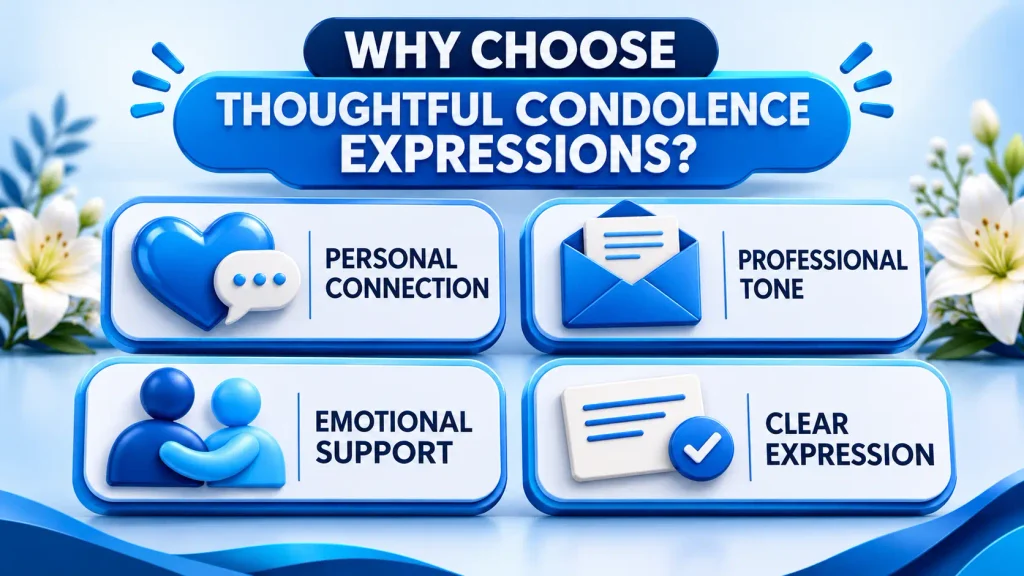
Using a different condolence expression can help you match your message to the situation and relationship.
For example, a formal message to a colleague may require respectful language, while a text to a close friend may sound better with simple, heartfelt words.
Alternatives can help you:
- Express genuine emotion: Personal wording can make your sympathy feel more sincere.
- Maintain professionalism: Formal expressions are useful when writing to clients, colleagues, or business contacts.
- Offer emotional support: Some phrases focus on comforting the grieving person rather than simply expressing sorrow.
- Avoid repetitive wording: Different expressions can make sympathy messages feel more personal.
- Communicate naturally: Simple language often feels more comforting during difficult moments.
The goal is not to find a more complicated phrase. It is to express your sympathy in a way that feels sincere and appropriate.
10 Best Alternatives to “Deepest Condolences”
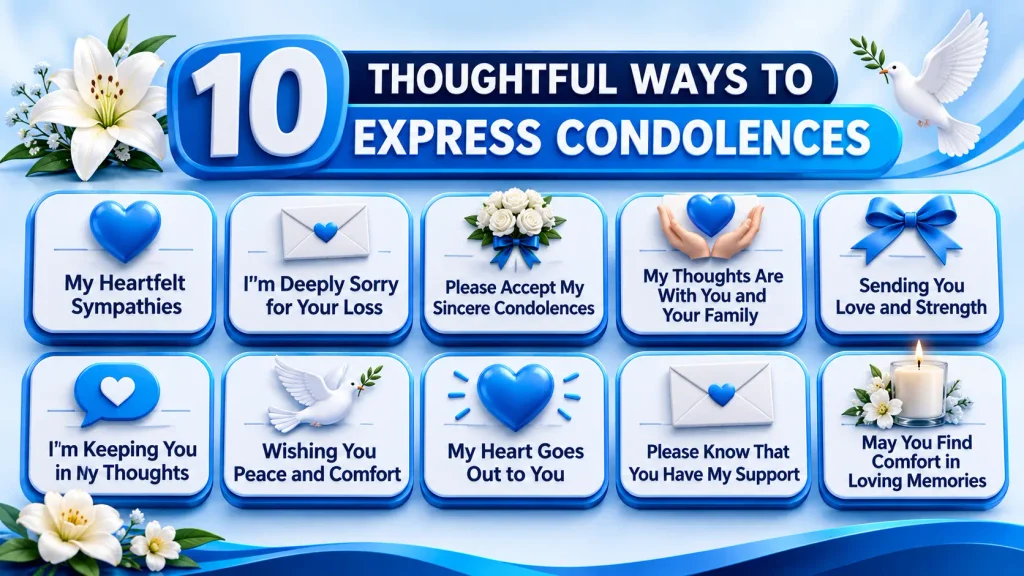
These ten expressions offer different levels of warmth, formality, and emotional support.
1. My Heartfelt Sympathies
Meaning and Usage
“My heartfelt sympathies” expresses sincere compassion and sadness about someone’s loss. It is a warm, respectful phrase that emphasizes genuine feelings.
It is slightly formal but still natural in personal and professional communication.
Best For
- Sympathy cards
- Professional condolence emails
- Messages to acquaintances
- Formal expressions of grief
Example Sentences
- Please accept my heartfelt sympathies on the loss of your mother.
- My heartfelt sympathies go out to you and your family.
- I extend my heartfelt sympathies during this difficult time.
Quick Tip
Use “heartfelt” when you want your message to sound sincere and compassionate without becoming overly emotional.
2. I’m Deeply Sorry for Your Loss
Meaning and Usage
“I’m deeply sorry for your loss” is a direct, compassionate expression of sadness. It acknowledges the person’s grief and communicates that you care.
This phrase sounds natural in American English and is one of the most versatile condolence expressions.
Best For
- Personal conversations
- Text messages
- Sympathy cards
- Messages to friends, relatives, or coworkers
Example Sentences
- I’m deeply sorry for your loss. Please know that I’m thinking of you.
- I’m deeply sorry for your loss and wish you comfort in the days ahead.
- I’m so deeply sorry for what you and your family are going through.
Quick Tip
This is an excellent choice when you are unsure what to say. Its simplicity makes it sincere and easy to understand.
3. Please Accept My Sincere Condolences
Meaning and Usage
This expression communicates respectful and genuine sympathy. The word “sincere” emphasizes that your feelings are honest.
It is more formal than “I’m sorry for your loss” and works well in written communication.
Best For
- Business emails
- Professional correspondence
- Formal sympathy cards
- Messages to people you do not know well
Example Sentences
- Please accept my sincere condolences on the passing of your loved one.
- Please accept my sincere condolences during this time of sorrow.
- I would like to extend my sincere condolences to your family.
Quick Tip
Use this expression when maintaining a respectful and professional tone is important.
4. My Thoughts Are With You and Your Family
Meaning and Usage
This phrase expresses emotional support and care for the grieving person and their family. It does not focus only on the death itself.
It feels gentle, warm, and supportive.
Best For
- Messages to friends
- Sympathy cards
- Coworker condolence messages
- Personal conversations
Example Sentences
- My thoughts are with you and your family during this difficult time.
- Please know that my thoughts are with you as you mourn your loss.
- My thoughts are with your family as you remember your loved one.
Quick Tip
Use this expression when you want to offer comfort without making the message too formal.
5. Sending You Love and Strength
Meaning and Usage
“Sending you love and strength” communicates affection, encouragement, and emotional support. It is more personal than traditional condolence expressions.
The phrase acknowledges that grieving can be difficult and offers warmth to the person experiencing it.
Best For
- Close friends
- Family members
- Personal text messages
- Supportive sympathy cards
Example Sentences
- Sending you love and strength as you navigate this painful time.
- I’m sending you all my love and strength after your loss.
- Sending you love and strength to help you through the days ahead.
Quick Tip
Use this phrase with people you know well. It may feel too intimate for a distant professional relationship.
6. I’m Keeping You in My Thoughts
Meaning and Usage
This expression lets someone know that you are thinking about them during their grief. It is gentle, considerate, and less formal than traditional condolences.
It can be especially helpful when you want to offer support without making assumptions about the person’s beliefs.
Best For
- Text messages
- Personal notes
- Messages to coworkers
- Sympathy cards
Example Sentences
- I’m keeping you in my thoughts as you go through this difficult time.
- Please know that I’m keeping you and your family in my thoughts.
- I’m keeping you in my thoughts and wishing you peace and comfort.
Quick Tip
This phrase works well when you want to acknowledge someone’s loss in a brief but thoughtful way.
7. Wishing You Peace and Comfort
Meaning and Usage
“Wishing you peace and comfort” expresses hope that the grieving person will find some relief and emotional calm.
It is gentle, respectful, and appropriate for many condolence situations.
Best For
- Sympathy cards
- Formal messages
- Personal notes
- Messages to acquaintances
Example Sentences
- Wishing you peace and comfort as you remember your loved one.
- I hope you find peace and comfort during this difficult time.
- Wishing you and your family peace and comfort in the days ahead.
Quick Tip
This phrase is a thoughtful choice when you want to focus on the grieving person’s well-being.
8. My Heart Goes Out to You
Meaning and Usage
“My heart goes out to you” expresses strong compassion for someone experiencing sadness or hardship.
It sounds warm, personal, and emotionally sincere.
Best For
- Close friends
- Family members
- Personal messages
- Conversations about a loss
Example Sentences
- My heart goes out to you and your family after your loss.
- My heart goes out to you during this heartbreaking time.
- My heart truly goes out to you as you mourn your loved one.
Quick Tip
This expression is especially useful when you want your message to feel personal rather than formal.
9. Please Know That You Have My Support
Meaning and Usage
This phrase offers practical and emotional reassurance. Instead of only expressing sadness, it lets the grieving person know that you are willing to support them.
It is appropriate when you genuinely intend to provide help.
Best For
- Close coworkers
- Friends
- Family members
- Personal and professional messages
Example Sentences
- Please know that you have my support during this difficult time.
- I’m deeply sorry for your loss. Please know that you can count on me.
- You have my support as you and your family navigate this loss.
Quick Tip
If possible, offer specific help. For example, “I can help with dinner this week” is more useful than a vague promise.
10. May You Find Comfort in Loving Memories
Meaning and Usage
This expression offers comfort by acknowledging the memories shared with the person who has passed away.
It is thoughtful and gentle, particularly when the grieving person had a close relationship with the deceased.
Best For
- Sympathy cards
- Memorial messages
- Personal notes
- Messages to family members
Example Sentences
- May you find comfort in the loving memories you shared.
- I hope the beautiful memories of your loved one bring you peace.
- May the memories you cherish help comfort you during this difficult time.
Quick Tip
Use this phrase when you know that the person values memories of their loved one. Avoid assuming that memories are comforting if the relationship was complicated.
Comparison Table: 10 Alternatives to “Deepest Condolences”
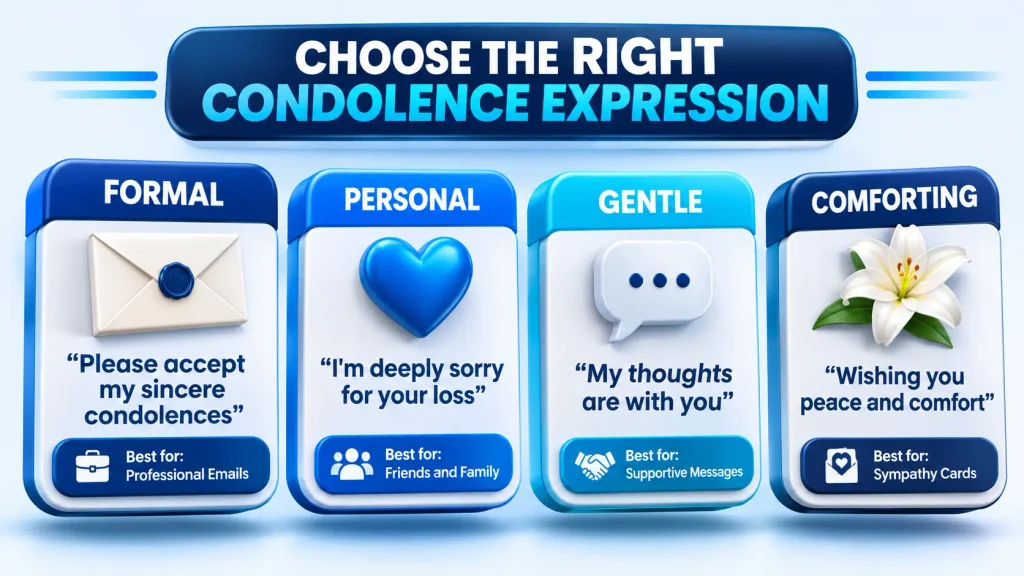
Use this table to choose a condolence expression that fits your relationship with the grieving person.
| Alternative Phrase | Tone | Best Use | Formality |
|---|---|---|---|
| My heartfelt sympathies | Warm, sincere | Sympathy cards, emails | Formal |
| I’m deeply sorry for your loss | Compassionate, natural | Personal messages | Neutral |
| Please accept my sincere condolences | Respectful | Professional emails | Very formal |
| My thoughts are with you and your family | Gentle, supportive | Friends, coworkers | Neutral |
| Sending you love and strength | Caring, personal | Close friends, family | Informal |
| I’m keeping you in my thoughts | Gentle, considerate | Texts, personal notes | Neutral |
| Wishing you peace and comfort | Thoughtful, calm | Sympathy cards | Neutral |
| My heart goes out to you | Emotional, sincere | Personal conversations | Neutral |
| Please know that you have my support | Reassuring | Friends, colleagues | Neutral |
| May you find comfort in loving memories | Reflective, compassionate | Memorial messages | Formal |
Common Mistakes to Avoid When Expressing Condolences
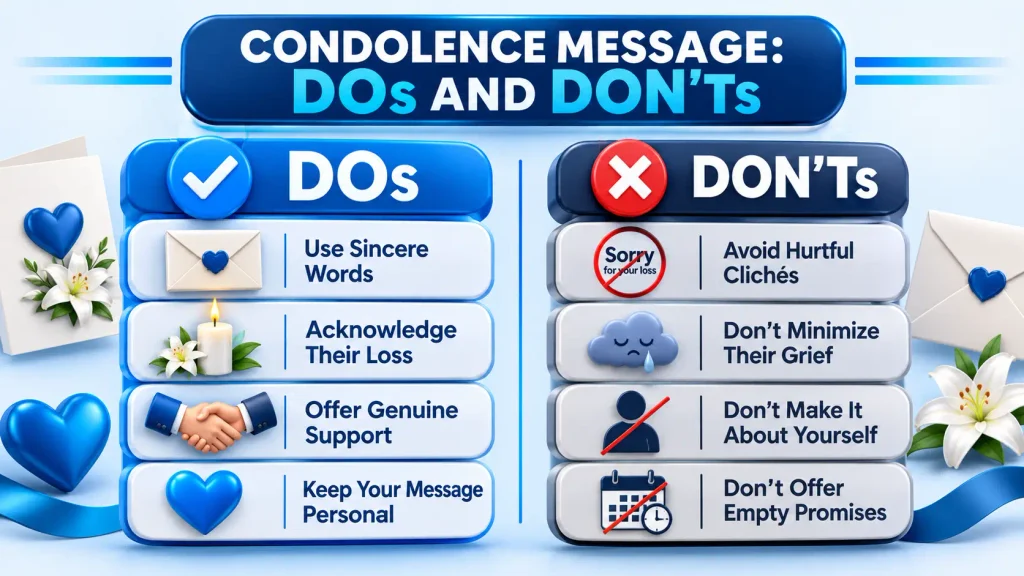
Choosing the right condolence phrase is important, but how you communicate your sympathy matters just as much. Avoid these common mistakes to make your message more thoughtful.
1. Using Overly Formal Language in Personal Messages
A phrase like “Please accept my sincere condolences” may sound distant when messaging a close friend.
Instead, try:
- “I’m so sorry for your loss.”
- “My heart goes out to you.”
Choose wording that reflects your relationship.
2. Making the Message About Yourself
Avoid focusing too much on your own feelings when someone is grieving.
For example:
- Less helpful: “I can’t believe this happened. I’m devastated.”
- Better: “I’m deeply sorry for your loss. I’m here for you.”
The second message keeps the focus on the grieving person.
3. Using Clichés That May Minimize Grief
Expressions such as “Everything happens for a reason” or “They are in a better place” may not comfort everyone.
Instead, use neutral and compassionate language:
- “I’m so sorry you’re going through this.”
- “Wishing you peace and comfort.”
Avoid making assumptions about the person’s beliefs.
4. Offering Help Without Following Through
Saying “Let me know if you need anything” is kind, but it may place the burden on the grieving person to ask.
A more helpful message could be:
- “I can bring dinner over this week if that would help.”
- “I’m available to help with errands whenever you need.”
Only offer help you can genuinely provide.
5. Sending a Message That Is Too Long
A condolence message does not need to be lengthy to feel sincere. A few thoughtful sentences are often enough.
For example:
“I’m deeply sorry for your loss. My thoughts are with you and your family. Please know that I’m here if you need support.”
Simple words can communicate genuine compassion.
Frequently Asked Questions
What is the most heartfelt way to say deepest condolences?
“I’m deeply sorry for your loss. My heart goes out to you and your family” is a heartfelt alternative. It combines a direct expression of sorrow with personal compassion. You can also add a genuine offer of support if you are close to the grieving person.
How do you say deepest condolences professionally?
You can say, “Please accept my sincere condolences during this difficult time.” Another suitable option is, “My heartfelt sympathies go out to you and your family.” Both expressions maintain a respectful and professional tone in workplace emails and formal messages.
What is another way to say deepest condolences in a text message?
“I’m so sorry for your loss. I’m thinking of you” is a natural choice for a text message. You could also write, “Sending you love and strength during this difficult time.” Keep the message brief, warm, and appropriate for your relationship.
Is “heartfelt condolences” better than “deepest condolences”?
Both expressions are appropriate and communicate sincere sympathy. “Heartfelt condolences” emphasizes genuine emotion, while “deepest condolences” emphasizes the depth of your sorrow. Neither is universally better. The choice depends on your preferred tone and the context of your message.
How do you express condolences without saying “sorry”?
You can say, “My thoughts are with you and your family,” “My heart goes out to you,” or “Wishing you peace and comfort.” These phrases communicate sympathy without using the word “sorry.” They are useful when you want to express compassion in a different way.
What should I write in a sympathy card?
A sympathy card can include a simple expression of sorrow, a supportive message, and a closing thought. For example: “Please accept my heartfelt sympathies. May you find comfort in the loving memories you shared. Thinking of you and your family.” Personalize the message when appropriate.
Can I say “deepest condolences” to a coworker?
Yes. “Deepest condolences” is respectful and suitable for a coworker who has experienced a loss. You can also write, “Please accept my sincere condolences. My thoughts are with you and your family during this difficult time.” Keep the message professional unless you have a close personal relationship.
What is a short and meaningful condolence message?
“I’m deeply sorry for your loss. Thinking of you and wishing you comfort” is a short, meaningful message. It expresses sympathy without unnecessary words. Another option is, “My heartfelt sympathies to you and your family.”
Writing something similar? Try What to Say Instead of “I Miss You” to a Friend, What to Say Instead of “I’m Sorry for Your Loss” or Another Way to Say Missing You.
Conclusion
Finding another way to say deepest condolences can help you express sympathy in a more personal, thoughtful, and meaningful way. Expressions such as “I’m deeply sorry for your loss,” “my heartfelt sympathies,” and “my heart goes out to you” are suitable for different situations. For professional messages, “Please accept my sincere condolences” offers a respectful tone, while “sending you love and strength” works well for close friends and family.
The most important thing is to choose words that reflect your genuine feelings. You do not need a long or elaborate message to comfort someone who is grieving. A few sincere sentences, combined with a thoughtful offer of support, can mean a great deal. Whether you are writing a sympathy card, sending a text, or speaking in person, let compassion and respect guide your choice of words.
“ A few sincere sentences, combined with a thoughtful offer of support, can mean a great deal. Whether you are writing a sympathy card, sending a text, or speaking in person, let compassion and respect guide your choice of words. You can also learn more about offering comfort to someone who is grieving.”

The FrontiersPost editorial team writes and reviews every guide to word and phrase alternatives, with clear meanings, tone notes and example sentences for everyday, academic and professional English.