

Another way to say “rude” includes impolite, disrespectful, discourteous, inconsiderate, or offensive. For a professional setting, “discourteous” or “unprofessional” may sound more appropriate, while “impolite” works well in everyday conversation. The best choice depends on the person’s behavior, tone, and situation.
Key Takeaways
- “Impolite” is a natural, everyday alternative to “rude.”
- “Disrespectful” emphasizes a lack of respect toward someone.
- “Discourteous” works especially well in professional or formal situations.
- “Inconsiderate” focuses on behavior that ignores other people’s feelings or needs.
- Choose the alternative based on the tone, context, and seriousness of the behavior.
Finding another way to say “rude” can help you describe someone’s behavior more accurately without sounding repetitive or overly harsh. The right word can also make your message more professional, polite, or specific.
Whether you are writing an email, describing a difficult interaction, or talking about someone’s manners, there are several natural alternatives to “rude.”
What Does “Another Way to Say Rude” Mean?
The phrase “another way to say rude” refers to different words or expressions that describe behavior that is impolite, disrespectful, offensive, or lacking in good manners.
People commonly use these alternatives when they want to avoid repeating the word “rude” or when they need a word that better matches the situation. For example, “disrespectful” is stronger than “impolite,” while “discourteous” sounds more formal.
You may need an alternative to “rude” when:
- Writing a professional email
- Describing someone’s behavior
- Giving constructive feedback
- Talking about poor manners
- Expressing concern without sounding aggressive
- Choosing a more precise word for an essay or article
Why Use Other Ways to Say “Rude”?
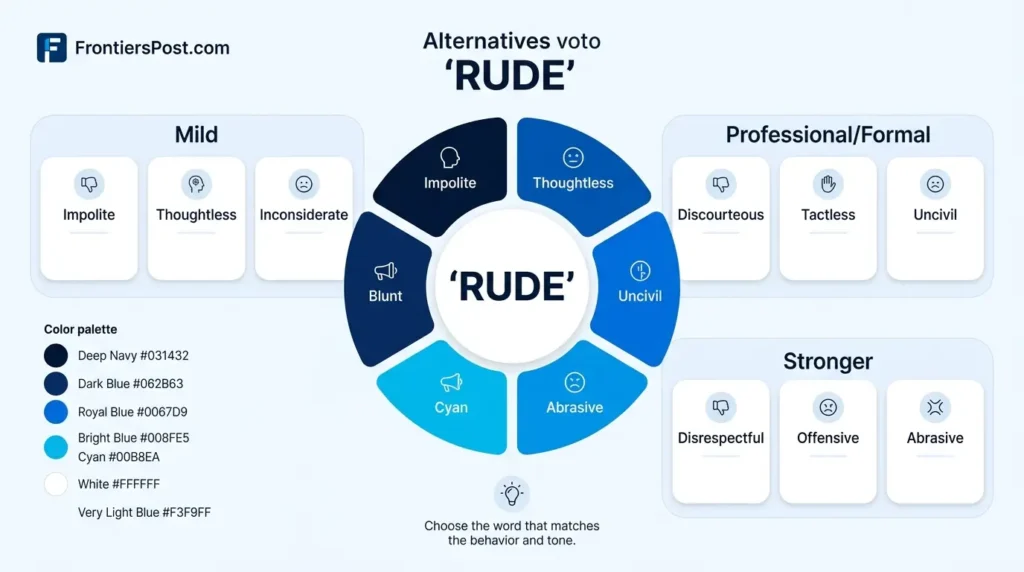
Using different words for “rude” gives you more control over the tone and meaning of your communication. Instead of labeling someone generally, you can describe the specific type of behavior you noticed.
Other alternatives can help you:
- Avoid unnecessary repetition
- Sound more natural in conversation
- Match formal and informal situations
- Make professional communication more tactful
- Describe behavior more precisely
- Express criticism without sounding unnecessarily harsh
For example, saying “Your comment was disrespectful” can communicate a different idea from “Your comment was inconsiderate.” The first focuses on respect, while the second focuses more on thoughtfulness.
10 Best Other Ways to Say “Rude”
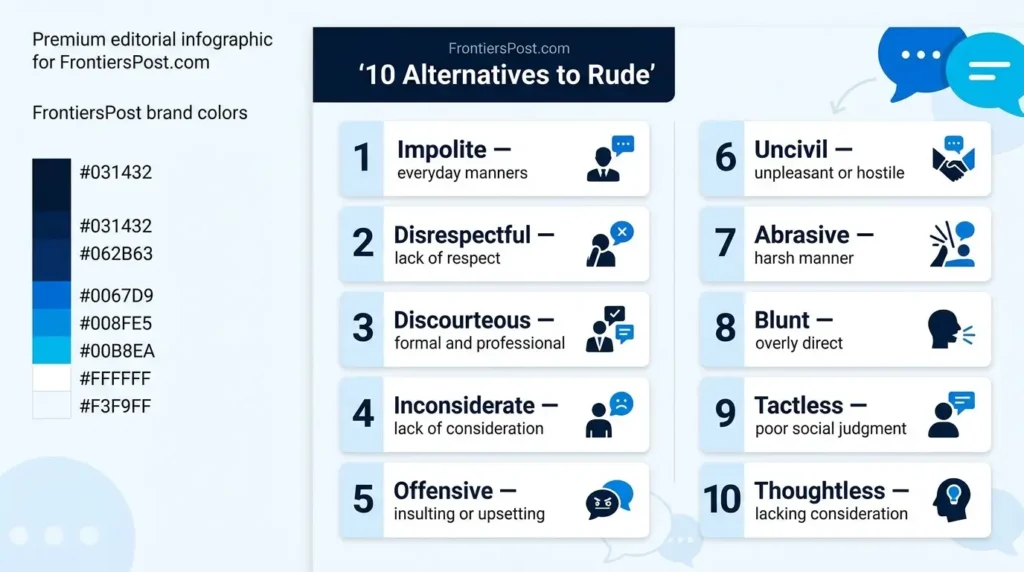
1. Impolite
Meaning
“Impolite” is one of the closest and most natural alternatives to “rude.” It describes behavior that does not follow ordinary standards of good manners or courtesy.
Best For
- Casual
- Friendly
- Polite
- Professional
Example 1
It was impolite to interrupt her while she was explaining the situation.
Example 2
I thought his response was a little impolite, but I decided not to take it personally.
Quick Tip
Use “impolite” when you want a straightforward replacement for “rude” without making the criticism sound especially strong.
2. Disrespectful
Meaning
“Disrespectful” describes behavior that shows a lack of respect toward another person. It is stronger than “impolite” because it suggests that someone crossed a boundary or treated another person poorly.
Best For
- Professional
- Formal
- Serious situations
Example 1
The employee apologized after realizing that his comments were disrespectful.
Example 2
Speaking to a customer in that tone was disrespectful.
Quick Tip
Choose “disrespectful” when the behavior affects someone’s dignity, authority, or personal boundaries.
3. Discourteous
Meaning
“Discourteous” means lacking courtesy or consideration for other people. It is a polished, formal-sounding alternative that works especially well when you want to describe poor manners professionally.
Best For
- Professional
- Formal
- Polite
Example 1
The manager addressed the employee’s discourteous behavior during the meeting.
Example 2
Leaving without thanking your host may be considered discourteous.
Quick Tip
Use “discourteous” when writing a formal complaint, workplace message, or professional explanation.
4. Inconsiderate
Meaning
“Inconsiderate” focuses on a person’s failure to think about how their actions affect others. Someone can be inconsiderate without deliberately trying to offend anyone.
Best For
- Casual
- Friendly
- Polite
- Professional
Example 1
It was inconsiderate of him to cancel the plans without telling anyone.
Example 2
Playing loud music late at night is inconsiderate to the neighbors.
Quick Tip
Use this word when the main problem is a lack of thoughtfulness rather than intentional disrespect.
5. Offensive
Meaning
“Offensive” describes words or actions that cause someone to feel insulted, upset, or deeply uncomfortable. It is stronger than many ordinary alternatives to “rude.”
Best For
- Formal
- Professional
- Serious situations
Example 1
Several employees found the remark offensive.
Example 2
The advertisement was criticized for using offensive language.
Quick Tip
Use “offensive” when the behavior goes beyond poor manners and causes genuine insult or discomfort.
6. Uncivil
Meaning
“Uncivil” describes behavior that is unpleasant, hostile, or lacking in basic courtesy. It can be useful when talking about arguments, public interactions, or conversations that have become unnecessarily harsh.
Best For
- Formal
- Professional
- Serious situations
Example 1
The discussion became uncivil after both sides stopped listening to each other.
Example 2
The customer complained about the employee’s uncivil response.
Quick Tip
“Uncivil” works well when describing behavior that damages the quality of a conversation or public interaction.
7. Abrasive
Meaning
“Abrasive” describes a person or communication style that feels harsh, blunt, or unpleasant. It often refers to someone’s overall manner rather than one isolated act.
Best For
- Professional
- Formal
- Casual
Example 1
His abrasive communication style made it difficult for the team to work together.
Example 2
She has a direct personality, although her delivery can sometimes seem abrasive.
Quick Tip
Use “abrasive” when the problem is someone’s consistently harsh manner or communication style.
8. Blunt
Meaning
“Blunt” describes someone who speaks very directly without softening their words. It does not always mean rude, but a blunt comment can come across as rude depending on the situation.
Best For
- Casual
- Professional
- Friendly
Example 1
He was blunt about the problems he saw in the proposal.
Example 2
I appreciate your honesty, but that answer sounded a little blunt.
Quick Tip
Use “blunt” when you want to describe directness without automatically accusing someone of intentionally behaving badly.
9. Tactless
Meaning
“Tactless” describes behavior or comments that show poor judgment about what is appropriate to say or do. It often suggests that someone failed to consider another person’s feelings.
Best For
- Formal
- Professional
- Polite
Example 1
Asking about her salary during dinner was a tactless question.
Example 2
His tactless comment made an already difficult conversation even more uncomfortable.
Quick Tip
Choose “tactless” when someone says or does the wrong thing at the wrong time without necessarily intending to hurt anyone.
10. Thoughtless
Meaning
“Thoughtless” can describe behavior that shows little consideration for other people. It is often softer than “rude,” making it useful when you want to criticize an action without sounding overly confrontational.
Best For
- Casual
- Friendly
- Warm
- Polite
Example 1
It was thoughtless of me to forget that she was waiting for a response.
Example 2
His thoughtless remark hurt her feelings even though he did not mean to offend her.
Quick Tip
Use “thoughtless” when you want to emphasize a lack of consideration rather than deliberate bad manners.
Comparison Table
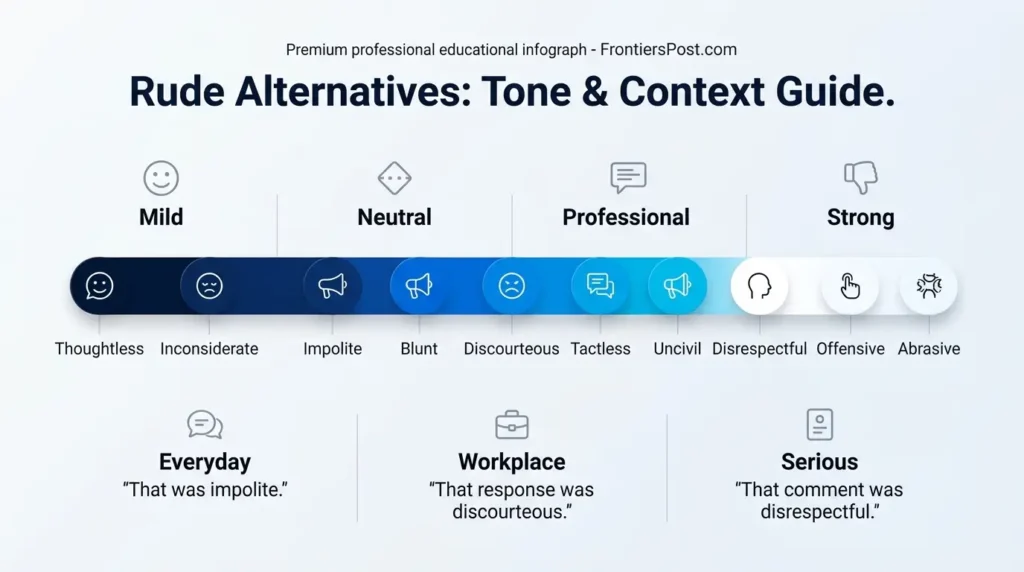
| Alternative | Best Used In | Tone |
| Impolite | Everyday conversation, workplace | Neutral |
| Disrespectful | Serious or sensitive situations | Strong |
| Discourteous | Professional and formal communication | Formal |
| Inconsiderate | Personal and everyday situations | Mild |
| Offensive | Serious complaints or harmful remarks | Strong |
| Uncivil | Arguments and public interactions | Formal |
| Abrasive | Workplace and communication styles | Direct |
| Blunt | Conversations and feedback | Neutral |
| Tactless | Sensitive or awkward situations | Polite |
| Thoughtless | Personal relationships and everyday situations | Mild |
Common Mistakes
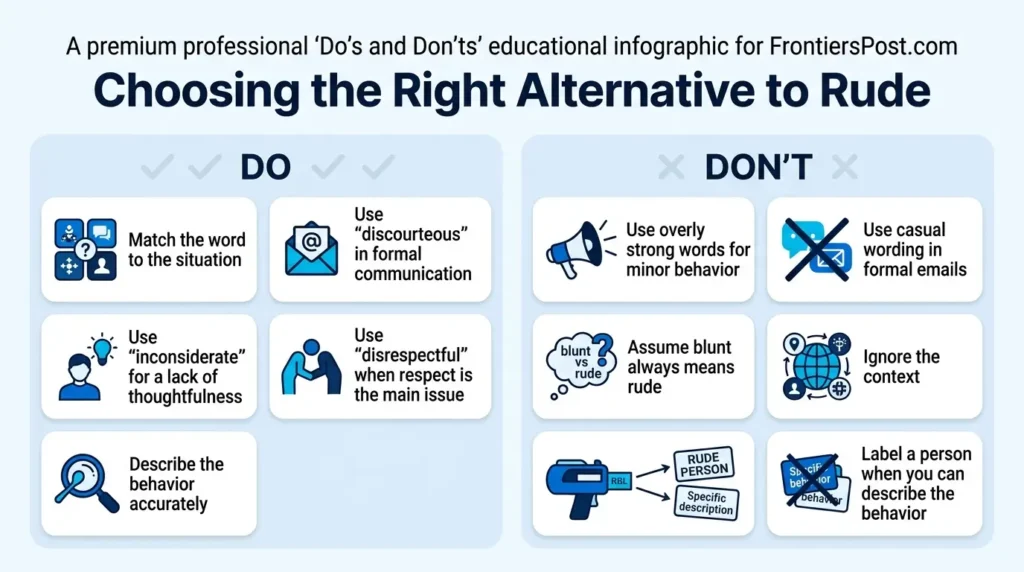
1. Using a casual phrase in a professional email
Calling a colleague’s behavior “rude” may sound too blunt in certain workplace situations. Words such as “discourteous,” “tactless,” or “unprofessional” can communicate the concern more constructively.
2. Choosing a word that is too strong
Not every unpleasant interaction is offensive or disrespectful. If someone simply forgot to respond or interrupted briefly, “inconsiderate” or “impolite” may be more accurate.
3. Assuming “blunt” always means rude
A person can be blunt while still being respectful. “Blunt” describes direct communication, whereas “rude” usually carries a clearer negative judgment.
4. Ignoring the context
The same behavior can have different meanings depending on the situation. A direct comment between close friends may feel normal, while the same comment in a workplace meeting may seem inappropriate.
5. Sounding more critical than necessary
If your goal is to solve a problem, overly harsh language can make the situation worse. When possible, describe the behavior rather than attacking the person.
Frequently Asked Questions
What is a polite way to say “rude”?
“Impolite” is one of the simplest polite alternatives to “rude.” Depending on the situation, you can also use “discourteous,” “inconsiderate,” or “tactless.” These words let you identify a problem with someone’s behavior while sounding more measured and specific.
What is a professional word for “rude”?
“Discourteous” is a strong professional alternative to “rude.” In workplace communication, “unprofessional,” “disrespectful,” or “inconsiderate” may also work depending on what happened. Choose the word that describes the actual behavior rather than using a stronger term than necessary.
What is another way to say someone is rude?
You can say someone is impolite, discourteous, disrespectful, inconsiderate, tactless, abrasive, or uncivil. The best option depends on the behavior. For example, “tactless” fits an inappropriate comment, while “disrespectful” is better when someone treats another person without proper respect.
What is a softer word for rude?
“Thoughtless” or “inconsiderate” can sound softer than “rude.” They focus on a person’s lack of consideration rather than directly judging their manners. “Blunt” can also be useful when the issue is overly direct communication rather than deliberate disrespect.
How can I say “that was rude” politely?
Instead of saying “That was rude,” you could say “That came across as a little harsh,” “That seemed a bit inconsiderate,” or “I found that comment discourteous.” These options communicate your concern while leaving room for the other person to explain their intention.
Is “disrespectful” stronger than “rude”?
Yes, “disrespectful” often sounds stronger than “rude.” “Rude” can describe ordinary poor manners, such as interrupting someone, while “disrespectful” suggests that a person failed to show appropriate respect toward someone or something.
Is “discourteous” the same as “rude”?
“Discourteous” and “rude” have very similar meanings, but they differ slightly in tone. “Rude” is common and conversational, while “discourteous” sounds more formal and measured. That makes “discourteous” particularly useful in professional writing, complaints, and formal discussions.
What word describes someone who is rude without meaning to be?
“Tactless” or “thoughtless” may fit someone who behaves poorly without intending to offend. “Tactless” emphasizes poor judgment in a social situation, while “thoughtless” focuses on failing to consider another person’s feelings or needs.
Conclusion
There are many effective ways to say “rude,” and the best choice depends on what you want to communicate. “Impolite” is a simple everyday substitute, while “discourteous” works particularly well in professional or formal settings.
When someone shows a lack of respect, “disrespectful” is more precise. If the problem involves poor judgment, “tactless” may be better, while “inconsiderate” and “thoughtless” are useful for softer criticism.
Before replacing “rude,” consider the behavior, your relationship with the person, and the tone you want to create. The most effective alternative is the one that describes the behavior accurately and communicates your point respectfully. For a clearer understanding of the word, you can also review the definition of rude.

Sarah Mitchell is a Senior English Editor at FrontiersPost, specializing in English usage, vocabulary, word choice, grammar, and effective communication. She focuses on helping readers understand subtle differences between commonly confused words, phrases, and expressions and use them naturally in everyday, professional, and academic writing.
At FrontiersPost, Sarah researches, writes, and edits educational content with an emphasis on clarity, accuracy, and practical examples. She works closely with the editorial team to ensure that articles are easy to understand while maintaining appropriate context, meaning, and usage.
Her editorial interests include English vocabulary, synonyms, phrasing, professional communication, and the practical nuances that can make written communication more precise and effective.