

Another way to say “save the date” includes “mark your calendar,” “keep the date open,” “please reserve the date,” and “plan to join us.” These phrases help you remind guests about an upcoming event before sending a formal invitation. Choose a friendly, professional, or formal expression based on the event and your relationship with the recipient.
Key Takeaways
- “Mark your calendar” is a natural, widely used alternative to “save the date.”
- “Please reserve the date” works well for formal events and professional invitations.
- “Keep the date open” is friendly and conversational.
- Wedding announcements often benefit from warm, personal wording.
- Include the event date and explain that a formal invitation will follow when appropriate.
“Save the date” is a familiar phrase in American English, especially when announcing weddings, parties, conferences, and other important events. However, you can use several alternatives to make your message sound more personal, professional, or appropriate for the occasion.
The best expression depends on your audience, the type of event, and whether you are sending a casual text, a business email, or a printed announcement. Below are ten useful alternatives, complete with meanings, examples, and tips for choosing the right wording.
What Does “Another Way to Say Save the Date” Mean?
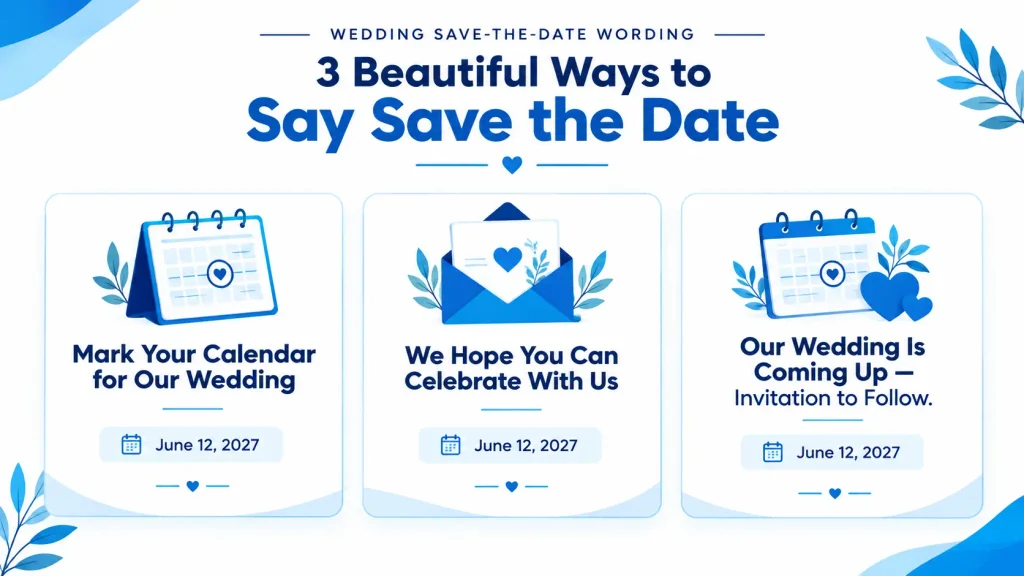
The phrase “another way to say save the date” refers to alternative expressions that communicate the same basic message: remember an upcoming event and keep that date available.
People commonly use “save the date” before sending a complete invitation. For example, a couple might announce their wedding date months in advance so guests can arrange travel, request time off, or avoid scheduling other commitments.
The phrase also appears in corporate announcements, graduation celebrations, fundraisers, birthday parties, and networking events. Although “save the date” is widely understood, alternatives can help you adjust the tone to suit the situation.
Why Use Other Ways to Say “Save the Date”?
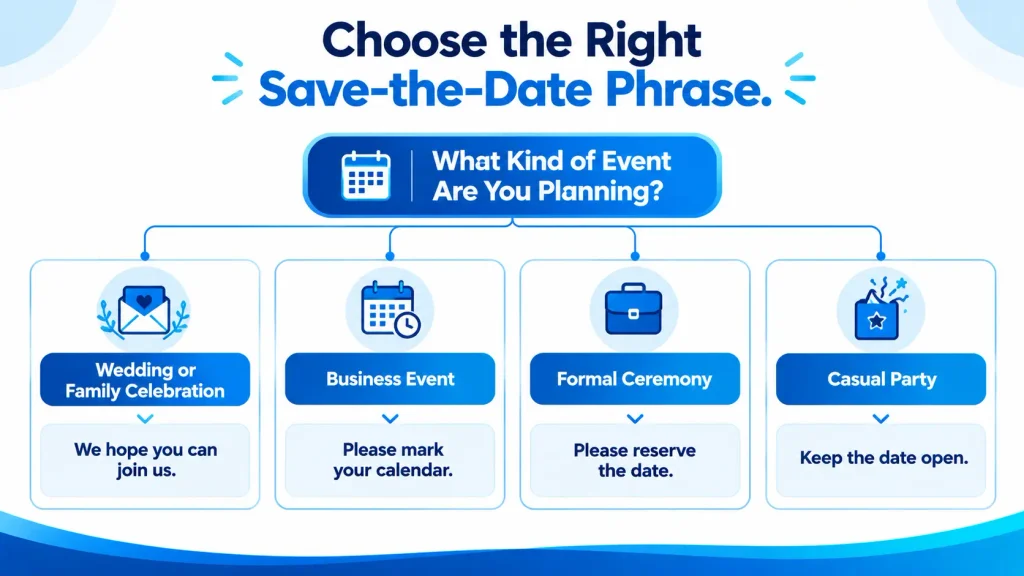
Choosing a different expression can make your invitation clearer and more natural. It also helps you avoid repeating the same wording across emails, announcements, and messages.
Consider using an alternative when you want to:
- Sound more professional: Choose wording that suits a company event or formal announcement.
- Create a personal connection: Use warm language for weddings and family celebrations.
- Encourage attendance: Make the invitation sound welcoming and engaging.
- Clarify the request: Tell recipients to keep a specific day available.
- Match the communication channel: Use casual expressions in texts and polished language in formal invitations.
The goal is not simply to replace words. Choose a phrase that communicates the importance of the event while making the recipient feel included.
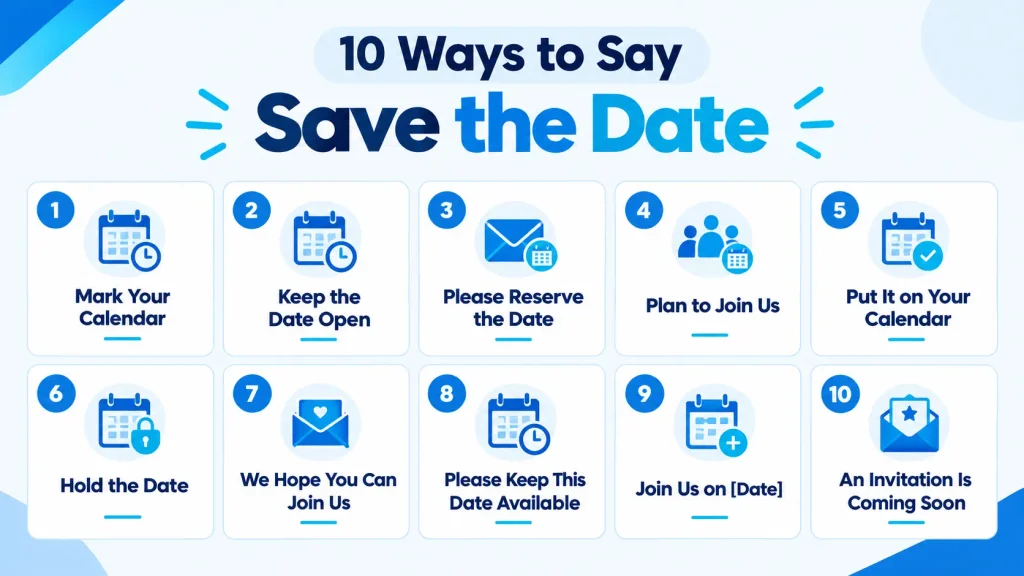
10 Best Other Ways to Say “Save the Date”
1. Mark Your Calendar
Meaning
“Mark your calendar” asks someone to record an important date so they remember the event. It is a natural American English expression that works in both personal and professional communication.
Best For
- Professional
- Friendly
- Casual
- Polite
Example 1
Mark your calendar for our annual company picnic on September 18.
Example 2
Please mark your calendar for Emma and Daniel’s wedding next spring.
Quick Tip
Use this phrase when you want a clear, direct reminder without making the message sound overly formal.
2. Keep the Date Open
Meaning
“Keep the date open” asks someone to avoid making other plans for a particular day. It works especially well when you have announced an event but have not shared every detail.
Best For
- Casual
- Friendly
- Warm
Example 1
Keep the date open for my graduation celebration on June 12.
Example 2
We are planning a family reunion in October, so please keep that Saturday open.
Quick Tip
Use this expression when you expect recipients to attend but will provide the full invitation later.
3. Please Reserve the Date
Meaning
“Please reserve the date” communicates a polite request to keep a day available. It has a more formal tone than “mark your calendar,” making it suitable for business functions and carefully worded announcements.
Best For
- Formal
- Professional
- Polite
Example 1
Please reserve the date for our annual leadership conference on November 6.
Example 2
We kindly ask you to reserve the date for the foundation’s fundraising gala.
Quick Tip
This phrase suits formal announcements, but “please mark your calendar” may sound more natural in everyday business emails.
4. Plan to Join Us
Meaning
“Plan to join us” invites recipients to anticipate attending an event. Rather than focusing on remembering a date, it emphasizes participation and creates a welcoming tone.
Best For
- Friendly
- Warm
- Professional
- Polite
Example 1
Plan to join us on May 23 as we celebrate our store’s grand opening.
Example 2
We hope you will plan to join us for an evening honoring our graduating seniors.
Quick Tip
Use this phrase when you want to build excitement or encourage attendance. It works best when the date and event details are clear.
5. Put It on Your Calendar
Meaning
“Put it on your calendar” is a straightforward way to remind someone to record an upcoming event. It sounds conversational and works well in emails, group chats, and workplace messages.
Best For
- Casual
- Friendly
- Professional
Example 1
Put it on your calendar: our next team workshop is scheduled for August 14.
Example 2
The neighborhood block party is happening on July 20, so put it on your calendar.
Quick Tip
This phrase is particularly useful for recurring meetings, community activities, and informal gatherings.
6. Hold the Date
Meaning
“Hold the date” asks recipients to keep a particular day available for an upcoming occasion. It is concise and slightly formal, making it a useful choice for event announcements and invitation materials.
Best For
- Formal
- Professional
- Polite
Example 1
Hold the date for our industry networking reception on October 9.
Example 2
Kindly hold the date for the museum’s annual benefit dinner.
Quick Tip
This expression works well in short announcements, but “save the date” remains more familiar for many wedding guests.
7. We Hope You Can Join Us
Meaning
“We hope you can join us” expresses a warm desire for someone to attend an event. It feels personal rather than instructional and helps recipients feel welcome.
Best For
- Warm
- Friendly
- Polite
Example 1
We hope you can join us on December 5 for our annual holiday gathering.
Example 2
Our daughter’s first birthday party will be on April 11, and we hope you can join us.
Quick Tip
Use this wording for family celebrations, social events, and invitations where maintaining a personal connection matters.
8. Please Keep This Date Available
Meaning
“Please keep this date available” clearly asks recipients not to schedule other commitments for the specified day. It is more explicit than some alternatives and works well when attendance planning matters.
Best For
- Professional
- Formal
- Polite
Example 1
Please keep this date available for the regional sales meeting on February 17.
Example 2
We ask all committee members to keep this date available for the planning session.
Quick Tip
This phrase is helpful when recipients need to coordinate schedules, especially for work meetings or group activities.
9. Join Us on [Date]
Meaning
“Join us on [date]” is a direct, inviting expression that puts the event itself at the center of the message. It works particularly well when the date is confirmed and you want the announcement to feel welcoming.
Best For
- Friendly
- Warm
- Professional
- Casual
Example 1
Join us on September 7 for an afternoon of food, music, and community activities.
Example 2
Join us on March 21 as we celebrate ten years of serving our customers.
Quick Tip
Replace the bracketed date with the actual day. Include the event name or purpose so recipients immediately understand the invitation.
10. An Invitation Is Coming Soon
Meaning
“An invitation is coming soon” tells recipients to expect a more detailed invitation later. It works when you want to announce an event early without sharing all the logistics at once.
Best For
- Warm
- Friendly
- Professional
Example 1
Our wedding will take place on October 17, 2027. An invitation is coming soon!
Example 2
We are hosting our annual customer appreciation dinner this winter; an invitation is coming soon.
Quick Tip
Pair this phrase with the confirmed date and event name. By itself, it does not directly ask recipients to reserve the day, so add a reminder if needed.
Comparison Table

| Alternative | Best Used In | Tone |
|---|---|---|
| Mark your calendar | General announcements and emails | Clear, friendly |
| Keep the date open | Casual gatherings and early announcements | Relaxed, personal |
| Please reserve the date | Formal events and business functions | Polite, formal |
| Plan to join us | Celebrations and promotional invitations | Welcoming |
| Put it on your calendar | Texts, team messages, and reminders | Conversational |
| Hold the date | Short formal announcements | Concise, polished |
| We hope you can join us | Family occasions and social invitations | Warm, personal |
| Please keep this date available | Meetings and schedule coordination | Direct, professional |
| Join us on [Date] | Event announcements and invitations | Inviting, confident |
| An invitation is coming soon | Preliminary event announcements | Anticipatory, friendly |
Common Mistakes When Using Alternatives to “Save the Date”
1. Using Casual Language for Every Event
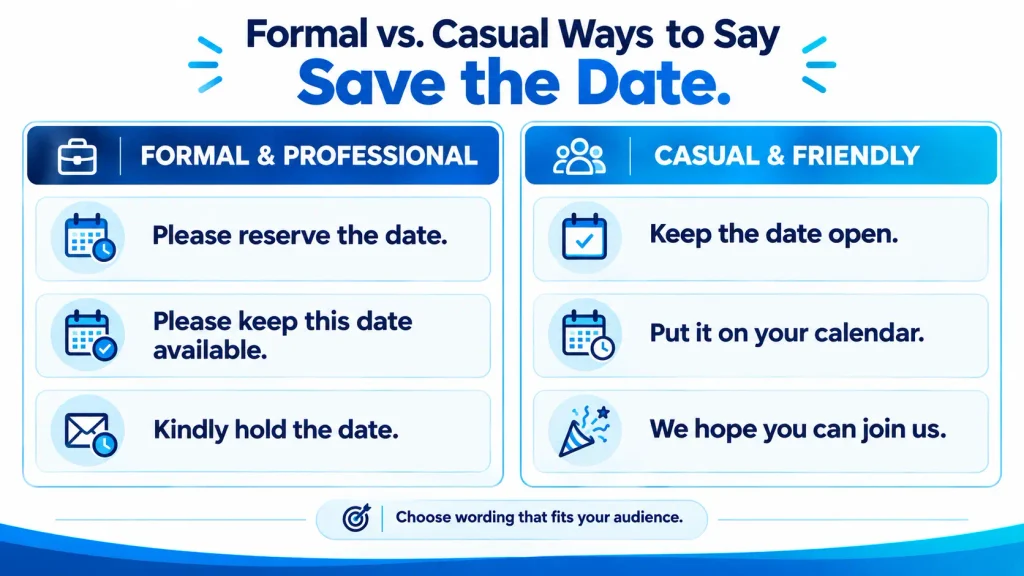
Expressions such as “keep the date open” work well with friends but may feel too informal for a formal conference or fundraising gala. Match the wording to the event’s purpose and audience.
2. Making the Message Too Formal
Phrases such as “please reserve the date” can sound stiff in a quick text to family members. Choose everyday language when communicating with people you know well.
3. Forgetting to Include the Actual Date
An announcement is less useful if recipients cannot identify the day they need to remember. Include the weekday, month, and day when possible, and add the year if the event is far in the future.
4. Suggesting That Attendance Is Confirmed
Asking someone to save a date does not necessarily mean they have accepted an invitation. Avoid language that implies a firm commitment unless the recipient has already confirmed attendance.
5. Leaving Out Important Context
A date without an event name may confuse recipients, especially when they receive several announcements. Explain whether you are planning a wedding, business meeting, birthday celebration, or another occasion.
Frequently Asked Questions
1. What is another way to say “save the date”?
“Mark your calendar,” “keep the date open,” and “please reserve the date” are useful alternatives. Choose “mark your calendar” for a general reminder, “keep the date open” for casual announcements, and “please reserve the date” for formal occasions.
2. What is a more professional way to say “save the date”?
“Please mark your calendar for [date]” is a polished, professional choice. You can also write “Please keep this date available for our upcoming meeting.” Both expressions communicate the request clearly without sounding too stiff or overly familiar.
3. What is a formal way to say “save the date”?
“Please reserve the date” and “kindly hold the date” are suitable for formal announcements. They work well for conferences, award ceremonies, fundraising events, and other occasions that require a polished tone. Include the event name and confirmed date to make the announcement complete.
4. How do you say “save the date” for a wedding?
For a wedding, you can write, “Please mark your calendar for our wedding on [date]” or “We hope you can celebrate with us on [date].” Add a note that a formal invitation will follow if you are sharing the date before sending complete wedding details.
5. Can I use “mark your calendar” instead of “save the date”?
Yes. “Mark your calendar” is a natural alternative that works for weddings, birthdays, business events, and community gatherings. Both expressions encourage recipients to remember an upcoming occasion, although “save the date” is especially associated with preliminary wedding announcements.
6. What is a casual way to say “save the date”?
Try “Keep that day free,” “put it on your calendar,” or “keep the date open.” These expressions sound relaxed and conversational. They work well in text messages, family group chats, and informal invitations when you want people to avoid scheduling other plans.
7. Should a save-the-date message include the event location?
It is helpful to include the location when it is confirmed, especially if guests may need to travel. For an early announcement, the date and general location may be enough. You can share the exact venue, schedule, dress code, and RSVP instructions in the formal invitation.
8. Is “save the date” the same as an invitation?
No. A save-the-date announcement gives recipients early notice of an upcoming event, while a formal invitation usually provides additional details and explains how to respond. For weddings, save-the-dates are generally sent before invitations so guests have time to make arrangements.
You may also find these guides useful: Another Way to Say “Sick” in a More Polite and Appropriate Way, Another Way to Say So Much and Another Way to Say Sounds Great.
Conclusion
Choosing another way to say “save the date” helps you create an announcement that fits your event and audience. “Mark your calendar” is a versatile choice for everyday and professional communication, while “please reserve the date” suits formal occasions. For friends and family, “keep the date open” and “we hope you can join us” offer a warmer, more personal touch.
Before sending your announcement, confirm the date and include enough information for recipients to understand the occasion. If you are sharing the date before finalizing the venue or schedule, explain that a complete invitation will follow. Understanding the meaning of invitation can also help you distinguish an early announcement from a formal request to attend.
The most effective wording is clear, considerate, and appropriate for the relationship. Choose a phrase that helps people remember the occasion while making them feel welcome, and your announcement will serve its purpose without unnecessary formality.

The FrontiersPost editorial team writes and reviews every guide to word and phrase alternatives, with clear meanings, tone notes and example sentences for everyday, academic and professional English.




