
Another way to say sick includes phrases such as ill, unwell, not feeling well, under the weather, feeling poorly, and not in good health. The best choice depends on the situation. For professional communication, “not feeling well” or “under the weather” sounds natural and polite, while “ill” is more formal.
Key Takeaways
- “Not feeling well” is one of the safest alternatives to “sick.”
- “Ill” works well in formal and professional situations.
- “Under the weather” is friendly and conversational.
- “Feeling poorly” can describe mild or general sickness.
- Choose your wording based on the situation, audience, and severity of the illness.
Finding another way to say “sick” can help you communicate more naturally and clearly. The word works in many situations, but it may sound too general, casual, or repetitive depending on what you want to say.
Whether you are writing an email to your manager, texting a friend, explaining how you feel, or describing someone’s health, the right alternative can make your message sound more appropriate.
What Does “Another Way to Say Sick” Mean?
“Another way to say sick” means looking for a different word or phrase that communicates illness, poor health, or not feeling well. People often search for alternatives because they want their writing or conversation to sound more natural.
For example, instead of saying, “I am sick today,” you could say, “I’m not feeling well today.” In a professional setting, you might say, “I’m feeling unwell and need to take the day off.”
These alternatives are commonly used in everyday conversations, workplace messages, emails, school communication, and personal writing.
Why Use Other Ways to Say “Sick”?
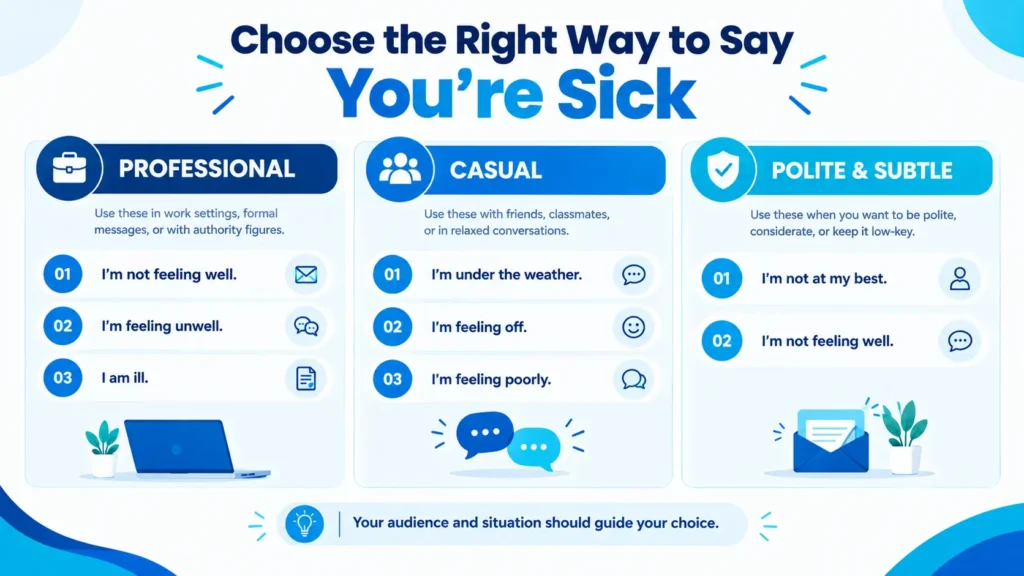
Using different expressions can make your communication clearer and better suited to the situation.
You may want an alternative to:
- Avoid repeating the word “sick.”
- Sound more natural in everyday conversation.
- Use more professional language at work.
- Describe mild illness without sounding dramatic.
- Communicate your condition politely.
- Match the tone of a text, email, or formal message.
The key is choosing a phrase that fits both the situation and the person you are speaking to.
10 Best Other Ways to Say “Sick”

1. Not Feeling Well
Meaning
“Not feeling well” is a polite and natural way to say that you are sick or experiencing health problems. It does not specify the illness, so it works when you prefer to keep your health details private.
Best For
- Professional
- Polite
- Casual
- Friendly
Example 1
I’m not feeling well today, so I’ll need to stay home and rest.
Example 2
She wasn’t feeling well after lunch and decided to leave early.
Quick Tip
Use this phrase when you want to sound polite without giving specific medical details.
2. Ill
Meaning
“Ill” is a more formal alternative to “sick.” It commonly refers to someone who is experiencing an illness or health problem.
Best For
- Formal
- Professional
- Polite
Example 1
He was too ill to attend the meeting this morning.
Example 2
The employee reported that she had been ill for several days.
Quick Tip
Choose “ill” when you want a straightforward, professional tone.
3. Unwell
Meaning
“Unwell” means that someone is not in good health or does not feel physically well. It sounds polite and slightly more formal than “not feeling well.”
Best For
- Professional
- Formal
- Polite
Example 1
I’m feeling unwell and would like to take the afternoon off.
Example 2
The patient became unwell during the afternoon.
Quick Tip
“Unwell” is especially useful in workplace messages when you want to sound professional without oversharing.
4. Under the Weather
Meaning
“Under the weather” is a common American English idiom meaning that someone feels sick or slightly ill. It usually suggests a mild illness rather than a serious medical condition.
Best For
- Casual
- Friendly
- Warm
Example 1
I’ve been feeling a little under the weather since yesterday.
Example 2
Tom is under the weather, so he’s going to skip dinner tonight.
Quick Tip
This expression is best for casual conversations rather than formal medical or business writing.
5. Feeling Poorly
Meaning
“Feeling poorly” means feeling sick, weak, or generally unwell. It can describe someone who does not feel physically normal without identifying a specific illness.
Best For
- Casual
- Friendly
- Polite
Example 1
I’m feeling poorly today, so I’m going to get some extra rest.
Example 2
She said she was feeling poorly after a long day at work.
Quick Tip
Use this phrase when describing a general feeling of sickness rather than a specific diagnosis.
6. Not in Good Health
Meaning
“Not in good health” is a neutral expression that indicates someone has health problems. It can refer to an ongoing condition rather than a temporary illness.
Best For
- Formal
- Professional
- Polite
Example 1
His grandmother has not been in good health recently.
Example 2
The organization provides additional support for employees who are not in good health.
Quick Tip
This phrase is better for discussing general or ongoing health concerns than a one-day illness.
7. Feeling Off
Meaning
“Feeling off” is an informal way to say that something does not feel right physically or mentally. It can describe mild symptoms when you are not sure exactly what is wrong.
Best For
- Casual
- Friendly
Example 1
I’m feeling a little off today, so I might go to bed early.
Example 2
She felt off all morning but couldn’t figure out why.
Quick Tip
Use “feeling off” when the problem is mild, unclear, or difficult to describe.
8. Feeling Under the Weather
Meaning
“Feeling under the weather” is a slightly fuller version of the common idiom “under the weather.” It means that someone feels sick, tired, or generally below their normal level of health.
Best For
- Casual
- Friendly
- Warm
Example 1
I’m feeling under the weather, so I’ll probably stay home tonight.
Example 2
Jake has been feeling under the weather since the weekend.
Quick Tip
This phrase sounds natural in texts and conversations but is less suitable for formal workplace documents.
9. Not at My Best
Meaning
“Not at my best” is a subtle way to communicate that you are not feeling physically well or performing normally. It is useful when you do not want to directly say that you are sick.
Best For
- Polite
- Professional
- Friendly
Example 1
I’m not at my best today, so I may need some extra time to finish this.
Example 2
She wasn’t at her best during the presentation because she had a headache.
Quick Tip
Use this expression when you want to acknowledge that you are struggling without focusing directly on your illness.
10. Feeling Unwell
Meaning
“Feeling unwell” is a clear and polite expression for being sick or experiencing physical discomfort. It works particularly well when speaking to coworkers, teachers, customers, or other people in a professional setting.
Best For
- Professional
- Formal
- Polite
Example 1
I’m feeling unwell today and won’t be able to come into the office.
Example 2
She started feeling unwell during the flight.
Quick Tip
Use “feeling unwell” when you want a professional alternative that is still easy to understand.
Comparison Table
| Alternative | Best Used In | Tone |
| Not feeling well | Work, everyday conversations | Polite, natural |
| Ill | Formal writing, professional settings | Formal |
| Unwell | Workplace, formal communication | Professional |
| Under the weather | Conversations, texts | Casual |
| Feeling poorly | Everyday conversations | Friendly |
| Not in good health | General health discussions | Formal, neutral |
| Feeling off | Casual conversations | Informal |
| Feeling under the weather | Texts, personal conversations | Casual, warm |
| Not at my best | Work and everyday situations | Polite, subtle |
| Feeling unwell | Emails, work, everyday situations | Professional, polite |
Common Mistakes
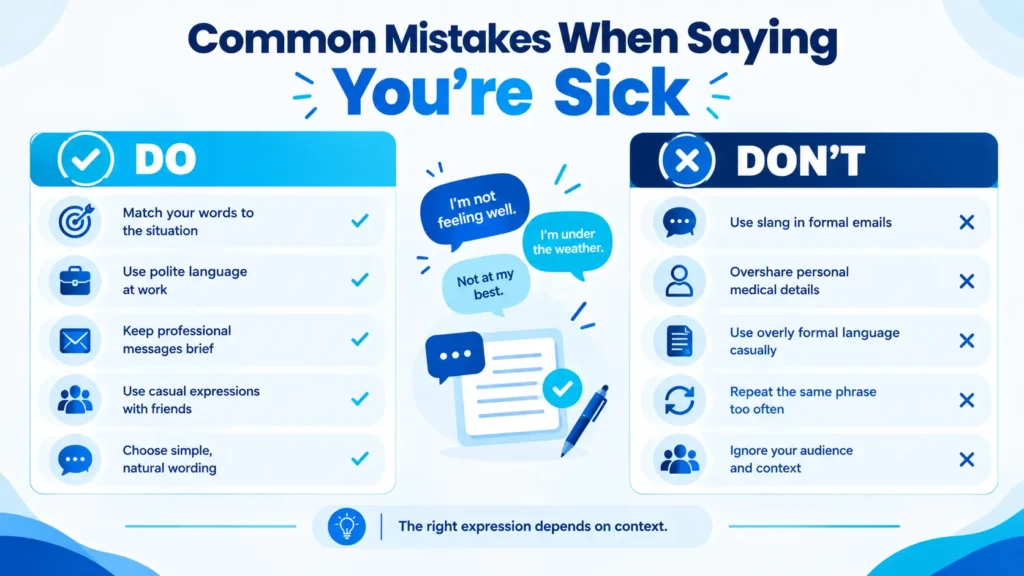
1. Using Casual Phrases in Professional Emails
Expressions such as “feeling off” can sound too informal for certain workplace messages. When writing to a manager or client, “not feeling well” or “feeling unwell” is usually safer.
2. Choosing Overly Formal Language
You do not need to say “not in good health” when you simply have a mild cold. Formal wording can sound unnatural when the situation is casual.
3. Repeating the Same Phrase
Using “sick” several times in one paragraph can make your writing repetitive. Varying your wording can make your communication smoother.
4. Forgetting the Context
An expression that works with a friend may not work with your employer. Always consider who will read or hear your message before choosing an alternative.
5. Sounding Insincere
Avoid choosing complicated language just to sound professional. Clear phrases such as “I’m not feeling well today” often communicate your message more effectively.
Frequently Asked Questions
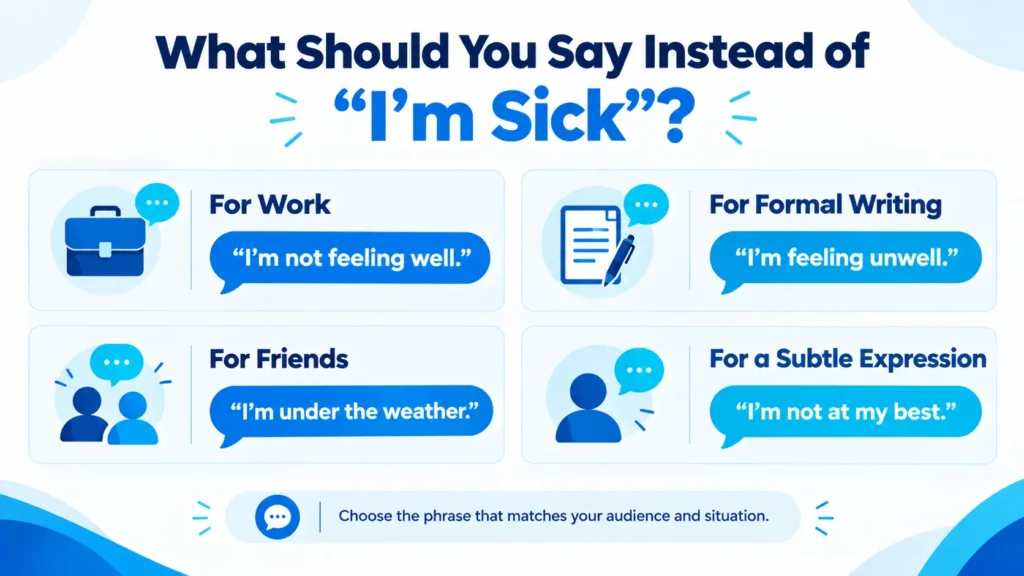
What is a professional way to say “I am sick”?
A professional way to say “I am sick” is “I’m not feeling well” or “I’m feeling unwell.” Both expressions are polite and clear without requiring you to share personal medical information. For a workplace email, you could say, “I’m not feeling well today and need to take the day off.”
What is a nicer way to say “I’m sick”?
A softer way to say “I’m sick” is “I’m not feeling well.” You can also say “I’m feeling a little under the weather” in casual conversation. These phrases sound less direct and can be useful when you want to communicate your condition without making it sound serious.
What is another word for sick?
Common alternatives for “sick” include “ill,” “unwell,” and “poorly.” The best choice depends on the context. “Ill” sounds more formal, while “unwell” is polite and professional. “Feeling poorly” is more conversational and can describe a general feeling of being physically unwell.
How do you say you are sick in a professional email?
You can say, “I’m not feeling well today and won’t be able to work.” Another option is, “I’m feeling unwell and need to take a sick day.” Keep the message brief and professional unless your employer requires additional information.
Is “under the weather” another way to say sick?
Yes. “Under the weather” is a common idiom that means feeling sick or unwell. It usually suggests a mild illness and is most appropriate in casual conversations, texts, and friendly messages. It may sound too informal for some professional or medical situations.
Is “unwell” more professional than “sick”?
“Unwell” generally sounds more polished and formal than “sick,” especially in workplace communication. However, “sick” is still completely normal and widely understood in American English. Choose “unwell” when you want a slightly more professional tone.
What can I say instead of “I’m too sick to work”?
You can say, “I’m not feeling well enough to work today,” or “I’m feeling unwell and need to take the day off.” Both options communicate the situation clearly while maintaining a professional tone.
What is a casual way to say you are sick?
Casual options include “I’m feeling under the weather,” “I’m feeling off,” and “I’m not feeling great.” These expressions work well when texting friends or talking with family. They sound relaxed and do not usually suggest a serious medical problem.
Conclusion
There are many natural ways to say “sick,” and the best choice depends on your audience and situation. For most everyday and professional situations, “not feeling well” is a safe, clear, and polite option. For a clearer understanding of the word itself, you can also review the meaning of “sick” in Merriam-Webster.
If you need a more formal expression, choose “ill,” “unwell,” or “feeling unwell.” For casual conversations with friends and family, “under the weather,” “feeling poorly,” and “feeling off” sound more relaxed.
You also do not always need to directly mention illness. Phrases such as “not at my best” can communicate that you are struggling without giving personal details.
The most important tip is to match your wording to the context. When in doubt, choose simple, natural language that clearly explains how you feel without sharing more information than necessary.

Melody Schaefer is the Founder and Editor-in-Chief of FrontiersPost, where she oversees the publication of clear, useful, and thoughtfully researched content for modern readers. Her editorial focus includes language, communication, vocabulary, writing, and practical topics that help readers understand information with greater clarity and confidence.
At FrontiersPost, Melody works with writers and editors to maintain consistent editorial standards, improve content quality, and ensure that published articles are useful, accessible, and easy to understand. She is particularly interested in clear communication and presenting complex or easily confused topics in a straightforward way.
As Editor-in-Chief, she is also responsible for guiding the site’s editorial direction, reviewing content standards, and helping ensure that articles are regularly maintained and improved as information evolves.