
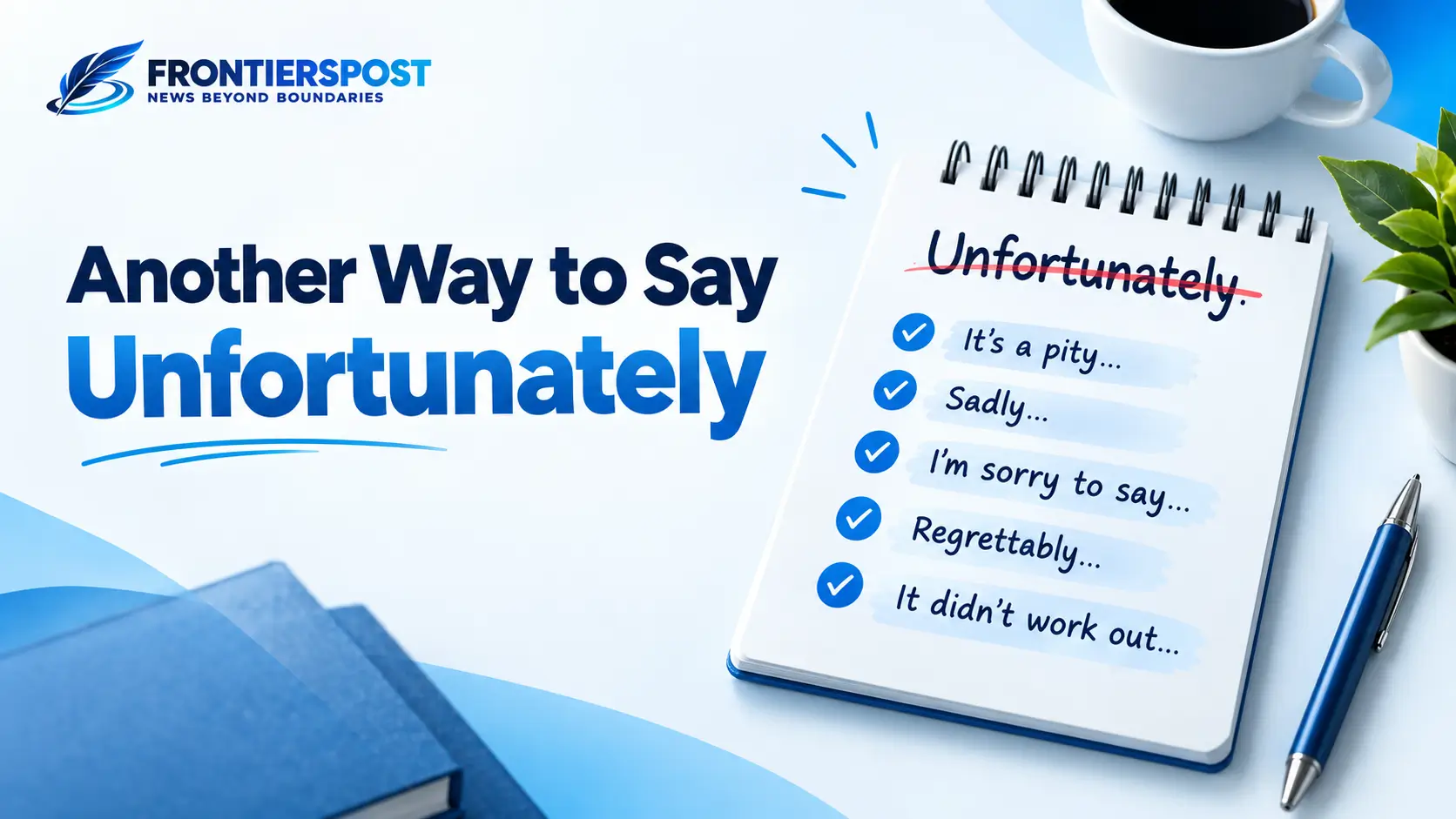
Another way to say unfortunately depends on the situation and tone you want to convey. You can use “regrettably,” “sadly,” “I’m sorry to say,” “unluckily,” or “to my disappointment.” For professional emails, “regrettably” and “I’m afraid” work well, while “sadly” and “as it happens” may suit more personal or casual conversations.
Key Takeaways
- Regrettably is a professional alternative for formal emails and business communication.
- Sadly works well when expressing disappointment, sympathy, or a personal loss.
- I’m afraid is a polite way to introduce disappointing news.
- To my disappointment emphasizes your personal reaction to an unwanted outcome.
- Choose an alternative based on your audience, message, and the level of formality you need.
The word “unfortunately” is useful when you need to share bad news, explain a problem, or express disappointment. However, using it repeatedly in emails, conversations, and professional writing can make your language sound predictable.
Fortunately, English offers several alternatives that help you communicate the same message with greater precision. Whether you are writing a business email, apologizing for a delay, or discussing an unexpected problem, the right phrase can make your message sound more natural and considerate.
What Does “Another Way to Say Unfortunately” Mean?
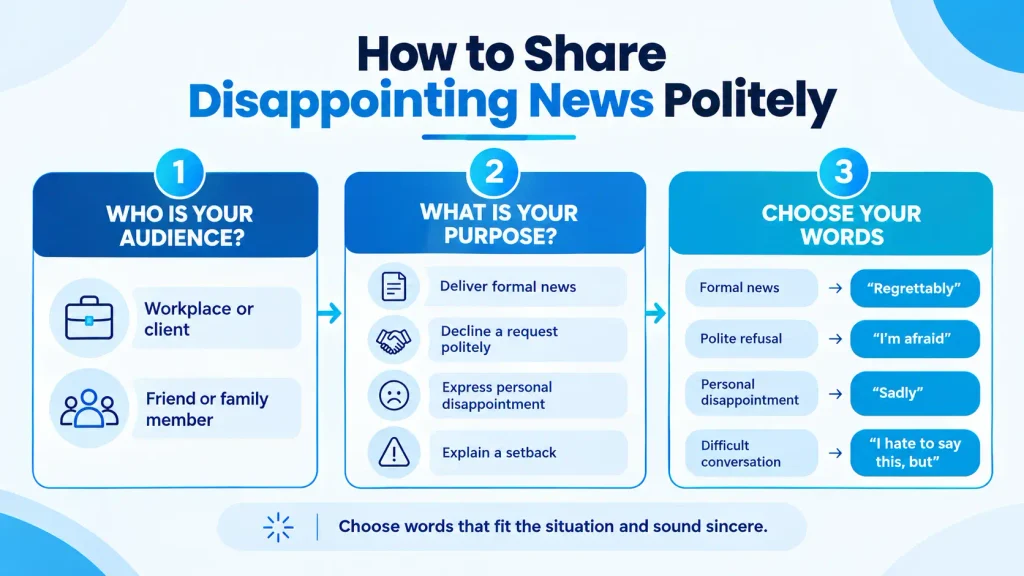
Looking for another way to say unfortunately means finding an alternative expression that communicates disappointment, regret, or an undesirable situation. These expressions can help you introduce negative information without sounding unnecessarily harsh.
People commonly use “unfortunately” when declining invitations, explaining delays, announcing cancellations, or sharing news that someone may not want to hear.
For example, instead of writing, “Unfortunately, we cannot attend the meeting,” you could say, “Regrettably, we cannot attend the meeting.”
The best alternative depends on context. A professional email may call for a formal expression, while a conversation with a friend may sound more natural with a simple phrase such as “Sadly” or “It’s a shame that.”
Why Use Other Ways to Say “Unfortunately”?
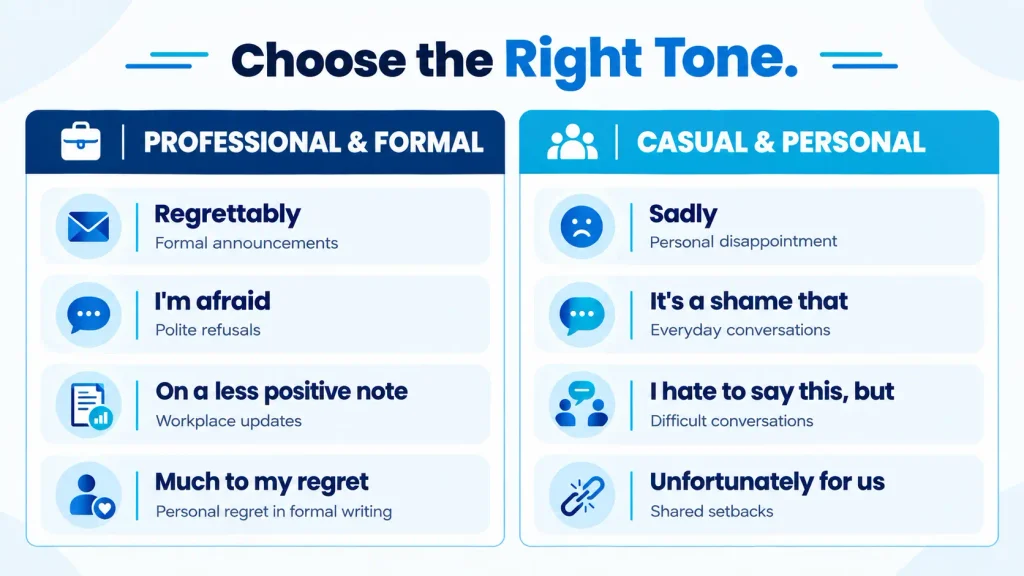
Choosing a different expression helps you communicate with variety and match your tone to the situation. It also allows you to show empathy, professionalism, or personal disappointment more clearly.
Here are the main benefits:
- Avoid repetition: Keep emails and articles from sounding monotonous.
- Sound more natural: Choose expressions that fit everyday American English.
- Communicate professionally: Deliver difficult news in a respectful way.
- Show empathy: Acknowledge another person’s disappointment or difficulty.
- Express your feelings: Make it clear when an outcome personally affects you.
- Improve clarity: Select wording that reflects the seriousness of the situation.
10 Best Other Ways to Say “Unfortunately”
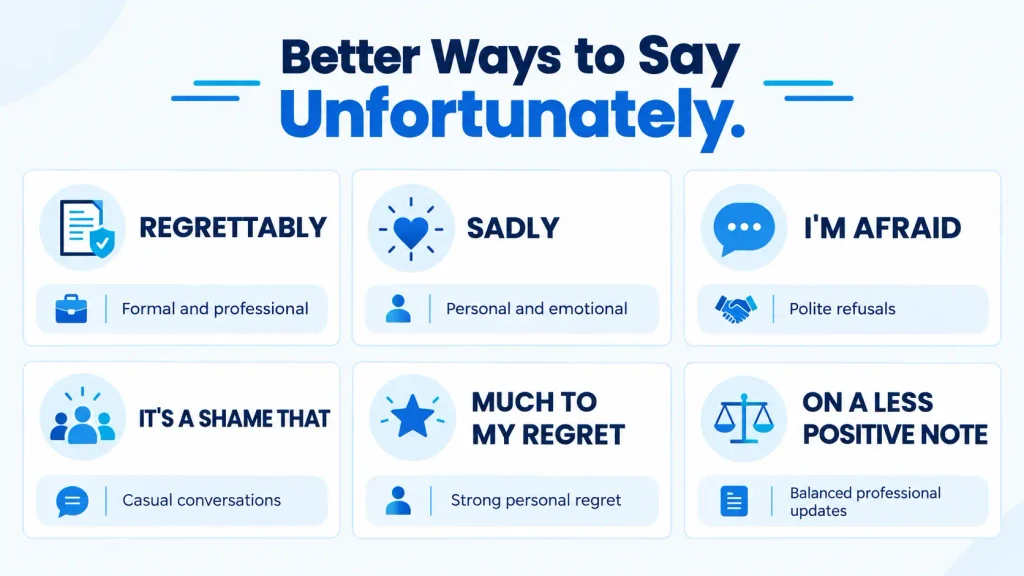
The following alternatives cover professional emails, formal writing, personal conversations, and everyday situations. Each phrase has a slightly different meaning, so consider the context before choosing one.
1. Regrettably
Meaning
“Regrettably” is a formal alternative to “unfortunately” that introduces disappointing news or an undesirable outcome. It sounds professional and measured, making it particularly useful when communicating decisions, delays, or limitations.
Best For
- Professional
- Formal
- Polite
Example 1
Regrettably, we must postpone the product launch until the revised materials are ready.
Example 2
Regrettably, your application does not meet the minimum eligibility requirements for this position.
Quick Tip
Use “regrettably” in formal emails, official announcements, and workplace communication. Avoid using it in relaxed conversations where it may sound overly stiff.
2. Sadly
Meaning
“Sadly” communicates disappointment, sorrow, or sympathy. It often feels more personal and emotional than “unfortunately,” especially when discussing difficult experiences, missed opportunities, or unfortunate events.
Best For
- Casual
- Friendly
- Warm
Example 1
Sadly, our favorite neighborhood bookstore is closing at the end of the month.
Example 2
Sadly, Maya won’t be able to join us for the family reunion this summer.
Quick Tip
Choose “sadly” when the situation has an emotional impact. For neutral business updates, a more measured expression may be appropriate.
3. I’m Afraid
Meaning
“I’m afraid” is a polite expression used to introduce disappointing information, a refusal, or a limitation. In American English, it can soften negative news without requiring a direct apology.
Best For
- Professional
- Polite
- Friendly
Example 1
I’m afraid we won’t be able to extend the registration deadline beyond Friday.
Example 2
I’m afraid the last available appointment this week has already been booked.
Quick Tip
Place “I’m afraid” before the disappointing information. It works well in customer service and professional conversations, but avoid using it when a direct, confident statement is more suitable.
4. Unfortunately for Us
Meaning
“Unfortunately for us” highlights a situation that creates a disadvantage for you or your group. It adds a personal perspective and emphasizes that the outcome is not in your favor.
Best For
- Casual
- Friendly
- Professional
Example 1
Unfortunately for us, the conference room was double-booked, so we had to move our presentation online.
Example 2
Unfortunately for us, the supplier ran out of the materials we needed for the project.
Quick Tip
Use this phrase when explaining a setback that affects your team or group. If the outcome affects someone else instead, choose a phrase that reflects their perspective.
5. To My Disappointment
Meaning
“To my disappointment” directly expresses your personal reaction to an unwanted outcome. Unlike a neutral transition, it emphasizes how a situation affected your expectations or feelings.
Best For
- Formal
- Professional
- Warm
Example 1
To my disappointment, the scholarship program was discontinued before I could submit my application.
Example 2
To my disappointment, the restaurant had removed my favorite dish from its menu.
Quick Tip
Use this expression when your personal feelings matter to the message. In objective business reports, avoid emphasizing personal disappointment unless it is relevant.
6. As It Happens
Meaning
“As it happens” introduces information that may change the situation or explain an unexpected development. It does not always mean “unfortunately,” so use it only when the context supports the intended meaning.
Best For
- Casual
- Friendly
- Professional
Example 1
As it happens, our guest speaker has canceled, so we’ll need to adjust the afternoon schedule.
Example 2
As it happens, the technician who handles these repairs is out of the office today.
Quick Tip
Use “as it happens” to introduce an unexpected fact rather than as a direct substitute for every use of “unfortunately.” It can sound neutral or even positive depending on the context.
7. It’s a Shame That
Meaning
“It’s a shame that” expresses disappointment about a missed opportunity, an undesirable outcome, or an unfortunate circumstance. It sounds conversational and often conveys sympathy without making the situation overly dramatic.
Best For
- Casual
- Friendly
- Warm
Example 1
It’s a shame that the outdoor concert was canceled just as the weather started to improve.
Example 2
It’s a shame that you couldn’t attend the workshop because the speakers were excellent.
Quick Tip
Use this expression in personal conversations and informal messages. In formal correspondence, “regrettably” may be a better choice.
8. Much to My Regret
Meaning
“Much to my regret” expresses strong personal regret about something that happened or a decision you had to make. It is more formal and emphatic than simply saying “unfortunately.”
Best For
- Formal
- Professional
- Polite
Example 1
Much to my regret, I must withdraw from the committee because of a scheduling conflict.
Example 2
Much to my regret, I missed the opportunity to thank the team in person after the presentation.
Quick Tip
Reserve this phrase for situations where your regret is meaningful. It may sound overly dramatic in routine messages about minor inconveniences.
9. I Hate to Say This, But
Meaning
“I hate to say this, but” prepares the listener for disappointing, uncomfortable, or unwelcome information. It sounds personal and conversational, often showing that you recognize the news may upset someone.
Best For
- Casual
- Friendly
- Polite
Example 1
I hate to say this, but we need to cut a few activities from the schedule to finish on time.
Example 2
I hate to say this, but your favorite coffee shop has stopped selling the seasonal drink.
Quick Tip
Use this phrase when speaking with people you know or when a conversational tone is appropriate. Avoid it in formal reports, where direct and neutral wording is usually more effective.
10. On a Less Positive Note
Meaning
“On a less positive note” introduces a drawback or disappointing update after discussing more favorable information. It helps you move between positive and negative points without making the transition feel abrupt.
Best For
- Professional
- Formal
- Polite
Example 1
On a less positive note, the revised budget leaves us with fewer resources for employee training.
Example 2
On a less positive note, we have not yet received approval for the second phase of the project.
Quick Tip
Use this expression when balancing positive and negative information in presentations, reports, or team updates. It is not the best choice when the entire message concerns bad news.
Comparison Table
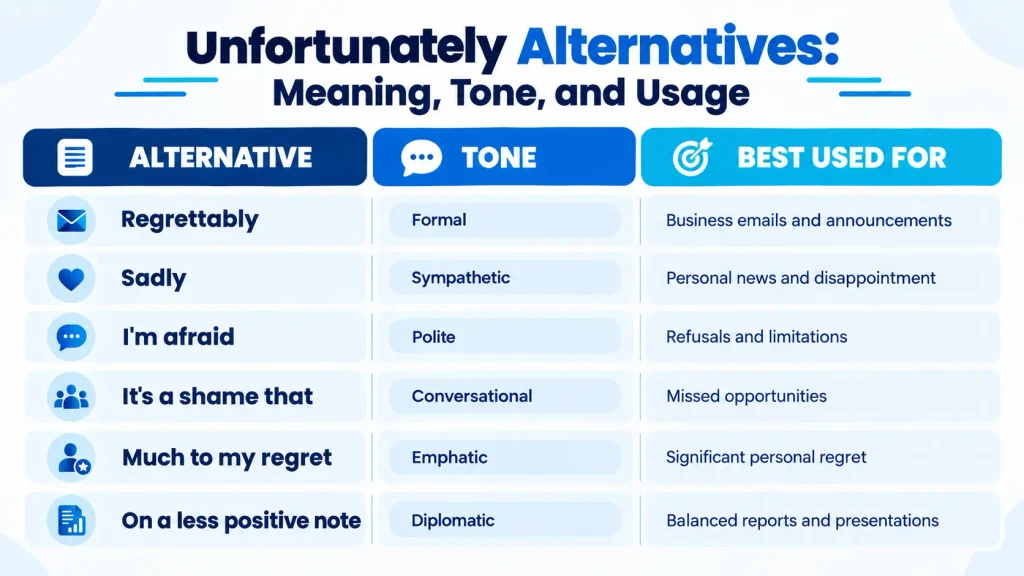
The table below summarizes when to use each alternative and the tone it conveys.
| Alternative | Best Used In | Tone |
|---|---|---|
| Regrettably | Business emails and formal announcements | Formal, professional |
| Sadly | Personal news and emotional situations | Warm, sympathetic |
| I’m afraid | Polite refusals and disappointing updates | Polite, measured |
| Unfortunately for us | Team setbacks and shared problems | Conversational, direct |
| To my disappointment | Personal experiences and reflections | Personal, expressive |
| As it happens | Unexpected facts and developments | Conversational, neutral |
| It’s a shame that | Missed opportunities and everyday disappointments | Friendly, sympathetic |
| Much to my regret | Formal statements of personal regret | Formal, emphatic |
| I hate to say this, but | Difficult conversations and uncomfortable news | Conversational, empathetic |
| On a less positive note | Presentations and balanced reports | Professional, diplomatic |
Common Mistakes When Replacing “Unfortunately”
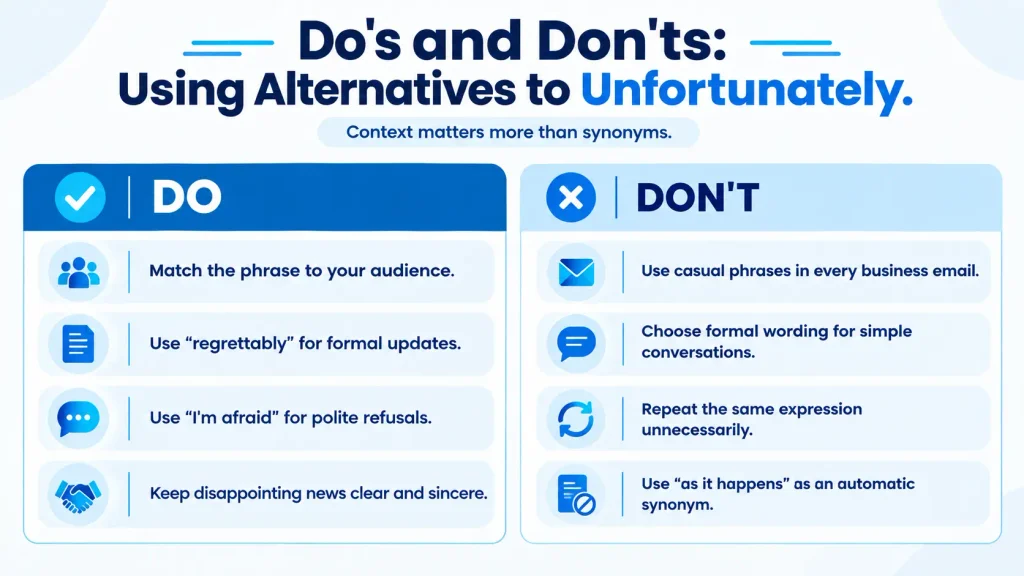
Using an alternative can improve your writing, but the wrong expression may confuse readers or make your message sound unnatural. Watch out for these five mistakes.
1. Using Casual Phrases in Professional Emails
Phrases such as “I hate to say this, but” can sound too informal in official correspondence.
Better approach: Use “regrettably” or “I’m afraid” when delivering disappointing workplace news.
2. Choosing Overly Formal Language
Expressions such as “much to my regret” may sound exaggerated when describing a minor inconvenience.
Better approach: Match the expression to the seriousness of the situation. A simple “Sadly” or “It’s a shame that” may work better in a personal conversation.
3. Repeating the Same Alternative
Replacing every instance of “unfortunately” with “regrettably” does not solve the problem of repetitive writing.
Better approach: Vary your language naturally and consider whether the transition word is necessary at all.
4. Ignoring the Context
Not every alternative has the same meaning. For example, “as it happens” introduces an unexpected fact but does not automatically express disappointment.
Better approach: Choose a phrase that communicates your actual intention instead of selecting a synonym based only on its dictionary meaning.
5. Sounding Insincere or Dramatic
Overly emotional wording can distract readers from the information you need to share.
Better approach: Be sincere, clear, and proportionate. If you are announcing a routine delay, a brief explanation is usually more helpful than an exaggerated expression of regret.
Frequently Asked Questions
1. What is the best professional alternative to unfortunately?
“Regrettably” is one of the best professional alternatives to “unfortunately.” It communicates disappointing information in a formal, respectful tone. For example, “Regrettably, we need to reschedule the meeting” sounds appropriate in a business email. “I’m afraid” is another useful option when you want to soften a refusal or limitation.
2. What is a polite way to say unfortunately in an email?
You can use “regrettably,” “I’m afraid,” or “I’m sorry to say” in a polite email. The best choice depends on your message. Use “regrettably” for formal announcements, “I’m afraid” for a courteous refusal, and “I’m sorry to say” when you want to acknowledge the recipient’s disappointment.
3. What is a more formal word for unfortunately?
“Regrettably” is a strong formal alternative, particularly in professional correspondence, official notices, and reports. “To my regret” and “much to my regret” can also work when you want to emphasize personal regret. However, the more emphatic expressions may sound too dramatic for routine business updates.
4. What can I say instead of unfortunately when giving bad news?
You can say “I’m afraid,” “regrettably,” or “I’m sorry to say” when delivering bad news. For example, “I’m afraid we cannot approve the request at this time” sounds polite and direct. If the news is personal or emotional, “Sadly” may communicate your feelings more naturally.
5. Is sadly the same as unfortunately?
“Sadly” and “unfortunately” overlap, but they are not always interchangeable. “Unfortunately” usually introduces an undesirable fact or outcome, while “sadly” often emphasizes sorrow, sympathy, or emotional disappointment. For a canceled business meeting, either may work, but “sadly” can sound more personal.
6. How do you say unfortunately without sounding negative?
You can use neutral transitions such as “however” or “that said” when you need to introduce a limitation without emphasizing disappointment. For example, “We cannot offer the original time slot; however, we have another appointment available.” These expressions do not mean exactly the same thing as “unfortunately,” but they can help you communicate setbacks constructively.
7. What is a casual way to say unfortunately?
“It’s a shame that” and “sadly” are natural options for casual conversations. You might say, “It’s a shame that the game was canceled” when speaking with a friend. These phrases sound less formal than “regrettably” and can express disappointment without making the conversation feel stiff.
8. Can I use unfortunately at the beginning of a sentence?
Yes. Starting a sentence with “unfortunately” is grammatically correct and common in American English. For example, “Unfortunately, the store is closed today.” A comma usually follows the introductory word. You can also place it later in a sentence when that structure sounds more natural.
Conclusion
Finding another way to say unfortunately can help you communicate disappointing news with greater clarity, variety, and sensitivity. The best alternative depends on your audience and the situation. Choose “regrettably” for formal emails, “I’m afraid” for polite refusals, and “sadly” when the situation involves personal disappointment or sympathy. If you want to share an unexpected development, “as it happens” may fit, while “on a less positive note” works well when presenting both favorable and unfavorable information.Before choosing a phrase, consider the meaning and usage of “unfortunately,” your relationship with the reader, and the tone you want to convey.
Remember that these expressions are not interchangeable in every context. Some communicate personal regret, while others introduce an unexpected fact or soften difficult news. Before choosing a phrase, consider your purpose, your relationship with the reader, and the tone you want to convey. A clear, sincere message will always be more effective than forcing a synonym into every sentence.

Sarah Mitchell is a Senior English Editor at FrontiersPost, specializing in English usage, vocabulary, word choice, grammar, and effective communication. She focuses on helping readers understand subtle differences between commonly confused words, phrases, and expressions and use them naturally in everyday, professional, and academic writing.
At FrontiersPost, Sarah researches, writes, and edits educational content with an emphasis on clarity, accuracy, and practical examples. She works closely with the editorial team to ensure that articles are easy to understand while maintaining appropriate context, meaning, and usage.
Her editorial interests include English vocabulary, synonyms, phrasing, professional communication, and the practical nuances that can make written communication more precise and effective.