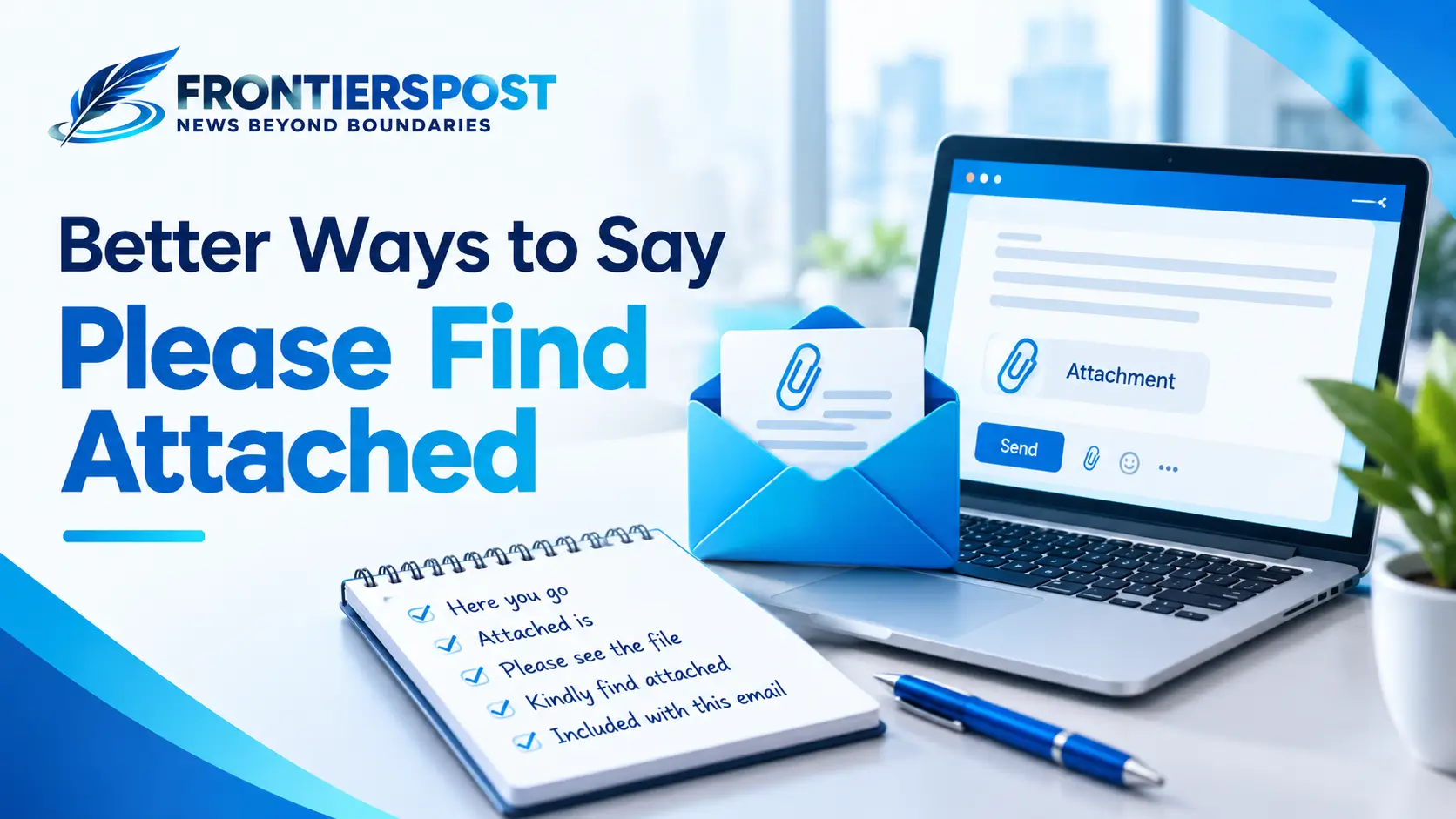
If you need another way to say “please find attached,” you can use phrases such as “please see the attached,” “I’ve attached,” “attached is,” “please find the attached,” or “I’m attaching.” The best choice depends on whether your email is formal, professional, friendly, or conversational.
Key Takeaways
- “Please find attached” is correct but can sound formal or dated.
- “Please see the attached” is a natural choice for professional emails.
- “I’ve attached” sounds direct, modern, and conversational.
- “Attached is” works well when introducing a specific document.
- Choose your wording based on your relationship with the recipient and the purpose of the email.
What Does “Please Find Attached” Mean?
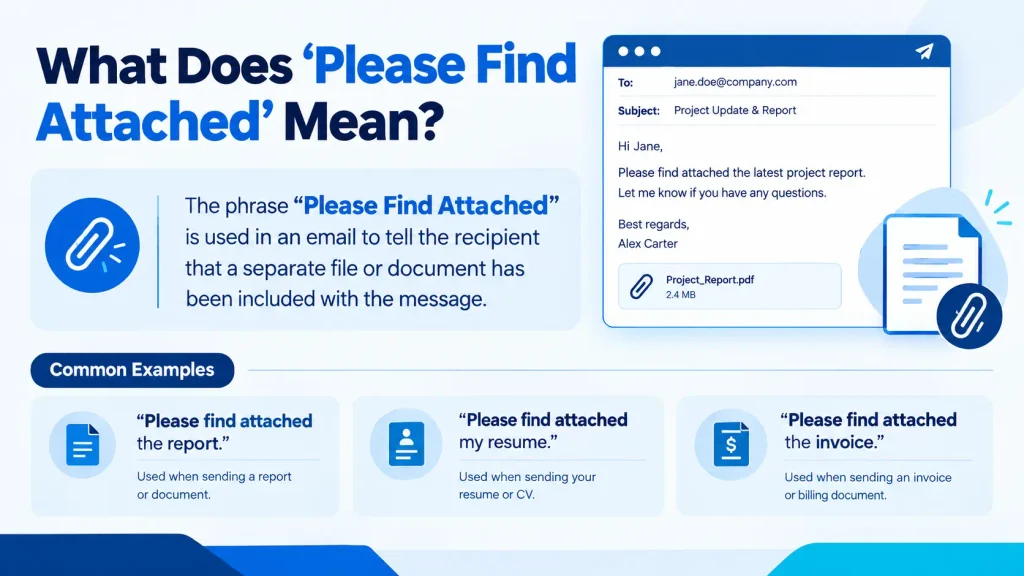
“Please find attached” is a common email phrase used to tell someone that a file or document is included with the message. It usually appears when sending reports, forms, invoices, applications, resumes, or other business documents.
For example, you might write, “Please find attached the updated report for your review.” The phrase is polite and grammatically acceptable, but it can sound somewhat formal or traditional in modern American business communication.
Why Use Other Ways to Say “Please Find Attached”?
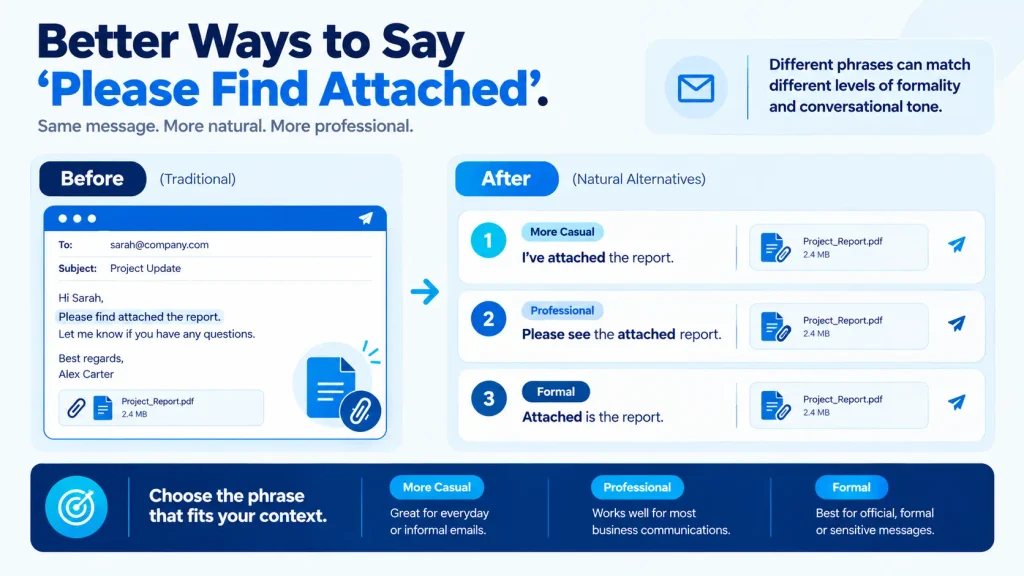
Using different phrases can make your emails sound more natural and specific. Instead of relying on the same wording every time, you can choose an expression that matches the tone of your message.
Other options can help you:
- Sound more natural and conversational.
- Avoid repetitive email language.
- Match formal and informal situations.
- Make your message more direct.
- Clearly identify the attached file.
- Create a warmer professional tone.
10 Best Other Ways to Say “Please Find Attached”
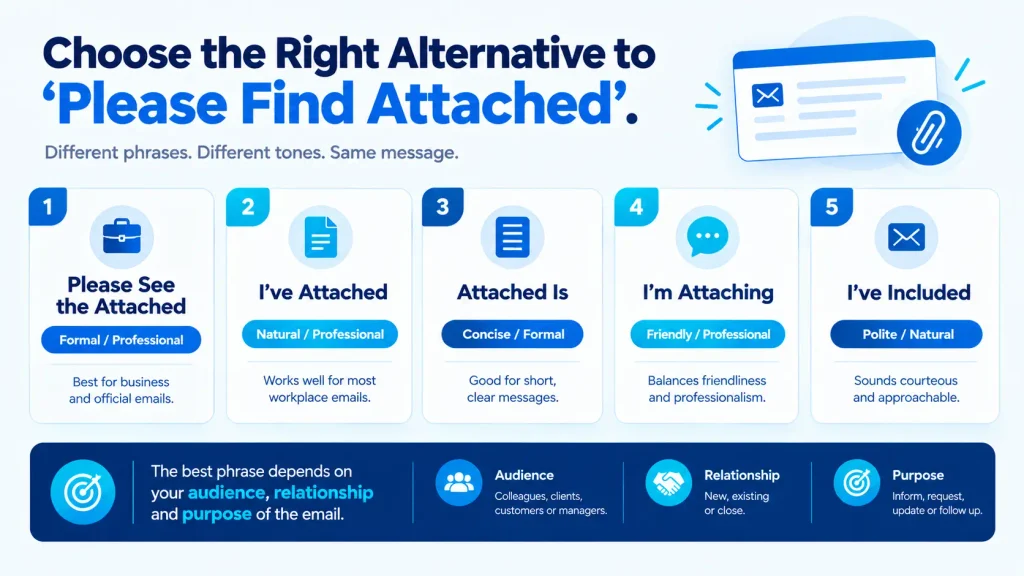
1. Please See the Attached
Meaning
“Please see the attached” politely directs the recipient to a file included with your email. It is professional without sounding overly formal.
Best For
- Professional
- Formal
- Polite
Example 1
Please see the attached proposal for your review.
Example 2
Please see the attached invoice for the completed project.
Quick Tip
Use this phrase when you want a safe, professional option for business emails.
2. I’ve Attached
Meaning
“I’ve attached” is a direct and modern way to tell someone that you included a file. It sounds natural in everyday workplace communication.
Best For
- Professional
- Friendly
- Casual
Example 1
I’ve attached the revised schedule for Monday’s meeting.
Example 2
I’ve attached my resume for your consideration.
Quick Tip
Use “I’ve attached” when you want your email to sound clear and conversational.
3. Attached Is
Meaning
“Attached is” introduces a specific document or file included with your message. It is concise and works particularly well in professional writing.
Best For
- Professional
- Formal
- Polite
Example 1
Attached is the final version of the contract.
Example 2
Attached is the receipt you requested yesterday.
Quick Tip
Use this structure when the attachment itself is the main subject of the sentence.
4. I’m Attaching
Meaning
“I’m attaching” emphasizes the action of including a file with your email. It has a straightforward and approachable tone.
Best For
- Professional
- Friendly
- Polite
Example 1
I’m attaching the meeting notes for everyone’s reference.
Example 2
I’m attaching the completed application to this email.
Quick Tip
This option is useful when explaining what you are sending as part of a larger message.
5. I’ve Included
Meaning
“I’ve included” tells the reader that you added a document or file to the email. It sounds natural and slightly less formal than “please find attached.”
Best For
- Professional
- Friendly
- Polite
Example 1
I’ve included the updated budget for your review.
Example 2
I’ve included the requested information in the attached document.
Quick Tip
Use this phrase when you want to focus on the information provided rather than the attachment itself.
6. Please Refer to the Attached
Meaning
“Please refer to the attached” directs the recipient to consult a particular document. It is especially useful when the attachment contains important details or supporting information.
Best For
- Formal
- Professional
- Polite
Example 1
Please refer to the attached guidelines before completing the form.
Example 2
Please refer to the attached report for the latest sales figures.
Quick Tip
Use this phrase when the recipient needs to read or consult the document carefully.
7. For Your Reference, I’ve Attached
Meaning
This phrase explains that the attachment is being provided as useful background or supporting information. It adds context instead of simply announcing the file.
Best For
- Professional
- Formal
- Polite
Example 1
For your reference, I’ve attached last quarter’s financial report.
Example 2
For your reference, I’ve attached the previous version of the agreement.
Quick Tip
This works well when the recipient does not necessarily need to take immediate action.
8. I’m Including the Attached
Meaning
“I’m including the attached” can introduce a document that supports the main purpose of your email. It gives the message a natural, explanatory tone.
Best For
- Professional
- Friendly
- Polite
Example 1
I’m including the attached checklist to help with the onboarding process.
Example 2
I’m including the attached document for your records.
Quick Tip
Use this wording when the attachment has a clear supporting role in your message.
9. The Attached Document Contains
Meaning
“The attached document contains” is useful when you want to explain what the recipient will find in the file. It focuses on the document’s content rather than simply pointing to it.
Best For
- Professional
- Formal
- Polite
Example 1
The attached document contains the revised project timeline.
Example 2
The attached document contains the information requested by your team.
Quick Tip
Choose this option when briefly describing the attachment will make your email clearer.
10. I’ve Included the File You Requested
Meaning
This phrase directly connects the attachment to a previous request from the recipient. It sounds helpful, personal, and professional.
Best For
- Professional
- Friendly
- Polite
Example 1
I’ve included the file you requested during our call.
Example 2
I’ve included the file you requested so you can review the figures.
Quick Tip
Use it when the recipient specifically asked you to send a particular file.
Comparison Table
| Alternative | Best Used In | Tone |
| Please See the Attached | Business emails | Professional |
| I’ve Attached | Everyday work emails | Natural |
| Attached Is | Formal correspondence | Concise |
| I’m Attaching | Workplace communication | Friendly |
| I’ve Included | Professional messages | Polite |
| Please Refer to the Attached | Reports and instructions | Formal |
| For Your Reference, I’ve Attached | Supporting documents | Professional |
| I’m Including the Attached | Explanatory emails | Friendly |
| The Attached Document Contains | Detailed business emails | Formal |
| I’ve Included the File You Requested | Replying to requests | Helpful |
Common Mistakes
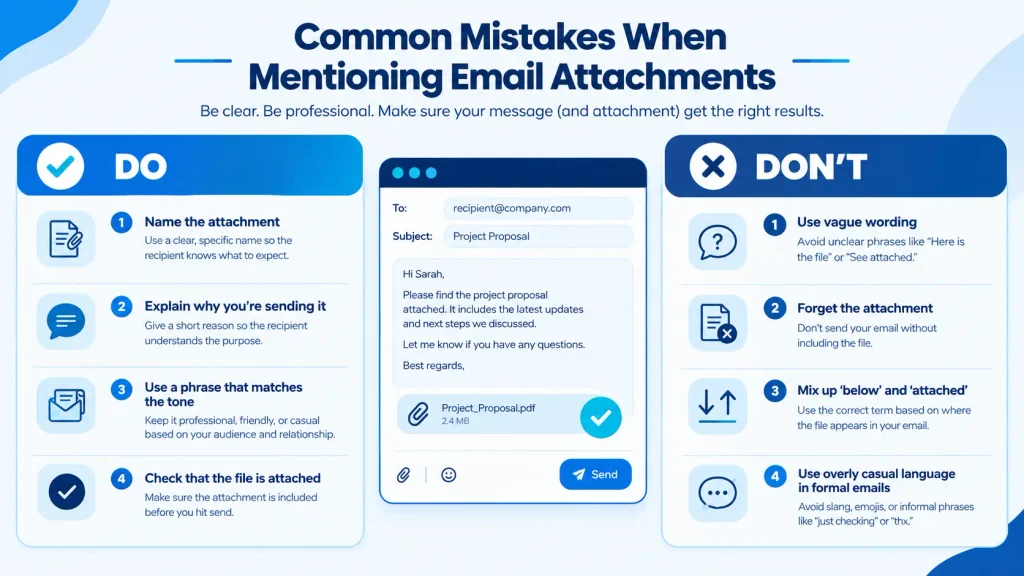
1. Using Casual Phrases in Formal Emails
A casual phrase may sound inappropriate when emailing a client, hiring manager, or senior executive. Choose wording that matches the professional relationship.
2. Choosing Overly Formal Language
“Please find attached” is not wrong, but using very formal language in every email can make your writing feel stiff. Modern alternatives often sound more natural.
3. Repeating the Same Phrase
Using the same attachment phrase in every email can make your communication repetitive. Rotate between clear alternatives when the context allows.
4. Forgetting the Context
Not every attachment needs the same introduction. A resume, invoice, report, and casual photo may require different wording.
5. Sounding Insincere
Avoid unnecessary formal language simply to sound professional. Clear, direct wording such as “I’ve attached the report” is often more effective.
Frequently Asked Questions
What is a professional way to say “please find attached”?
“Please see the attached” and “I’ve attached” are both professional choices. “Please see the attached” has a slightly more formal tone, while “I’ve attached” sounds more direct and natural. Choose the phrase based on your relationship with the recipient and the formality of the email.
Is “please find attached” grammatically correct?
Yes, “please find attached” is grammatically acceptable and has long been used in professional correspondence. However, some modern business writers prefer more direct expressions such as “I’ve attached” or “Please see the attached” because they sound more natural in contemporary American English.
What is a modern alternative to “please find attached”?
“I’ve attached” is one of the simplest modern alternatives. For example, instead of writing “Please find attached the report,” you can write, “I’ve attached the report for your review.” The second version is direct, clear, and common in modern workplace communication.
How do you say “please find attached” in a polite email?
You can write, “Please see the attached report,” “I’ve attached the requested document,” or “Attached is the report for your review.” Each option is polite while avoiding unnecessary formality. If the recipient specifically requested the file, “I’ve included the file you requested” is also appropriate.
Is “I’ve attached” better than “please find attached”?
Both phrases are correct, but they create slightly different impressions. “I’ve attached” is generally more direct and conversational, while “please find attached” sounds more traditional and formal. Neither is universally better; the right choice depends on your audience and the context of your email.
Can I use “attached is” in a business email?
Yes. “Attached is” is concise and professional, especially when you are introducing one specific document. For example, “Attached is the final proposal for your review” clearly tells the recipient what you have included without adding unnecessary wording.
What should I say when sending a document someone requested?
A natural option is, “I’ve included the file you requested.” You can also write, “I’ve attached the document you requested.” Both phrases make the connection between the recipient’s request and the file clear while maintaining a professional tone.
How can I avoid repeating “please find attached” in emails?
Use different phrases according to the situation. Try “I’ve attached,” “Please see the attached,” “Attached is,” or “I’ve included the requested document.” You can also describe what the file contains, which makes the email more useful than simply announcing that an attachment exists.
Writing something similar? Try Another Way to Say Sincerely, Another Way to Say “Sounds Good to Me” Naturally or What to Say Instead of “Team Player” on a Resume.
Conclusion
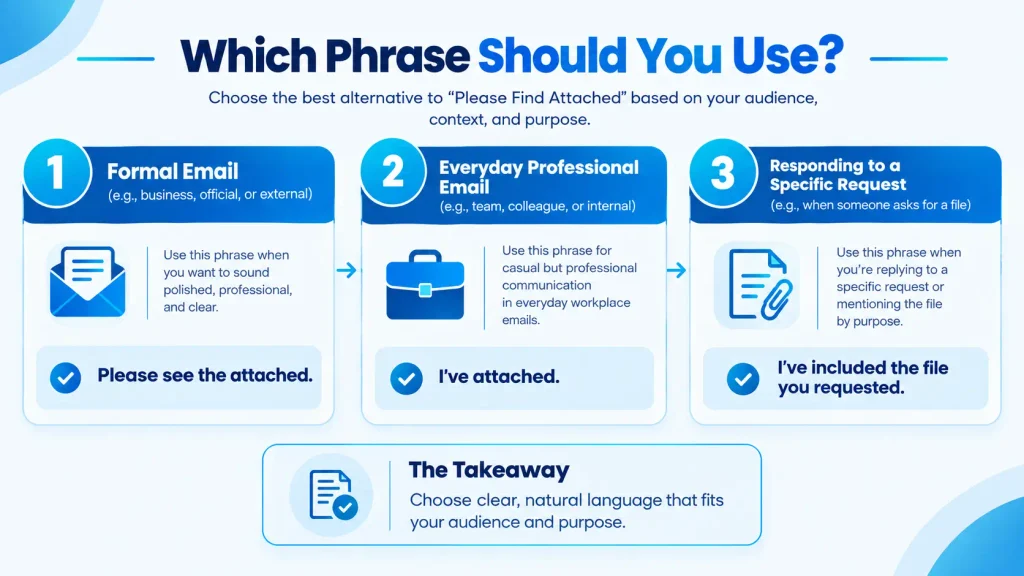
“Please find attached” is a correct and widely understood way to introduce an email attachment, but it is not your only option. Phrases such as “I’ve attached,” “Please see the attached,” and “Attached is” can make professional emails sound clearer and more natural.
For formal communication, “Please see the attached” or “Please refer to the attached” works well. For everyday workplace emails, “I’ve attached” is usually more conversational. When responding to a specific request, “I’ve included the file you requested” provides useful context.
The key is to choose language that fits your audience, purpose, and relationship with the recipient. If you want to understand the term more clearly, see this guide to email attachment terminology. Clear communication matters more than using the most formal-sounding phrase.

The FrontiersPost editorial team writes and reviews every guide to word and phrase alternatives, with clear meanings, tone notes and example sentences for everyday, academic and professional English.