
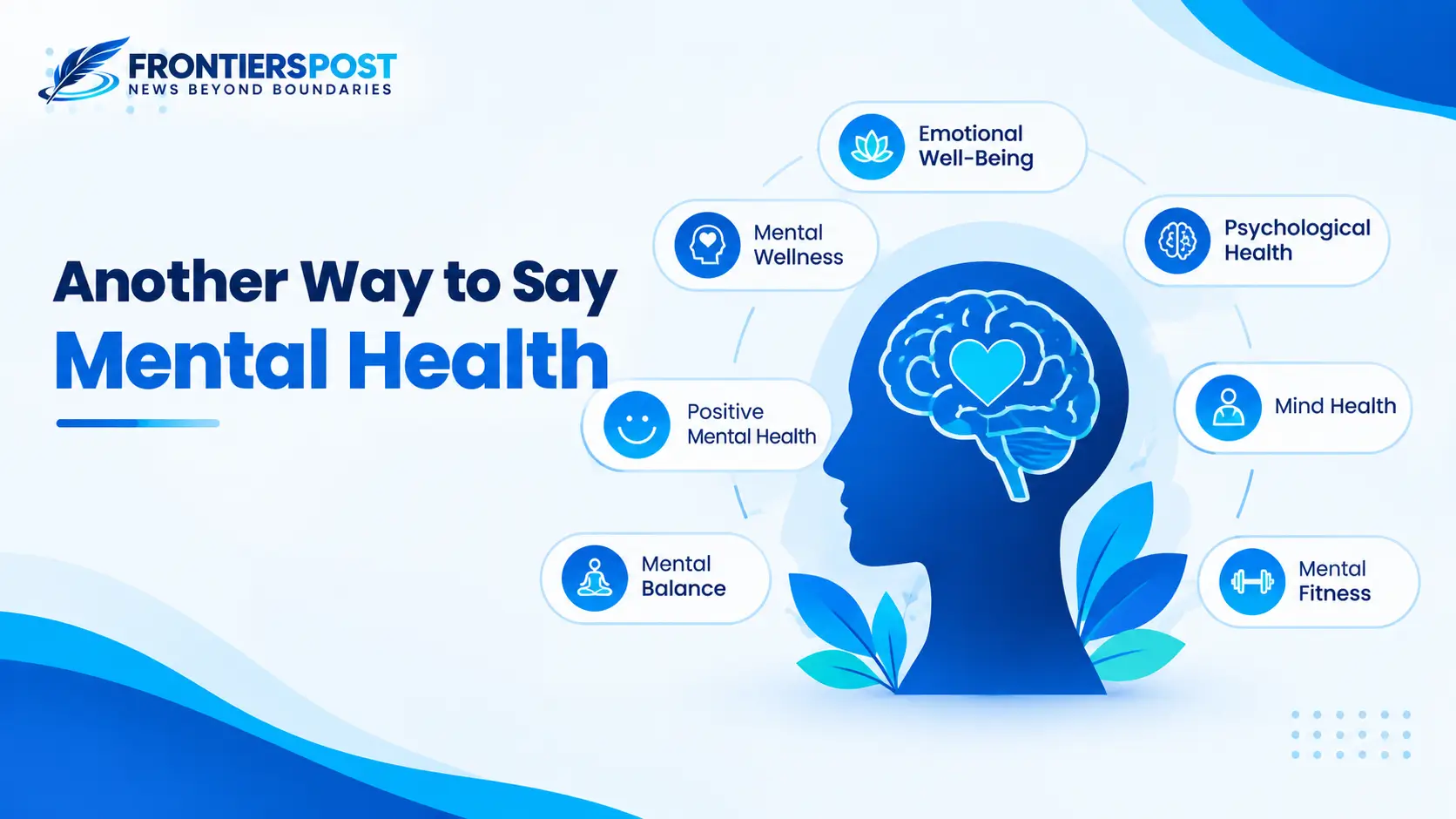
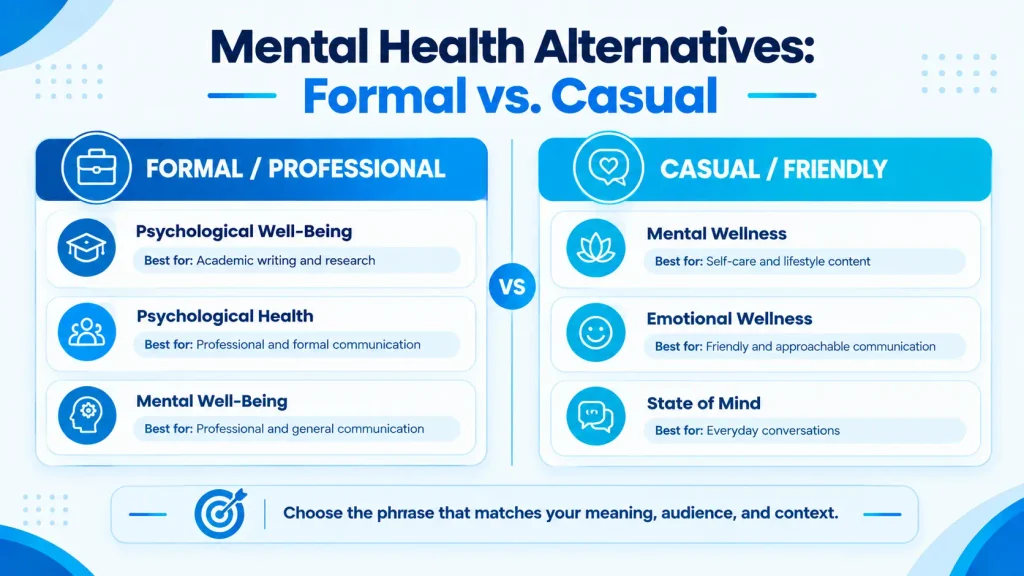
Another way to say “mental health” includes mental well-being, emotional health, psychological well-being, emotional well-being, mental wellness, psychological health, and emotional wellness. The best choice depends on context. For professional or academic writing, “mental well-being” and “psychological well-being” are clear, while “emotional wellness” sounds warmer and more approachable.
Key Takeaways
- “Mental well-being” is one of the most natural alternatives to “mental health.”
- “Psychological well-being” works especially well in academic and professional writing.
- “Emotional health” focuses more specifically on managing feelings and emotions.
- “Mental wellness” and “emotional wellness” have a positive, wellness-focused tone.
- Always choose an alternative based on your audience, purpose, and the exact meaning you want to express.
What Does “Another Way to Say Mental Health” Mean?
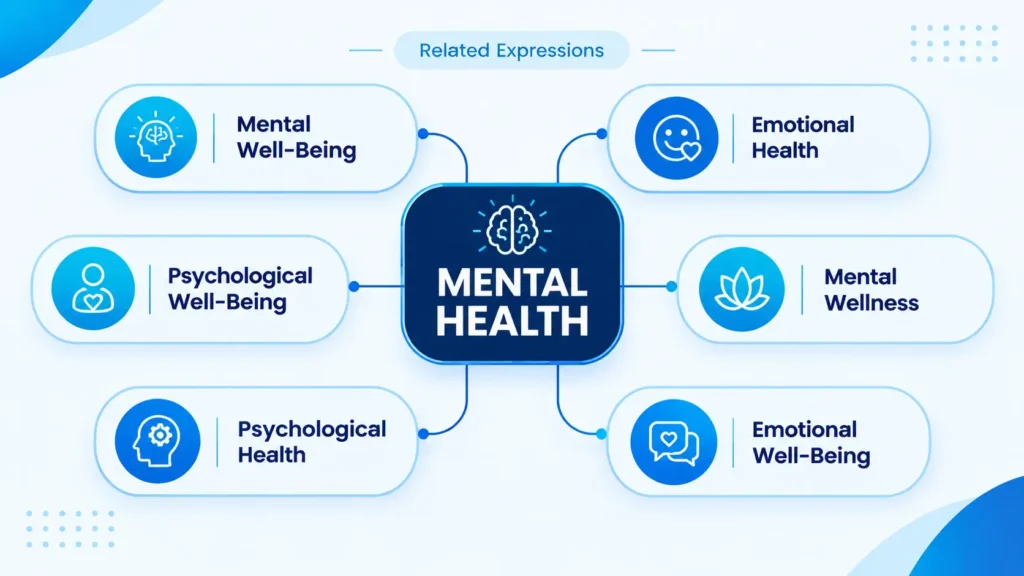
The phrase “another way to say mental health” refers to different words or expressions that communicate a person’s psychological, emotional, or overall mental well-being.
People often look for alternatives when writing an essay, professional document, healthcare resource, presentation, or everyday message. The right phrase can make your writing sound more natural, precise, respectful, or appropriate for a particular audience.
For example, “mental well-being” can sound positive and general, while “psychological health” may fit better in an academic or professional context.
Why Use Other Ways to Say “Mental Health”?
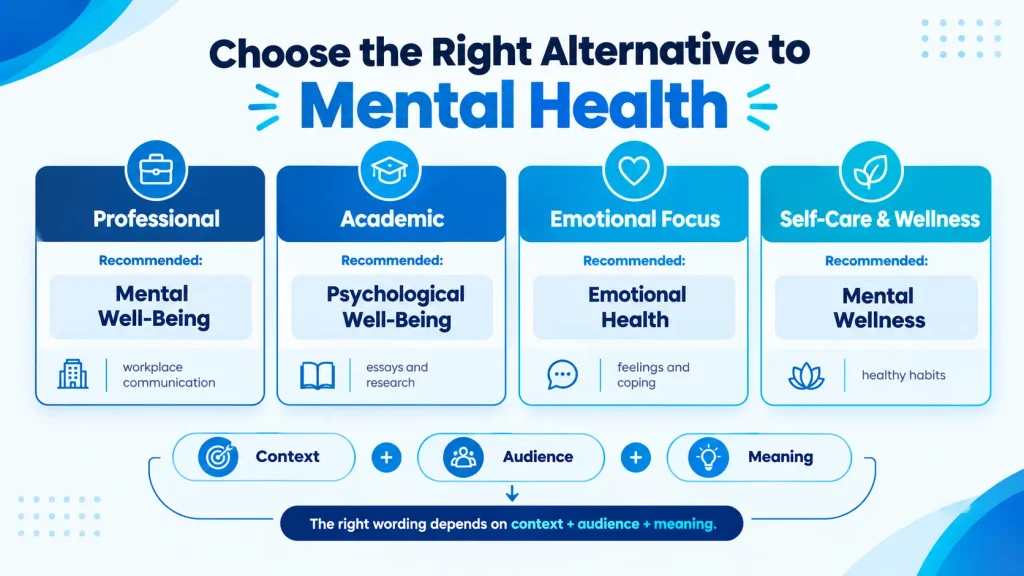
Using alternatives to “mental health” can make your writing more precise and prevent the same phrase from appearing repeatedly.
Different expressions can also highlight slightly different aspects of psychological wellness.
- Avoid repetition in articles, essays, and reports.
- Sound more natural in everyday conversations.
- Match your audience and communication setting.
- Use a professional tone in workplace or academic writing.
- Focus on a specific aspect, such as emotions, resilience, or psychological well-being.
- Use positive language when discussing wellness and self-care.
10 Best Other Ways to Say “Mental Health”
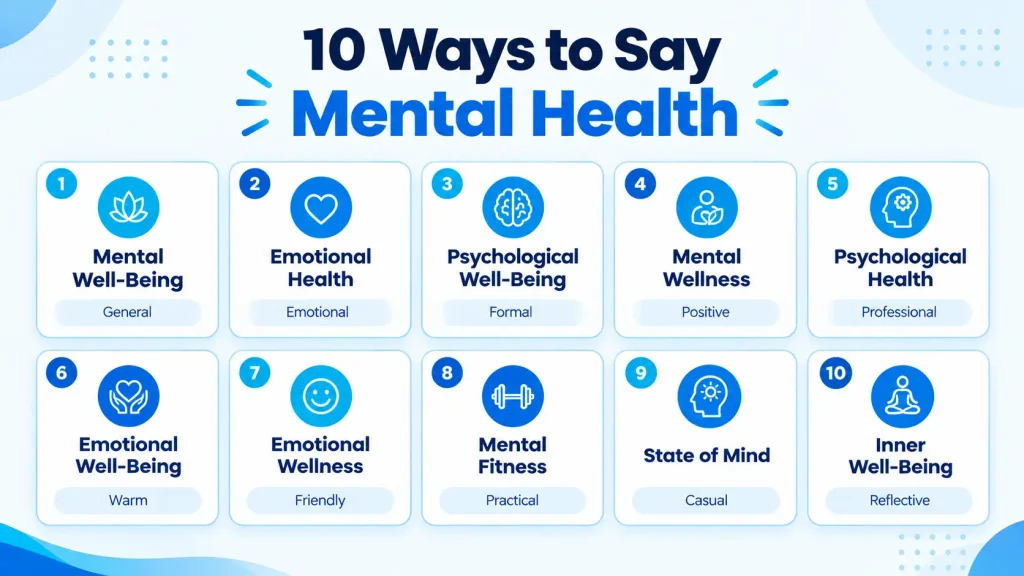
1. Mental Well-Being
Meaning
“Mental well-being” describes a person’s overall psychological state and how they are doing mentally. It often has a positive and balanced tone, making it useful when discussing wellness rather than mental illness.
Best For
- Professional
- Formal
- Friendly
- Warm
Example 1
Regular exercise can support your mental well-being as well as your physical health.
Example 2
The company introduced new programs designed to support employees’ mental well-being.
Quick Tip
Use “mental well-being” when you want to emphasize overall wellness, balance, and quality of life.
2. Emotional Health
Meaning
“Emotional health” focuses more specifically on how people understand, manage, and respond to their emotions. It is useful when the subject involves feelings, stress, emotional regulation, or coping skills.
Best For
- Professional
- Friendly
- Warm
- Casual
Example 1
Talking openly about difficult experiences can support your emotional health.
Example 2
Parents can help children develop strong emotional health by teaching them how to express their feelings.
Quick Tip
Choose this phrase when your discussion is mainly about emotions rather than broader psychological functioning.
3. Psychological Well-Being
Meaning
“Psychological well-being” refers to a person’s overall psychological functioning and sense of wellness. It has a more formal and academic sound than many everyday alternatives.
Best For
- Professional
- Formal
Example 1
Social connections can have a significant effect on psychological well-being.
Example 2
The study examined how workplace conditions influence employees’ psychological well-being.
Quick Tip
This is a strong choice for research papers, academic writing, reports, and professional publications.
4. Mental Wellness
Meaning
“Mental wellness” describes an ongoing effort to maintain a healthy and positive mental state. The expression often emphasizes prevention, self-care, healthy habits, and personal growth.
Best For
- Friendly
- Casual
- Warm
- Professional
Example 1
The workshop gives students practical strategies for improving their mental wellness.
Example 2
Getting enough sleep is an important part of maintaining mental wellness.
Quick Tip
Use “mental wellness” when the focus is on positive habits and maintaining overall well-being.
5. Psychological Health
Meaning
“Psychological health” refers to a person’s mental and psychological functioning. It is a relatively formal expression that can work well when discussing mental processes, behavior, coping, or psychological conditions.
Best For
- Formal
- Professional
Example 1
Strong social relationships can contribute to better psychological health.
Example 2
The organization recognizes the importance of psychological health in the workplace.
Quick Tip
Use this expression when you need a professional alternative that still closely matches the broad meaning of “mental health.”
6. Emotional Well-Being
Meaning
“Emotional well-being” describes how well a person is coping with emotions and handling the emotional side of everyday life. It generally sounds positive, supportive, and approachable.
Best For
- Friendly
- Warm
- Professional
- Casual
Example 1
Spending time with supportive friends can improve your emotional well-being.
Example 2
Schools are paying more attention to students’ emotional well-being.
Quick Tip
This phrase works especially well when your message centers on feelings, relationships, stress, or emotional support.
7. Emotional Wellness
Meaning
“Emotional wellness” emphasizes maintaining healthy emotional habits and developing effective ways to handle challenges. It has a positive, self-care-oriented tone.
Best For
- Casual
- Friendly
- Warm
Example 1
Journaling can be a simple way to support emotional wellness.
Example 2
The community center offers activities that encourage emotional wellness.
Quick Tip
Choose this expression for wellness programs, lifestyle content, self-care discussions, and approachable communication.
8. Mental Fitness
Meaning
“Mental fitness” describes practices and habits that help people maintain psychological resilience, focus, and cognitive or emotional strength. It presents mental well-being through the idea of maintaining and strengthening a healthy mind.
Best For
- Casual
- Friendly
- Professional
Example 1
Meditation and regular breaks can become part of a healthy mental fitness routine.
Example 2
The seminar teaches employees simple exercises for improving mental fitness.
Quick Tip
Use “mental fitness” when discussing habits, resilience, focus, stress management, or exercises for maintaining mental strength.
9. State of Mind
Meaning
“State of mind” describes a person’s current mental or emotional condition at a particular time. Unlike “mental health,” it usually refers to a temporary condition rather than overall psychological well-being.
Best For
- Casual
- Friendly
- Warm
Example 1
Your state of mind can affect how you respond to a difficult situation.
Example 2
Taking a short walk helped him return to a calmer state of mind.
Quick Tip
Do not use “state of mind” as a direct replacement when you mean long-term mental health. It is better for describing someone’s current mental or emotional condition.
10. Inner Well-Being
Meaning
“Inner well-being” is a broad, gentle expression for a person’s internal sense of peace, balance, and emotional or psychological wellness. It is less clinical than “mental health.”
Best For
- Warm
- Friendly
- Casual
Example 1
Making time for yourself can contribute to a greater sense of inner well-being.
Example 2
Healthy boundaries can protect your inner well-being during stressful periods.
Quick Tip
Use this phrase when you want a softer, more reflective expression, especially in lifestyle or personal-development writing.
Comparison Table
| Alternative | Best Used In | Tone |
|---|---|---|
| Mental well-being | General, professional, workplace | Neutral, positive |
| Emotional health | Emotions, coping, relationships | Warm, supportive |
| Psychological well-being | Academic, research, professional | Formal, precise |
| Mental wellness | Wellness, self-care, lifestyle | Positive, approachable |
| Psychological health | Academic, healthcare, professional | Formal, professional |
| Emotional well-being | Personal, education, workplace | Warm, positive |
| Emotional wellness | Self-care, lifestyle, wellness | Friendly, positive |
| Mental fitness | Resilience, habits, stress management | Positive, practical |
| State of mind | Everyday situations, temporary feelings | Casual, conversational |
| Inner well-being | Personal growth, lifestyle, reflection | Warm, gentle |
Common Mistakes
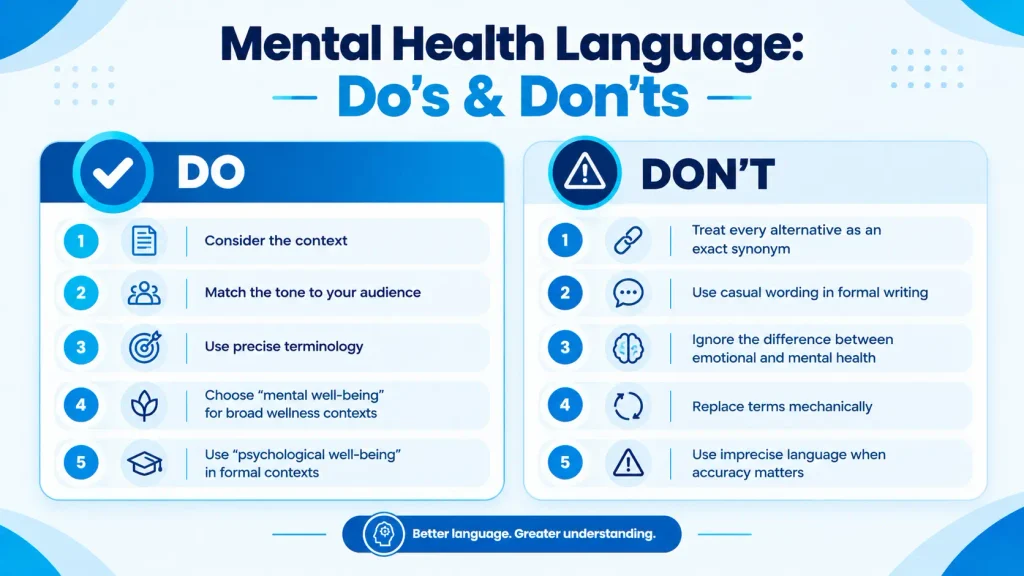
1. Treating Every Alternative as an Exact Synonym
Not every phrase has precisely the same meaning as “mental health.” For example, “state of mind” usually describes a temporary mental condition, while “mental health” can refer to a person’s broader psychological health over time.
2. Using Casual Language in Formal Writing
Expressions such as “mental fitness” may sound approachable, but they may not be appropriate in a research paper or formal report. Academic writing usually benefits from terms such as “psychological well-being” or “psychological health.”
3. Using “Emotional Health” for Every Mental Health Topic
Emotional health is related to mental health, but the two concepts are not identical. A discussion about depression, anxiety, cognition, or other psychological conditions may require the broader term “mental health.”
4. Choosing a Phrase Without Considering Context
The best alternative depends on where the phrase appears. A wellness blog, college essay, workplace policy, and personal message may all require different wording.
5. Using Softer Language When Precision Matters
Warm alternatives can make writing approachable, but they should not replace precise terminology when accuracy is important. In healthcare, academic, or research contexts, choose language that clearly communicates the intended concept.
Frequently Asked Questions
What is another way to say “mental health”?
Common alternatives include mental well-being, emotional health, psychological well-being, mental wellness, psychological health, emotional well-being, and emotional wellness. The best choice depends on the context. “Mental well-being” is a particularly useful general alternative because it sounds natural while retaining a broad meaning similar to “mental health.”
What is a professional way to say “mental health”?
For professional writing, mental well-being, psychological well-being, and psychological health are strong choices. “Mental well-being” sounds natural in workplace communication, while “psychological well-being” is more formal and often fits reports, research, and academic writing.
What is a positive way to say “mental health”?
If you want a positive and wellness-focused expression, consider mental wellness, mental well-being, emotional wellness, or emotional well-being. These terms can shift the focus toward maintaining healthy habits, building resilience, and supporting overall wellness rather than focusing only on mental health problems.
Is “mental well-being” the same as “mental health”?
The two expressions are closely related, but they are not always identical. “Mental health” is a broad term that can include psychological conditions and overall functioning, while “mental well-being” usually emphasizes a person’s positive psychological state, balance, and ability to cope with everyday life.
What is another way to say “mental health” in an essay?
For an essay, psychological well-being is a strong formal alternative, while mental well-being works well for general academic writing. Choose the phrase that matches your specific argument. If you are discussing emotions specifically, “emotional well-being” may be more precise.
Can I say “emotional health” instead of “mental health”?
Sometimes, but the terms are not completely interchangeable. “Emotional health” focuses mainly on how someone manages and experiences emotions, whereas “mental health” covers a broader range of psychological and emotional functioning. Use “emotional health” when emotions are the specific focus of your sentence.
What is a casual way to say “mental health”?
In casual or approachable writing, you can use expressions such as mental wellness, emotional well-being, emotional wellness, or state of mind, depending on your meaning. “State of mind” is best when you are talking about someone’s current mental or emotional condition rather than their overall mental health.
How can I avoid repeating “mental health” in my writing?
First, determine exactly what you mean by the phrase in each sentence. Then choose a suitable alternative, such as “mental well-being” for general wellness, “emotional health” for emotions, or “psychological well-being” for formal writing. Avoid replacing the phrase mechanically when the meaning would change.
You may also find these guides useful: Another Way to Say “Next”, Another Way to Say No and Another Way to Say “Not My Circus, Not My Monkeys.
Conclusion
There are many useful ways to say “mental health,” but the best alternative depends on your meaning and audience. Mental well-being is one of the most versatile choices for general and professional writing, while psychological well-being works particularly well in academic or formal contexts. If your focus is emotions, emotional health or emotional well-being may be more accurate. For self-care and lifestyle content, mental wellness and emotional wellness offer a positive, approachable tone. For a clearer understanding of the original term, see the mental health.
Remember that these expressions are related but not always interchangeable. Choose the wording that communicates your intended meaning clearly rather than simply replacing “mental health” with another phrase. When precision matters, especially in academic or professional writing, clarity should always come first.

The FrontiersPost editorial team writes and reviews every guide to word and phrase alternatives, with clear meanings, tone notes and example sentences for everyday, academic and professional English.




