
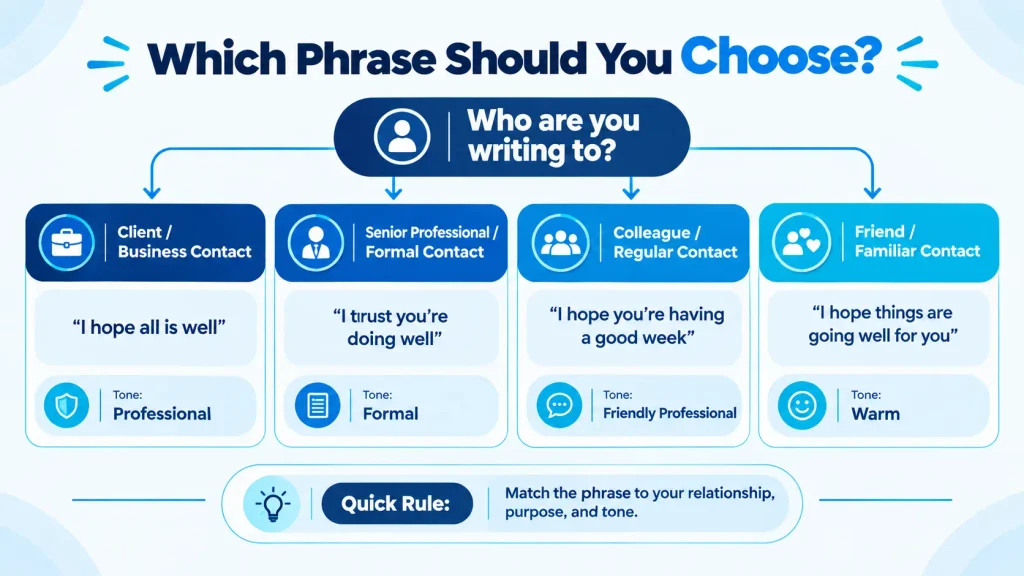
Another way to say “I hope you’re doing well” depends on the situation. In professional emails, try “I hope all is well,” “I hope you’re having a good week,” or “I trust you’re doing well.” For a warmer tone, use “I hope things are going well for you” or “I hope you’ve been well.”
Key Takeaways
- “I hope you’re doing well” is polite, friendly, and common in emails and messages.
- The best alternative depends on your relationship with the reader and the situation.
- “I hope all is well” works well in most professional settings.
- Warmer options can make personal or friendly messages feel more genuine.
- Avoid overly formal alternatives when a simple, natural phrase will work better.
What Does “I Hope You’re Doing Well” Mean?
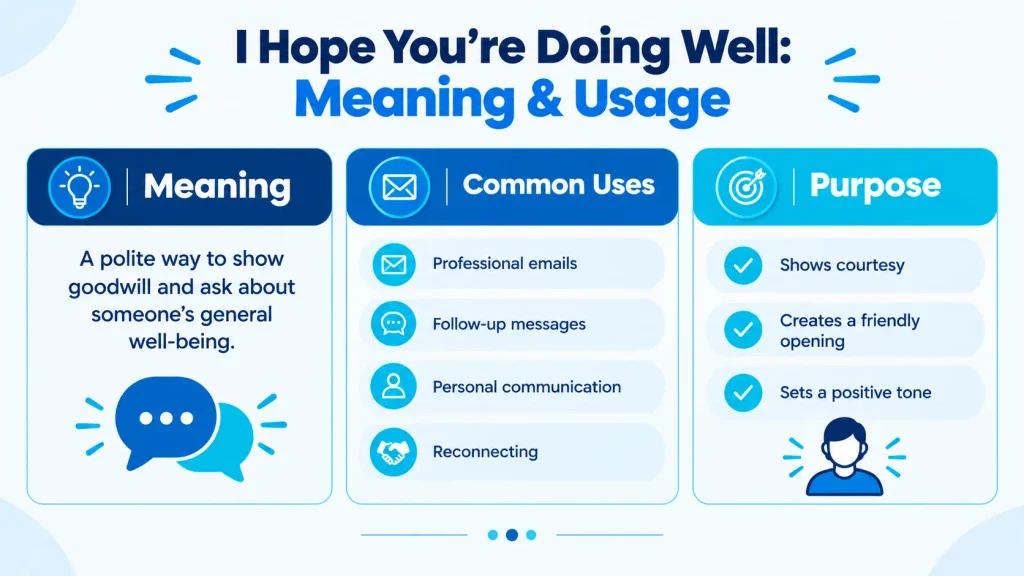
“I hope you’re doing well” is a polite way to show that you care about someone’s well-being before starting a conversation. It usually appears at the beginning of an email, letter, or message, especially when you have not spoken to the person recently.
The phrase does not require the recipient to share personal information. It simply creates a friendly and respectful opening before moving to the main purpose of the message.
You may see it in professional emails, follow-up messages, networking conversations, academic communication, and personal correspondence.
Why Use Other Ways to Say “I Hope You’re Doing Well”?
Although the phrase is perfectly acceptable, using a different expression can make your message feel more natural and specific.
You may want an alternative to:
- Avoid repeating the same email opening.
- Match a formal or casual relationship.
- Sound warmer and more personal.
- Create a smoother transition into your main point.
- Show genuine interest in someone’s situation.
- Make professional communication feel less routine.
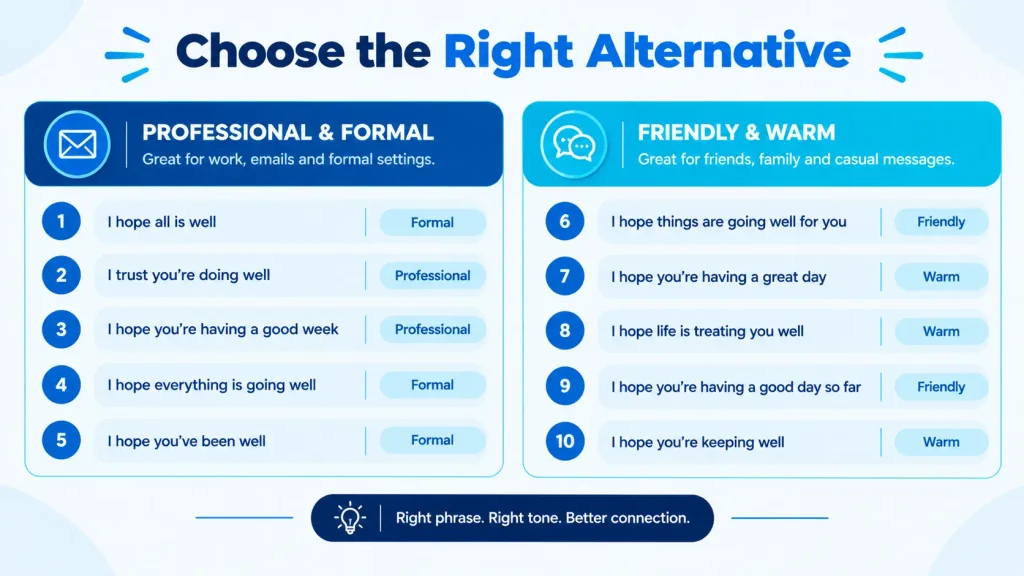
10 Best Other Ways to Say “I Hope You’re Doing Well”
1. I Hope All Is Well
Meaning
“I hope all is well” is a concise way to express good wishes about someone’s general situation. It has a polished tone without sounding overly formal.
Best For
- Professional
- Formal
- Polite
Example 1
I hope all is well with you and the team as you prepare for the annual conference.
Example 2
I hope all is well on your end. I wanted to follow up on our conversation from last week.
Quick Tip
Use this when you want a dependable professional opening that works in many situations.
2. I Hope You’ve Been Well
Meaning
“I hope you’ve been well” works especially well when you have not spoken with someone for some time. It acknowledges the time between conversations while expressing genuine goodwill.
Best For
- Professional
- Friendly
- Warm
Example 1
I hope you’ve been well since we last spoke about the project.
Example 2
It’s been a while, and I hope you’ve been well. I’d love to hear how things are going.
Quick Tip
Choose this phrase when reconnecting with an old colleague, friend, or professional contact.
3. I Hope Things Are Going Well for You
Meaning
This expression sounds warmer and more personal than a standard email greeting. It suggests that you are interested in how life or work has been going.
Best For
- Friendly
- Warm
- Casual
Example 1
I hope things are going well for you in your new position.
Example 2
I hope things are going well for you and that you’re enjoying the summer.
Quick Tip
Use it when you know enough about the person’s circumstances to make the message feel personal.
4. I Trust You’re Doing Well
Meaning
“I trust you’re doing well” has a polished, professional tone. It communicates goodwill while sounding slightly more formal and traditional than “I hope you’re doing well.”
Best For
- Professional
- Formal
- Polite
Example 1
I trust you’re doing well. I’m writing to discuss the updated contract.
Example 2
I trust you’re doing well and settling into your new role.
Quick Tip
This works best in formal correspondence, but avoid using it repeatedly because it can sound stiff.
5. I Hope You’re Having a Good Week
Meaning
This phrase adds a specific time-based touch to a familiar greeting. It feels friendly and natural without becoming too personal.
Best For
- Professional
- Friendly
- Polite
Example 1
I hope you’re having a good week. I wanted to send over the revised proposal.
Example 2
I hope you’re having a good week so far. Thanks again for your feedback on the report.
Quick Tip
Use this in workplace emails when you want your opening to feel current and conversational.
6. I Hope Everything Is Going Well
Meaning
“I hope everything is going well” expresses general concern for the recipient without focusing specifically on their health or personal life. It is flexible and easy to adapt.
Best For
- Professional
- Friendly
- Warm
Example 1
I hope everything is going well with the new office.
Example 2
I hope everything is going well with your classes this semester.
Quick Tip
This is a good choice when you know about a specific change, project, or situation in the person’s life.
7. I Hope You’re Having a Great Day
Meaning
“I hope you’re having a great day” is upbeat and approachable. It works particularly well for everyday messages where you want to create a positive tone.
Best For
- Casual
- Friendly
- Warm
Example 1
I hope you’re having a great day! I wanted to ask about Saturday’s plans.
Example 2
I hope you’re having a great day. Thanks for taking the time to look over my application.
Quick Tip
This is better suited to casual or friendly communication than highly formal business correspondence.
8. I Hope Life Is Treating You Well
Meaning
This expression has a warm, personal feel and suggests that you genuinely care about how someone’s life has been going. It is less conventional in formal emails.
Best For
- Casual
- Friendly
- Warm
Example 1
It’s been several months since we caught up, and I hope life is treating you well.
Example 2
I hope life is treating you well and that you’re enjoying your new adventure.
Quick Tip
Save this phrase for friends, former colleagues, or people with whom you have an established relationship.
9. I Hope You’re Keeping Well
Meaning
“I hope you’re keeping well” is a polite variation that expresses the same basic goodwill. It can sound natural in personal or professional correspondence, although it is somewhat more common in British and Irish English than American English.
Best For
- Formal
- Polite
- Friendly
Example 1
I hope you’re keeping well. I wanted to check whether you received my previous email.
Example 2
I hope you’re keeping well and enjoying the start of the new semester.
Quick Tip
For a U.S. audience, use this selectively because “I hope you’re doing well” or “I hope all is well” will usually sound more natural.
10. I Hope You’re Having a Good Day So Far
Meaning
This is a friendly and conversational opening that focuses on the recipient’s current day rather than their general well-being. It feels approachable without being overly familiar.
Best For
- Casual
- Friendly
- Warm
Example 1
I hope you’re having a good day so far. I had a quick question about the meeting.
Example 2
I hope you’re having a good day so far! I’m reaching out to confirm our appointment for Thursday.
Quick Tip
Use this for everyday emails and messages when you want a cheerful but natural opening.
Comparison Table
| Alternative | Best Used In | Tone |
|---|---|---|
| I Hope All Is Well | Professional emails | Polished |
| I Hope You’ve Been Well | Reconnecting | Warm |
| I Hope Things Are Going Well for You | Personal or friendly messages | Warm |
| I Trust You’re Doing Well | Formal correspondence | Formal |
| I Hope You’re Having a Good Week | Workplace emails | Friendly |
| I Hope Everything Is Going Well | Professional or personal updates | Neutral |
| I Hope You’re Having a Great Day | Casual messages | Upbeat |
| I Hope Life Is Treating You Well | Personal communication | Warm |
| I Hope You’re Keeping Well | Polite correspondence | Polite |
| I Hope You’re Having a Good Day So Far | Everyday communication | Friendly |
Common Mistakes
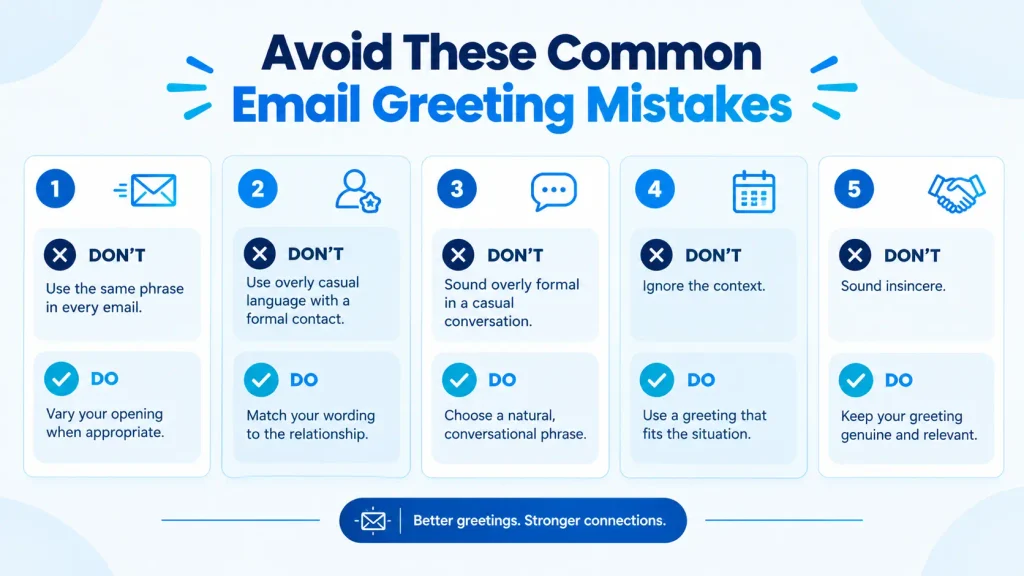
1. Using a Casual Phrase in a Formal Email
Expressions such as “I hope you’re having a great day” may feel too relaxed for certain formal business or academic situations. Choose a more neutral option when communicating with someone you do not know well.
2. Choosing Overly Formal Language
“I trust you’re doing well” can work professionally, but using very formal language in every message may create unnecessary distance. A simple phrase often sounds more natural.
3. Repeating the Same Opening
Using “I hope you’re doing well” in every email can make your writing sound formulaic. Rotate your openings when the context allows it, especially when communicating with the same person frequently.
4. Forgetting the Context
The best alternative depends on your relationship with the recipient. “I hope life is treating you well” may suit an old friend but feel too personal in a formal business email.
5. Sounding Insincere
Avoid adding a warm greeting that does not fit the rest of your message. If the email immediately becomes demanding or abrupt, a generic expression of goodwill can sound like a routine formality rather than genuine courtesy.
Frequently Asked Questions
What is a professional way to say “I hope you’re doing well”?
“I hope all is well” is one of the most versatile professional alternatives. “I trust you’re doing well” is another polished option for formal correspondence. For workplace emails, “I hope you’re having a good week” can sound more conversational while remaining professional.
What is a friendly way to say “I hope you’re doing well”?
For a friendly message, try “I hope things are going well for you,” “I hope you’re having a great day,” or “I hope life is treating you well.” The best choice depends on how well you know the person and how personal you want the message to feel.
Is “I hope all is well” better than “I hope you’re doing well”?
Neither phrase is universally better. “I hope all is well” is slightly broader and often works well in professional emails, while “I hope you’re doing well” directly focuses on the person. Both are natural and polite in American English.
How do I start an email without saying “I hope you’re doing well”?
You can start with a context-specific sentence instead. For example, “Thank you for your quick response,” “I’m following up on our conversation,” or “It was great speaking with you yesterday.” These openings often feel more direct because they immediately establish the reason for the email.
Is “I trust you’re doing well” formal?
Yes. “I trust you’re doing well” generally sounds more formal and polished than “I hope you’re doing well.” It can work in professional letters, business emails, and formal correspondence, although it may feel slightly traditional in casual workplace communication.
What can I say instead of “I hope you’re doing well” in a follow-up email?
For a follow-up email, consider opening with the purpose of the message: “I wanted to follow up on our conversation,” or “I’m checking in regarding the proposal we discussed.” If you want a warmer opening, “I hope you’ve been well” is also appropriate when some time has passed.
Is “I hope you’re having a good day” professional?
It can be professional, especially in friendly workplace communication or customer-facing messages. However, it is more conversational than “I hope all is well.” For formal business correspondence, choose an opening that matches the seriousness of the situation.
What is a warm alternative to “I hope you’re doing well”?
“I hope things are going well for you” is a warm, flexible choice. For someone you know well, “I hope life is treating you well” can sound more personal. If you have not spoken recently, “I hope you’ve been well” is another natural option.
You may also find these guides useful: How to Say “I Would Love the Opportunity” More Professionally, Another Way to Say I’m Sorry Without Saying “I’m Sorry” and Another Way to Say “Interpersonal Skills”.
Conclusion
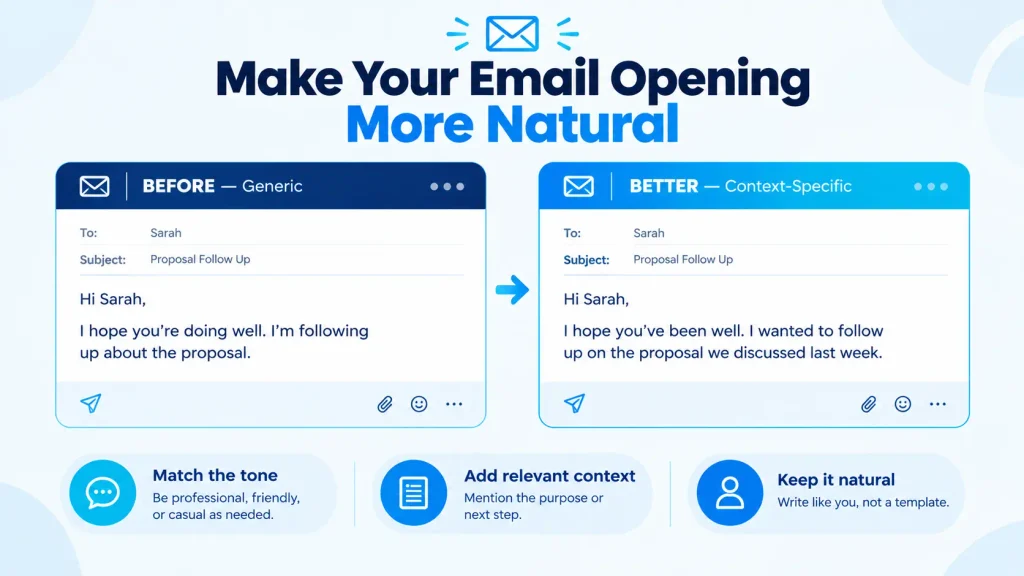
There are many natural ways to say “I hope you’re doing well,” and the right choice depends on your relationship with the reader and the purpose of your message. For professional communication, “I hope all is well” is a reliable choice, while “I trust you’re doing well” adds a more formal tone.For professional communication, “I hope all is well” is a reliable choice, while “I trust you’re doing well” adds a more formal tone.
If you are reconnecting with someone, “I hope you’ve been well” acknowledges the time since your last conversation. For friends or familiar contacts, warmer options such as “I hope things are going well for you” or “I hope life is treating you well” can feel more genuine.
The key is to match your opening to the situation rather than searching for a single perfect replacement. A thoughtful, context-appropriate greeting will always make your communication sound more natural.

The FrontiersPost editorial team writes and reviews every guide to word and phrase alternatives, with clear meanings, tone notes and example sentences for everyday, academic and professional English.