

Another way to say “I’m sorry” depends on the situation and how sincere, formal, or casual you want to sound. You can say “I apologize,” “Please forgive me,” “I regret what happened,” or “I didn’t mean to hurt you.” The best alternative should match the seriousness of the situation and clearly express genuine regret.
Key Takeaways
- “I apologize” works well in professional and formal situations.
- “Please forgive me” sounds personal, sincere, and emotional.
- “I regret what happened” is useful when expressing serious remorse.
- “I didn’t mean to hurt you” works when your actions caused unintended harm.
- The best apology is specific, sincere, and appropriate for the situation.
What Does “Another Way to Say I’m Sorry” Mean?
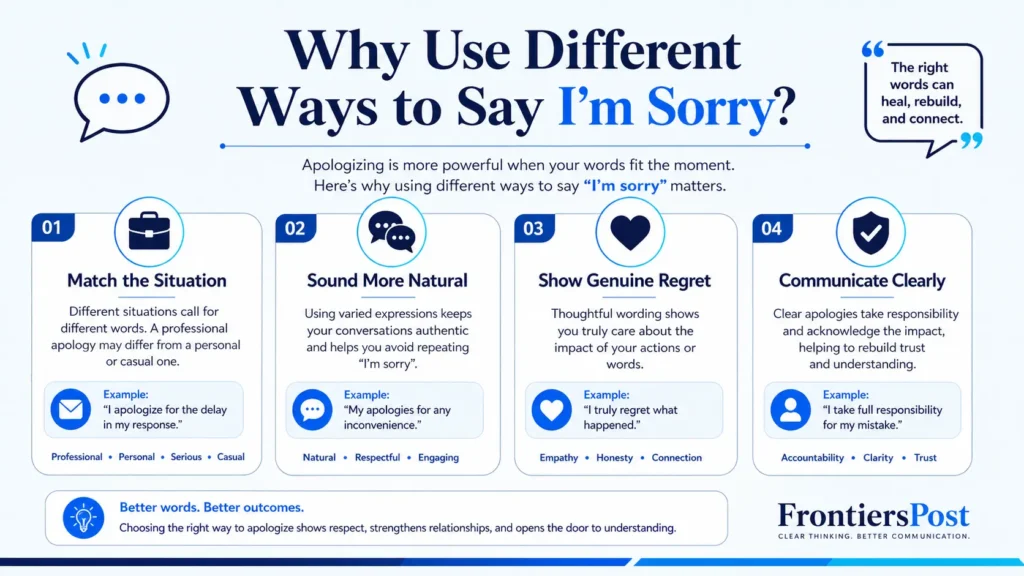
The phrase “another way to say I’m sorry” refers to different expressions you can use to apologize, show regret, or acknowledge that something went wrong.
People often look for alternatives because “I’m sorry” can feel too simple, repetitive, or informal for a particular situation. Depending on the context, you may want to sound professional, sincere, polite, warm, or deeply remorseful.
These alternatives are commonly used in emails, conversations, relationships, customer service, workplace communication, and difficult personal situations.
Why Use Other Ways to Say “I’m Sorry”?
Using a different apology can help you communicate your feelings more clearly and naturally.
You may want another expression to:
- Avoid repeating “I’m sorry.”
- Sound more professional in an email.
- Express deeper regret.
- Take responsibility for a mistake.
- Respond appropriately to someone’s feelings.
- Make a personal apology feel more sincere.
- Match the seriousness of the situation.
The important thing is not to choose the fanciest phrase. Choose the one that honestly reflects what happened and what you want to communicate.
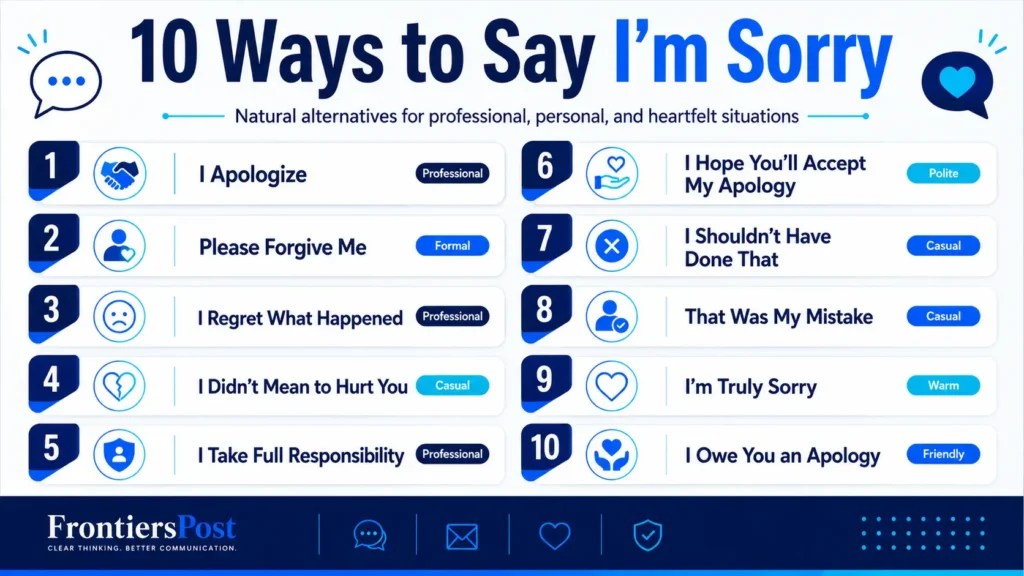
10 Best Other Ways to Say “I’m Sorry”
1. I Apologize
Meaning
“I apologize” is one of the most useful alternatives to “I’m sorry.” It clearly acknowledges a mistake and sounds more professional and formal.
It works especially well when you need to apologize at work, in an email, or when speaking to someone you do not know well.
Best For
- Professional
- Formal
- Polite
Example 1
I apologize for sending the report later than expected.
Example 2
I apologize for any confusion caused by the updated schedule.
Quick Tip
Use “I apologize” when you want to take responsibility without sounding overly emotional.
2. Please Forgive Me
Meaning
“Please forgive me” is more personal and emotional than “I apologize.” It directly asks another person to accept your apology and move past the mistake.
This phrase is best suited to close relationships or situations where you genuinely want to repair trust.
Best For
- Warm
- Friendly
- Personal
- Emotional
Example 1
Please forgive me for not being there when you needed my support.
Example 2
I know I disappointed you, and I hope you can forgive me.
Quick Tip
Use this phrase when the relationship matters and you want your apology to feel heartfelt rather than purely formal.
3. I Regret What Happened
Meaning
“I regret what happened” expresses genuine remorse without using the word “sorry.” It can work particularly well when the situation is serious or when you want to acknowledge the impact of your actions.
The phrase focuses on your regret rather than simply asking the other person to forgive you.
Best For
- Formal
- Professional
- Serious
- Warm
Example 1
I regret what happened during yesterday’s meeting and understand why you were upset.
Example 2
I deeply regret what happened and wish I had handled the situation differently.
Quick Tip
Use “I regret what happened” when you want to communicate serious remorse in a measured way.
4. I Didn’t Mean to Hurt You
Meaning
“I didn’t mean to hurt you” is useful when your words or actions caused pain unintentionally. It explains your intention while recognizing that the other person was still affected.
Be careful not to use it as an excuse. A good apology should acknowledge the impact instead of focusing only on your intentions.
Best For
- Casual
- Friendly
- Warm
- Personal
Example 1
I didn’t mean to hurt you with what I said earlier.
Example 2
I didn’t mean to make you feel ignored, and I understand why you were upset.
Quick Tip
Pair this phrase with an acknowledgment of the other person’s feelings to make it more sincere.
5. I Take Full Responsibility
Meaning
“I take full responsibility” is a strong way to acknowledge that you caused a problem or made a mistake. It shows that you are not trying to blame someone else.
This phrase is especially effective in professional situations where accountability matters.
Best For
- Professional
- Formal
- Serious
Example 1
I take full responsibility for the error in the final report.
Example 2
I take full responsibility for missing the deadline and will make sure it does not happen again.
Quick Tip
Use this phrase when you are ready to accept responsibility and, when appropriate, explain how you will correct the problem.
6. I Hope You’ll Accept My Apology
Meaning
“I hope you’ll accept my apology” is a polite and respectful way to apologize. It places emphasis on your sincere attempt to make things right without demanding immediate forgiveness.
It is appropriate when you want your apology to sound thoughtful and somewhat formal.
Best For
- Formal
- Professional
- Polite
- Warm
Example 1
I hope you’ll accept my apology for the misunderstanding.
Example 2
I hope you’ll accept my apology for the way I handled the conversation.
Quick Tip
This expression works well at the end of a written apology, particularly when you want to maintain a respectful tone.
7. I Shouldn’t Have Done That
Meaning
“I shouldn’t have done that” directly admits that a particular action was wrong. Because it identifies your behavior rather than making a vague statement, it can make an apology feel more genuine.
It is natural in everyday conversations and personal relationships.
Best For
- Casual
- Friendly
- Personal
- Warm
Example 1
I shouldn’t have raised my voice at you, and I understand that it was unfair.
Example 2
I shouldn’t have shared that information without asking you first.
Quick Tip
Use this phrase when you want to name the specific action you regret.
8. That Was My Mistake
Meaning
“That was my mistake” is a simple way to accept responsibility without making the apology overly emotional. It works well when you want to acknowledge an error quickly and clearly.
You can use it in both professional and everyday conversations.
Best For
- Professional
- Casual
- Polite
Example 1
I entered the wrong date on the form. That was my mistake.
Example 2
I misunderstood your instructions, and that was my mistake.
Quick Tip
For a more complete apology, follow it with what you will do to fix the problem.
9. I’m Truly Sorry
Meaning
“I’m truly sorry” keeps the familiar phrase “I’m sorry” but adds emphasis. The word “truly” signals that the apology is sincere rather than automatic or casual.
It is a good choice when you want to sound genuine without becoming overly formal.
Best For
- Warm
- Friendly
- Personal
- Polite
Example 1
I’m truly sorry for putting you in that difficult position.
Example 2
I’m truly sorry that my actions made things harder for you.
Quick Tip
Use this when you want a natural, heartfelt apology without changing the basic structure of “I’m sorry.”
10. I Owe You an Apology
Meaning
“I owe you an apology” is a thoughtful way to recognize that someone deserves an apology from you. It can sound mature because it acknowledges the need to address what happened.
The phrase works especially well when you have had time to reflect on your actions.
Best For
- Professional
- Warm
- Polite
- Personal
Example 1
After thinking about our conversation, I realize I owe you an apology.
Example 2
I owe you an apology for making that assumption without hearing your side.
Quick Tip
This phrase is useful when you want to open a conversation about what happened before giving a more specific apology.
Comparison Table
| Alternative | Best Used In | Tone |
| I apologize | Workplace, emails, formal situations | Professional |
| Please forgive me | Personal relationships | Heartfelt |
| I regret what happened | Serious situations | Sincere |
| I didn’t mean to hurt you | Personal conversations | Warm |
| I take full responsibility | Workplace, mistakes | Accountable |
| I hope you’ll accept my apology | Emails, formal apologies | Respectful |
| I shouldn’t have done that | Personal conversations | Direct |
| That was my mistake | Everyday and workplace situations | Straightforward |
| I’m truly sorry | Personal conversations | Heartfelt |
| I owe you an apology | Personal or professional conversations | Thoughtful |
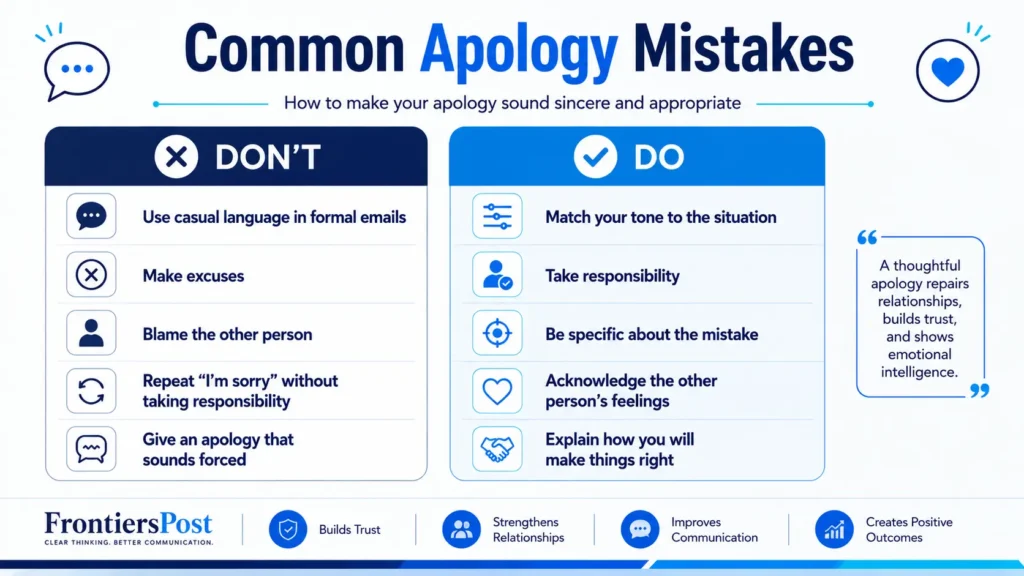
Common Mistakes When Apologizing
1. Using Casual Phrases in Professional Emails
Expressions that sound natural with friends may not work in a workplace email. When communicating with a client, manager, or customer, “I apologize” or “I take responsibility” may be more appropriate.
2. Choosing Overly Formal Language
The opposite problem can also make an apology sound unnatural. You do not need complicated wording when talking to someone close to you. A simple, honest “I shouldn’t have done that” may be more meaningful.
3. Repeating the Same Apology
Saying “I’m sorry” several times does not necessarily make an apology stronger. Instead, explain what you regret, acknowledge the impact, and describe what you will do differently.
4. Forgetting the Context
An apology should match the situation. A minor mistake may only require a brief acknowledgment, while a serious personal issue may need a more thoughtful and detailed response.
5. Sounding Insincere
Avoid apologies that shift blame, such as implying that someone is upset because they are “too sensitive.” A sincere apology focuses on your actions and their impact rather than finding excuses.
Frequently Asked Questions
What is a professional way to say “I’m sorry”?
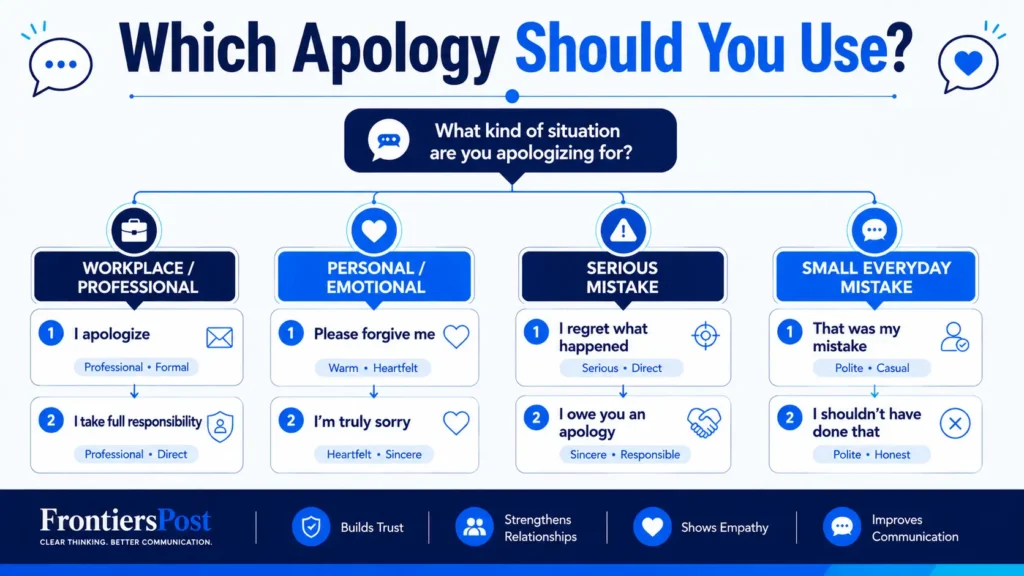
“I apologize” is one of the best professional alternatives to “I’m sorry.” It works well in emails, meetings, customer service, and workplace conversations. For more serious mistakes, you can say, “I take full responsibility” or “I regret what happened.” Choose the expression based on how serious the situation is.
What is a polite way to apologize?
“I hope you’ll accept my apology” is a polite and respectful option. “I apologize” also works in most formal situations. If you are speaking to someone personally, “I’m truly sorry” can sound warmer while still communicating genuine regret.
How can I say “I’m sorry” without actually saying it?
You can say “I apologize,” “I regret what happened,” “That was my mistake,” “I shouldn’t have done that,” or “I take full responsibility.” Each expression communicates regret in a slightly different way, so choose one that matches the situation and your relationship with the other person.
What is a heartfelt way to say “I’m sorry”?
“Please forgive me” and “I’m truly sorry” are heartfelt alternatives. You can also make your apology more meaningful by identifying exactly what you regret. For example, acknowledging that your words hurt someone can sound more sincere than simply repeating “I’m sorry.”
How do I apologize professionally in an email?
Start with a clear acknowledgment, such as “I apologize for the delay.” If appropriate, briefly explain what happened, take responsibility, and state what you are doing to resolve the issue. Avoid making excuses or writing an unnecessarily long explanation.
Is “I regret what happened” a good apology?
Yes, particularly when the situation is serious or formal. “I regret what happened” expresses remorse in a measured way. However, if you caused the problem directly, a stronger statement such as “I take full responsibility” may communicate accountability more clearly.
What is another way to say “sorry for the inconvenience”?
In professional communication, you can say, “I apologize for the inconvenience,” “Thank you for your patience,” or “I regret any disruption this may have caused.” The best choice depends on whether you need to focus on the apology, the customer’s patience, or the impact of the situation.
How can I make an apology sound sincere?
Be specific about what you did, acknowledge how it affected the other person, and avoid excuses. Instead of only saying “I’m sorry,” explain what you regret and, when possible, what you will do differently. A sincere apology focuses on accountability rather than simply ending an uncomfortable conversation.
Conclusion
There are many ways to say “I’m sorry,” and the best choice depends on the situation, relationship, and level of regret you want to communicate. “I apologize” is a reliable choice for professional settings, while “please forgive me” and “I’m truly sorry” work well for personal situations.
For serious mistakes, phrases such as “I take full responsibility” and “I regret what happened” show stronger accountability. If your mistake was specific, saying “I shouldn’t have done that” can make your apology more direct and meaningful.
The key is to choose words that sound natural and match your actions. A sincere apology does not need complicated language—it needs honesty, responsibility, and a clear understanding of the other person’s feelings. For more guidance on another way to say I’m sorry, you can also explore the different meanings and uses of apology and apologize.

Sarah Mitchell is a writer and editor specializing in English usage, professional communication, vocabulary, and natural word choice. At FrontiersPost, she helps readers understand how words and phrases differ across professional, academic, and everyday contexts.