
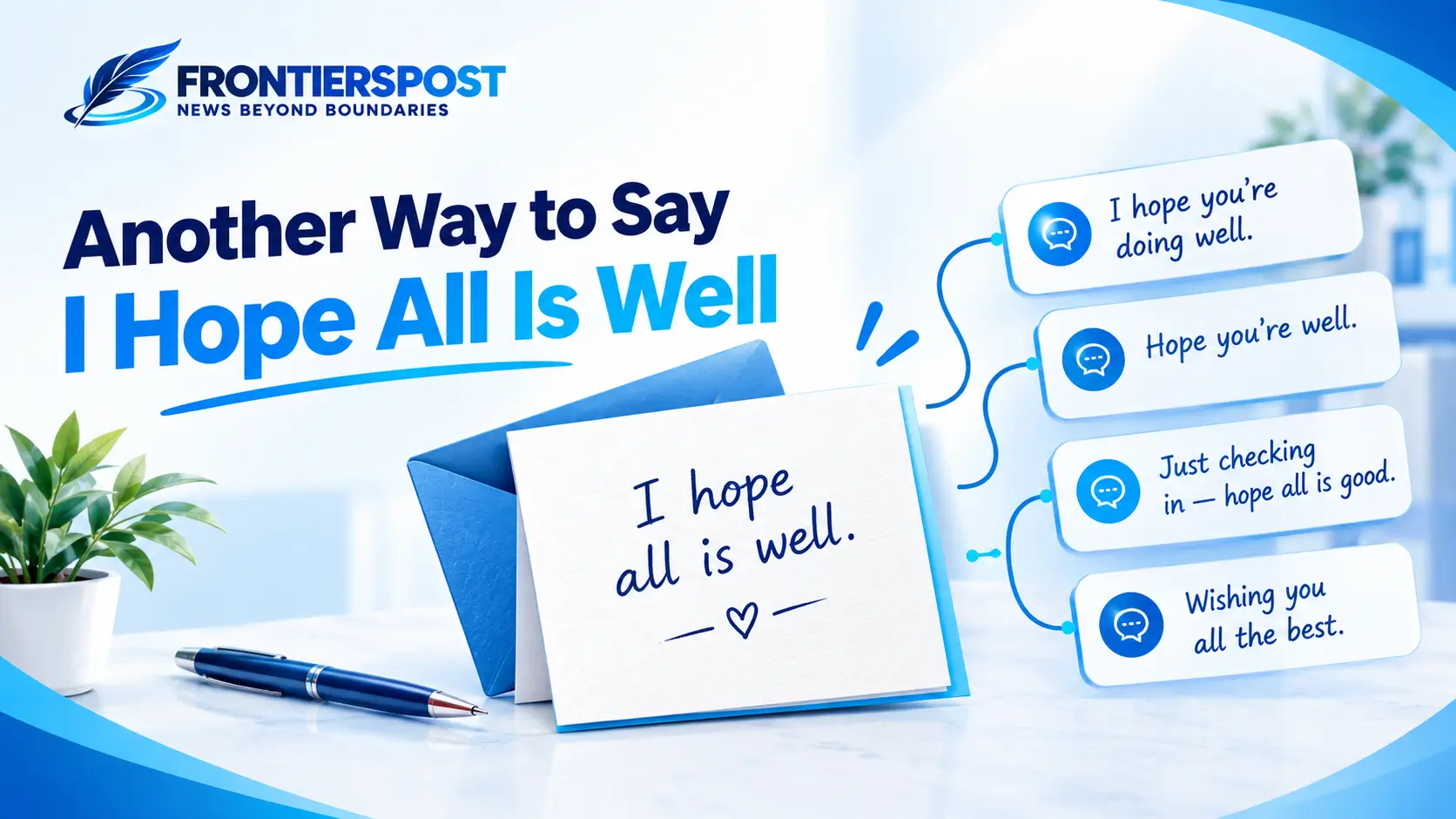
Looking for another way to say “I hope all is well”? Try “I hope you’re doing well,” “I hope everything is going well,” or “I hope things are going smoothly.” For professional emails, “I hope this message finds you well” works well, while “How have you been?” feels more natural and personal in casual conversations.
Key Takeaways
- “I hope you’re doing well” is the most versatile alternative.
- Use “I hope this message finds you well” for traditional professional emails.
- “How have you been?” sounds more personal and conversational.
- “I hope things are going smoothly” works well when discussing work or ongoing situations.
- Choose an alternative based on your relationship, context, and desired tone.
When you want to start an email, message, or conversation politely, “I hope all is well” is a common choice. However, using the same expression repeatedly can make your writing feel predictable.
Fortunately, there are many natural ways to express the same warm sentiment. The best alternative depends on whether you are writing to a coworker, client, friend, family member, or someone you have not contacted in a while.
What Does “I Hope All Is Well” Mean?
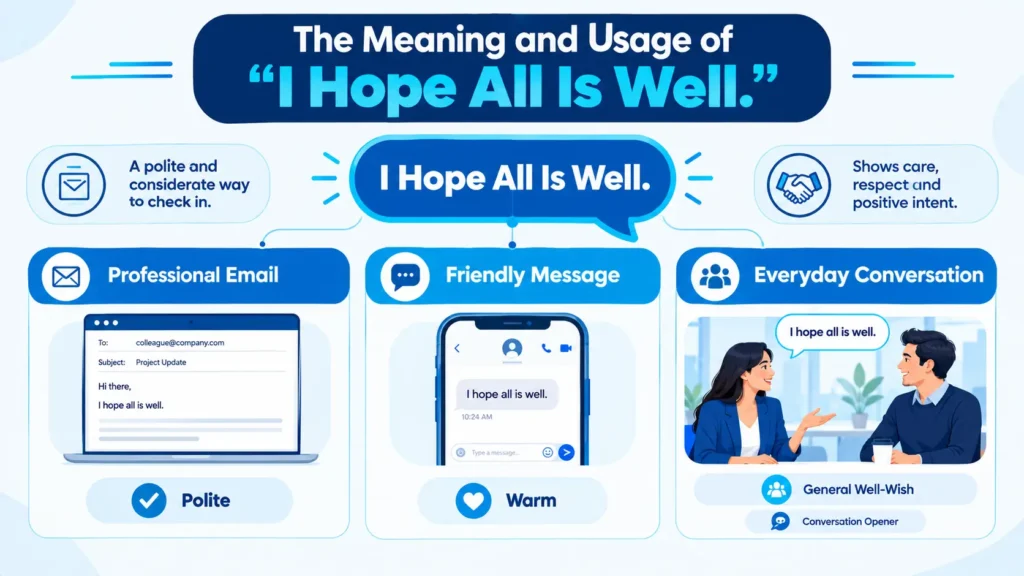
“I hope all is well” is a polite expression used to show that you are thinking positively about someone and hoping that everything in their life or current situation is going well.
It is especially common at the beginning of emails and messages. You might use it when reconnecting with someone, checking in after some time, or opening a professional conversation in a friendly way.
For example:
“Hi Sarah, I hope all is well. I wanted to follow up on our conversation from last week.”
The phrase is friendly without being overly personal, which makes it useful in both professional and personal communication.
Why Use Other Ways to Say “I Hope All Is Well”?
Although the original phrase is perfectly acceptable, alternatives can make your communication sound more natural and intentional.
Using different expressions can help you:
- Avoid repeating the same opening in emails.
- Match the tone to your relationship with the reader.
- Sound more conversational and genuine.
- Make professional messages feel warmer.
- Show more personal interest when appropriate.
- Choose wording that fits the specific situation.
The key is not simply to find a synonym. Instead, choose a phrase that communicates the right level of warmth, professionalism, and personal interest.
10 Best Other Ways to Say “I Hope All Is Well”
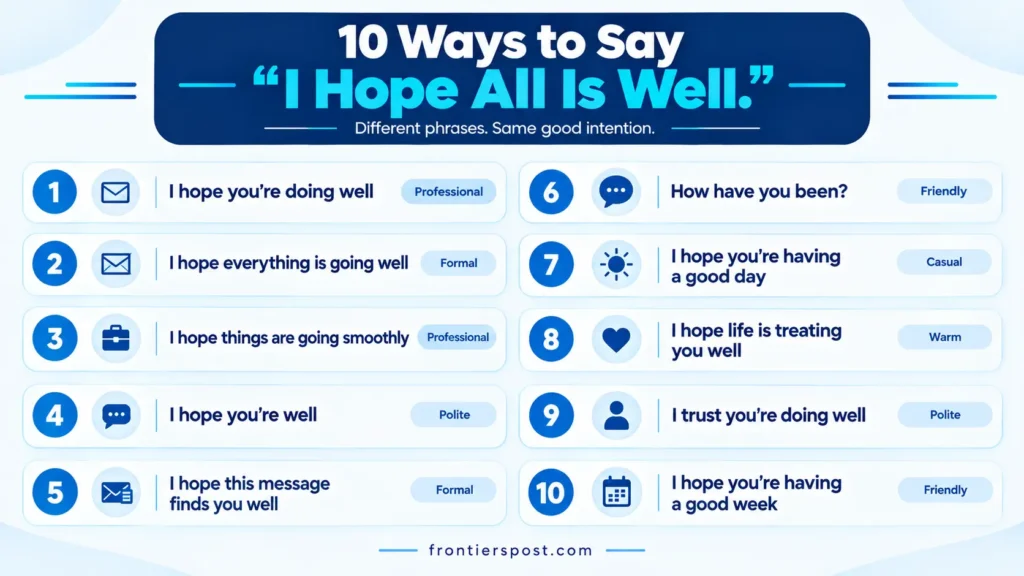
1. I Hope You’re Doing Well
Meaning
“I hope you’re doing well” is one of the most natural and widely used alternatives to “I hope all is well.” It expresses general goodwill without sounding too formal or too personal.
Best For
- Professional
- Friendly
- Polite
- Casual
Example 1
“Hi Michael, I hope you’re doing well. I’m reaching out about the proposal we discussed.”
Example 2
“Hey Jessica, I hope you’re doing well and enjoying your new job.”
Quick Tip
Use this as your default choice when you want something simple, warm, and appropriate for most situations.
2. I Hope Everything Is Going Well
Meaning
“I hope everything is going well” focuses on the person’s overall circumstances. It can refer to work, school, family life, or another situation without being overly specific.
Best For
- Professional
- Friendly
- Polite
- Warm
Example 1
“Hi Daniel, I hope everything is going well with the new project.”
Example 2
“I hope everything is going well for you since we last spoke.”
Quick Tip
This phrase is particularly useful when you know the person has recently experienced a change or started something new.
3. I Hope Things Are Going Smoothly
Meaning
“I hope things are going smoothly” suggests that you hope the person is having a manageable and positive experience. It works especially well when someone is dealing with a project, transition, or busy period.
Best For
- Professional
- Polite
- Friendly
- Warm
Example 1
“I hope things are going smoothly with the office relocation.”
Example 2
“Just checking in to see how things are going. I hope everything is going smoothly on your end.”
Quick Tip
Choose this expression when you want your message to acknowledge an ongoing situation rather than simply ask about someone’s general well-being.
4. I Hope You’re Well
Meaning
“I hope you’re well” is a concise and polished way to express the same basic sentiment. It is slightly more formal than “I hope you’re doing well,” making it a strong option for professional correspondence.
Best For
- Professional
- Formal
- Polite
Example 1
“Dear Mr. Thompson, I hope you’re well. I’m writing to discuss the upcoming meeting.”
Example 2
“Hi Laura, I hope you’re well. Thank you for getting back to me so quickly.”
Quick Tip
Use this when you want a professional opening that is courteous but does not sound overly wordy.
5. I Hope This Message Finds You Well
Meaning
“I hope this message finds you well” is a traditional email greeting that expresses goodwill before getting to the main purpose of your message. It has a polished, courteous tone.
Best For
- Professional
- Formal
- Polite
Example 1
“Dear Professor Adams, I hope this message finds you well. I’m writing to ask about the research assignment.”
Example 2
“Hello James, I hope this message finds you well. I wanted to follow up regarding our previous discussion.”
Quick Tip
This works best in formal or traditional correspondence, but avoid using it in every email because it can feel formulaic.
6. How Have You Been?
Meaning
“How have you been?” turns a general expression of goodwill into a direct question. It feels more personal and conversational, especially when you have not spoken with someone recently.
Best For
- Casual
- Friendly
- Warm
- Polite
Example 1
“Hi Emma! It’s been a while. How have you been?”
Example 2
“Hey Mark, how have you been? I was thinking about you after seeing your recent post.”
Quick Tip
Use this instead of a formal email opener when you genuinely want to invite the other person to share how they have been doing.
7. I Hope You’re Having a Good Day
Meaning
“I hope you’re having a good day” is a lighter and more immediate expression. Rather than referring to someone’s overall circumstances, it focuses on their current day.
Best For
- Casual
- Friendly
- Warm
- Polite
Example 1
“Hi Rachel, I hope you’re having a good day. Could you send me the updated schedule?”
Example 2
“Good morning, Tom! I hope you’re having a good day so far.”
Quick Tip
This is a natural choice for short messages, customer communication, and everyday conversations.
8. I Hope Life Is Treating You Well
Meaning
“I hope life is treating you well” has a warmer and more personal feel. It suggests that you are interested in the person’s broader life rather than only their immediate circumstances.
Best For
- Friendly
- Warm
- Casual
- Polite
Example 1
“Hi Alex, it’s been years! I hope life is treating you well.”
Example 2
“I was reminded of our college days today and wanted to say hello. I hope life is treating you well.”
Quick Tip
Save this phrase for personal relationships because it can sound too intimate or informal in some workplace settings.
9. I Trust You’re Doing Well
Meaning
“I trust you’re doing well” conveys goodwill with a more formal and confident tone. It is suitable when you want to sound polished without using the more traditional “I hope this message finds you well.”
Best For
- Professional
- Formal
- Polite
Example 1
“Dear Ms. Carter, I trust you’re doing well. I’m following up on the information you requested.”
Example 2
“I trust you’re doing well and that the conference preparations are progressing as planned.”
Quick Tip
This expression fits business correspondence particularly well, but its formal tone may feel unnatural in a casual text.
10. I Hope You’re Having a Good Week
Meaning
“I hope you’re having a good week” gives your opening a friendly, current feel. It is slightly more specific than a general statement about someone’s well-being.
Best For
- Professional
- Friendly
- Casual
- Warm
Example 1
“Hi Kevin, I hope you’re having a good week. I wanted to check whether Thursday still works for our meeting.”
Example 2
“Good afternoon, Lisa. I hope you’re having a good week so far.”
Quick Tip
This is especially useful for weekday emails and messages because it sounds friendly without becoming overly personal.
Comparison Table
| Alternative | Best Used In | Tone |
| I hope you’re doing well | Most situations | Friendly, polite |
| I hope everything is going well | Work and personal conversations | Warm, polite |
| I hope things are going smoothly | Projects and ongoing situations | Professional, warm |
| I hope you’re well | Professional emails | Formal, polite |
| I hope this message finds you well | Formal correspondence | Formal, courteous |
| How have you been? | Reconnecting with people | Casual, personal |
| I hope you’re having a good day | Short messages and emails | Friendly, warm |
| I hope life is treating you well | Personal conversations | Warm, personal |
| I trust you’re doing well | Business correspondence | Formal, professional |
| I hope you’re having a good week | Work and everyday messages | Friendly, professional |
Common Mistakes
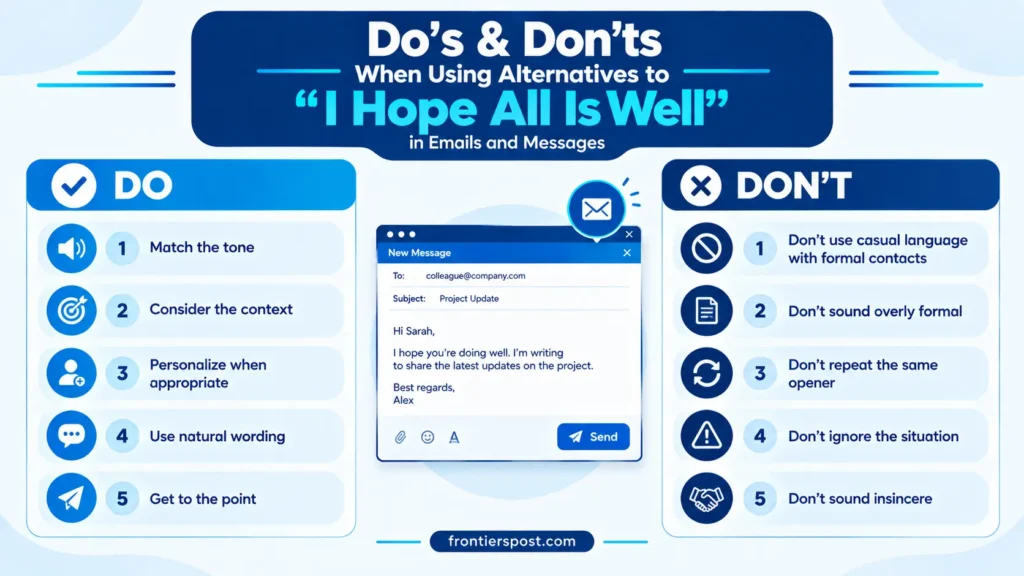
1. Using Casual Phrases in Professional Emails
A phrase such as “How have you been?” may be perfectly natural with a friend but can feel too personal when writing to a client or senior colleague.
2. Choosing Overly Formal Language
Expressions such as “I trust you’re doing well” may sound polished, but they are not appropriate for every audience. Match the formality of your language to the relationship.
3. Repeating the Same Opening
Starting every email with “I hope all is well” can make your messages sound automated. Rotate your wording naturally when the context allows it.
4. Forgetting the Context
The best alternative depends on what you are communicating. If someone is managing a project, “I hope things are going smoothly” is more relevant than a generic greeting.
5. Sounding Insincere
Do not add a warm greeting simply as filler before immediately making a demand. When possible, connect the opening naturally to the reason you are contacting the person.
Frequently Asked Questions
What is another way to say “I hope all is well” professionally?
A strong professional alternative is “I hope you’re doing well.” It sounds natural, respectful, and less formulaic than some traditional email greetings. For a more formal message, you can use “I hope this message finds you well” or “I trust you’re doing well,” depending on your relationship with the recipient.
What is a better way to say “I hope all is well” in an email?
“I hope you’re doing well” is usually the safest choice for an email. If you want to sound more specific, try “I hope everything is going well” or “I hope things are going smoothly.” The best option depends on whether you are writing to a coworker, client, professor, friend, or another professional contact.
Is “I hope you’re doing well” better than “I hope all is well”?
Both phrases are correct and natural. However, “I hope you’re doing well” often sounds more direct and conversational because it addresses the person specifically. “I hope all is well” is broader and can refer to someone’s general circumstances, making it useful when you want a neutral, polite opening.
What can I say instead of “I hope all is well” to a friend?
For a friend, you can use “How have you been?”, “I hope you’re doing well,” or “I hope life is treating you well.” “How have you been?” is especially natural when you have not spoken recently because it invites your friend to tell you what has been happening in their life.
What is a casual way to say “I hope all is well”?
“How have you been?” is one of the most natural casual alternatives. You could also say “I hope you’re having a good day” or “I hope things are going well.” These options feel relaxed and friendly without sounding overly formal or scripted.
How do you say “I hope all is well” without sounding formal?
Use conversational language such as “I hope you’re doing well,” “How have you been?” or “I hope things are going well.” These phrases sound more natural than traditional formal greetings. For texts and casual messages, a simple “How have you been?” can feel especially genuine.
What is the best alternative to “I hope all is well” for a client?
“I hope you’re doing well” is a reliable choice for most client emails. If you are discussing a specific project, “I hope things are going smoothly” can be even better because it connects your greeting to the client’s current work without becoming too personal.
Can I use “I hope this message finds you well” instead of “I hope all is well”?
Yes, you can. “I hope this message finds you well” is a conventional professional greeting, especially in formal emails and correspondence. However, it can sound somewhat traditional or formulaic, so “I hope you’re doing well” may feel more natural in modern American business communication.
Conclusion
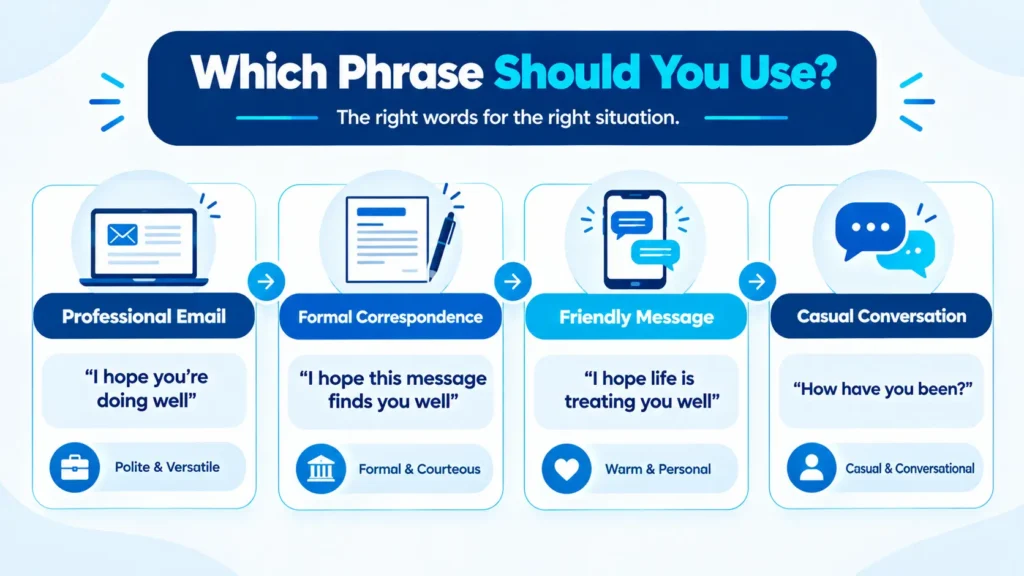
There are many natural ways to say “I hope all is well,” and the right choice depends on your audience and situation. “I hope you’re doing well” is the most versatile option, while “I hope you’re well” works nicely in professional correspondence.
For a more personal conversation, try “How have you been?” or “I hope life is treating you well.” When discussing work or a specific project, “I hope things are going smoothly” adds useful context. Meanwhile, formal messages may benefit from “I hope this message finds you well” or “I trust you’re doing well.”
The best approach is to choose wording that sounds natural for your relationship with the reader. Understanding the meaning and usage of ‘hope’ can also help you choose the right expression for each situation.

Sarah Mitchell is a writer and editor specializing in English usage, professional communication, vocabulary, and natural word choice. At FrontiersPost, she helps readers understand how words and phrases differ across professional, academic, and everyday contexts.