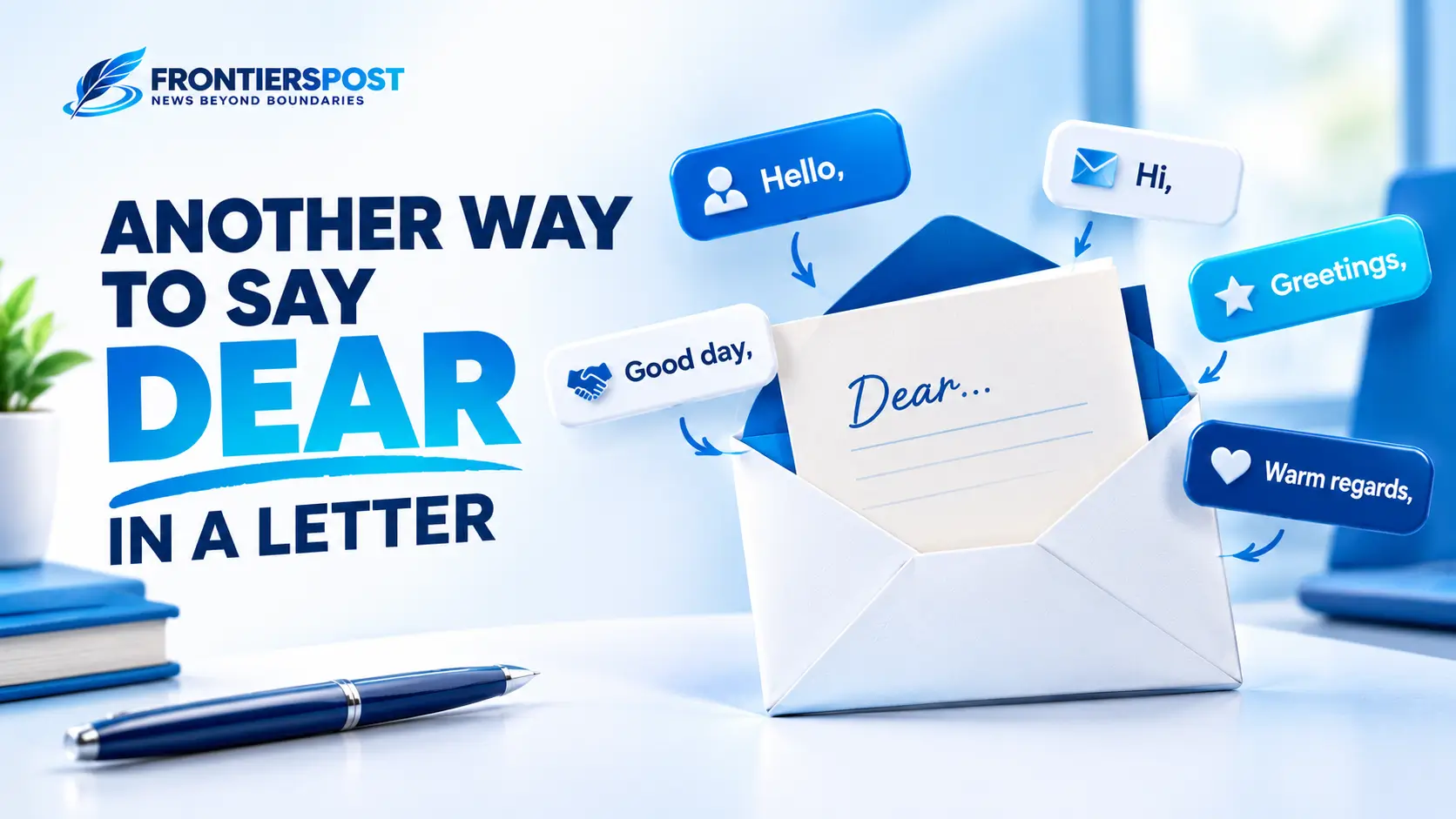
Another way to say dear in a letter includes “Hello,” “Greetings,” “Good morning,” and “Dear [Full Name].” The best greeting depends on your relationship with the recipient and the purpose of your message. For professional correspondence, choose a respectful and inclusive greeting. For personal letters, use a warm opening that feels natural.
Key Takeaways
- Choose a greeting that matches your audience and the purpose of your letter.
- Use “Hello” for friendly, professional, and everyday communication.
- Choose a person’s name or professional title for formal correspondence.
- Use gender-neutral greetings when the recipient’s preferred title is unknown.
- Save affectionate greetings such as “My Dear” for personal relationships.
What Does “Another Way to Say Dear in a Letter” Mean?
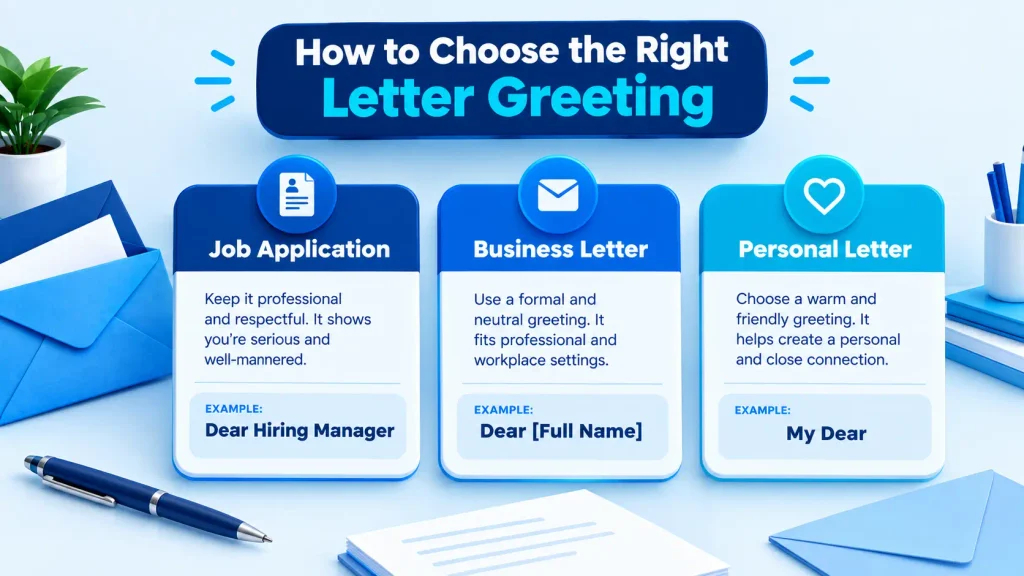
Looking for another way to say “Dear” in a letter means finding an alternative greeting to use at the beginning of written communication. Although “Dear” remains common in formal letters and professional emails, other greetings can sound more natural in modern settings.
People often look for alternatives when contacting a business, applying for a job, writing to a colleague, or sending a personal message. The right opening helps establish the tone before the reader reaches the main message.
When Is “Dear” Commonly Used?
The word “Dear” is traditionally used to begin letters and emails in different situations.
Professional Correspondence
Examples include:
- Dear Hiring Manager,
- Dear Dr. Wilson,
- Dear Customer Support Team,
Personal Letters
Examples include:
- Dear Grandma,
- Dear Emily,
- Dear Friends,
Formal Communication
Examples include:
- Dear Members of the Committee,
- Dear Admissions Team,
- Dear Conference Organizers,
Why Consider a Different Greeting?
A different greeting can make your writing more appropriate for the situation. For example, “Hello” sounds natural in many everyday emails, while “Dear Dr. Wilson” maintains a respectful tone in academic correspondence.
The goal is not to avoid “Dear” completely. Instead, choose a greeting that fits your audience, communicates respect, and sounds natural.
Why Use Other Ways to Say “Dear” in a Letter?
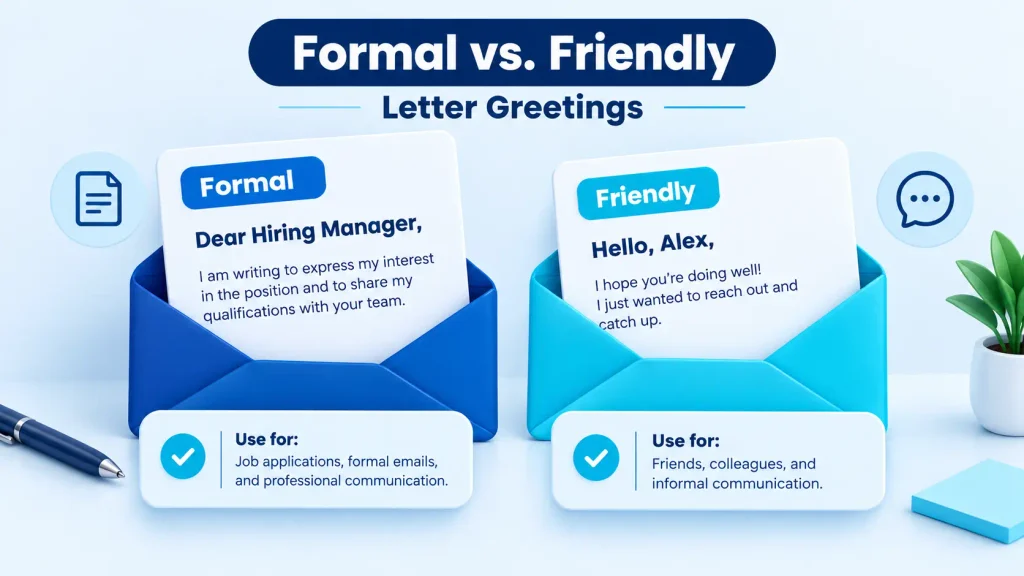
Although “Dear” is widely accepted, varying your greeting can improve your written communication.
Here are the main benefits:
- Avoid repetition: Use different greetings when writing several messages.
- Sound more natural: Match your opening to modern email and letter-writing habits.
- Maintain professionalism: Choose appropriate wording for clients, managers, and unfamiliar recipients.
- Create a friendly tone: Make personal notes feel warm and approachable.
- Use inclusive language: Avoid assumptions about a recipient’s gender or preferred title.
- Address unknown recipients: Choose a suitable greeting when you do not know the reader’s name.
The best greeting depends on the context. A phrase that works for a friend may not be suitable for a formal application or business inquiry.
10 Best Other Ways to Say “Dear” in a Letter
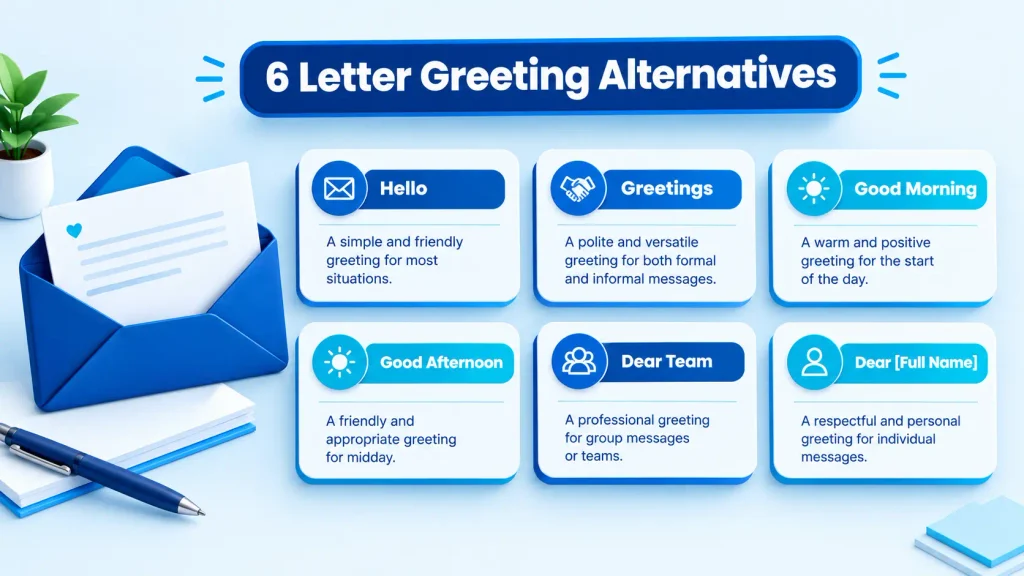
These ten alternatives cover professional emails, formal letters, workplace messages, and personal correspondence.
1. Hello
Meaning
“Hello” is a friendly, neutral greeting that works in many modern communication settings. It feels less traditional than “Dear” while remaining polite enough for most professional emails.
Best For
- Professional
- Casual
- Friendly
- Polite
Example 1
Hello Sarah,
I’m writing to confirm our meeting scheduled for Thursday afternoon.
Example 2
Hello Customer Support Team,
Could you please help me resolve an issue with my recent order?
Quick Tip
Use “Hello” when you want a straightforward opening that feels professional without sounding overly formal.
2. Greetings
Meaning
“Greetings” is a polite, somewhat formal opening for letters and emails. It works well when addressing a group or introducing a general announcement.
Best For
- Formal
- Professional
- Polite
Example 1
Greetings, Hiring Committee,
Thank you for reviewing my application for the marketing position.
Example 2
Greetings, Conference Participants,
We are pleased to share the schedule for next month’s event.
Quick Tip
Use “Greetings” for announcements and group correspondence. For a routine one-to-one email, “Hello” often sounds more natural.
3. Good Morning
Meaning
“Good morning” is a courteous greeting that makes a professional message feel conversational. It is useful when you want to acknowledge the recipient politely at the beginning of the day.
Best For
- Professional
- Friendly
- Polite
Example 1
Good morning, Mr. Davis,
I’m following up on the proposal we discussed yesterday.
Example 2
Good morning, Team,
Please review the updated project timeline before our afternoon meeting.
Quick Tip
Use this greeting when the time of day is relevant. For messages that may be read later, “Hello” is a more flexible choice.
4. Good Afternoon
Meaning
“Good afternoon” is a respectful greeting for professional correspondence sent during the afternoon. It offers a courteous alternative to a traditional letter opening.
Best For
- Professional
- Formal
- Polite
Example 1
Good afternoon, Professor Miller,
I have a question about the research assignment due next week.
Example 2
Good afternoon, Ms. Carter,
I’m writing to discuss the next steps for our partnership.
Quick Tip
Choose “Good afternoon” when a time-specific greeting suits the situation and your relationship with the recipient.
5. Dear [Full Name]
Meaning
“Dear [Full Name]” is a traditional, respectful greeting that identifies the recipient without relying on a gender-specific title. It works well when you know the person’s name but are unsure which title they prefer.
Best For
- Formal
- Professional
- Polite
Example 1
Dear Jordan Lee,
I am writing to express my interest in the available administrative position.
Example 2
Dear Taylor Morgan,
Thank you for taking the time to review my research proposal.
Quick Tip
Check the spelling of the recipient’s name before sending your letter. When appropriate, follow the person’s preferred form of address.
6. To Whom It May Concern
Meaning
“To Whom It May Concern” is a traditional formal greeting used when the intended recipient is unknown or cannot be identified. It may be appropriate for certain official letters, verification requests, and general inquiries.
Best For
- Formal
- Professional
- Polite
Example 1
To Whom It May Concern,
I am writing to request verification of my employment history.
Example 2
To Whom It May Concern,
Please find enclosed the documents required to process my application.
Quick Tip
Use this phrase only when you cannot identify a suitable person or department. A specific greeting is usually more direct and personal.
7. Hello [Full Name]
Meaning
“Hello” followed by the recipient’s full name creates a direct, polite greeting without using a formal title. It is useful for modern workplace emails and professional messages that call for an approachable tone.
Best For
- Professional
- Friendly
- Casual
- Polite
Example 1
Hello Jordan Lee,
I’m sharing the revised presentation for your feedback.
Example 2
Hello Taylor Morgan,
Would you be available for a brief conversation about the upcoming project?
Quick Tip
Use the recipient’s name and follow the communication style already established in your workplace.
8. Dear Hiring Manager
Meaning
“Dear Hiring Manager” is a professional greeting for job applications when you do not know the name of the person reviewing your materials. It identifies the likely reader’s role without making assumptions about their gender.
Best For
- Formal
- Professional
- Polite
Example 1
Dear Hiring Manager,
I am excited to apply for the customer service representative position advertised on your careers page.
Example 2
Dear Hiring Manager,
My experience in project coordination has prepared me to contribute effectively to your team.
Quick Tip
If the job posting identifies a recruiter or hiring manager, use that person’s name when appropriate. A specific greeting can make your application feel more carefully prepared.
9. My Dear
Meaning
“My Dear” is an affectionate greeting that expresses closeness, warmth, or fondness. It is more personal than a standard letter opening and is best suited to relationships where affection is welcome.
Best For
- Warm
- Friendly
- Casual
Example 1
My dear Emily,
I was delighted to hear about your new home and wish you happiness there.
Example 2
My dear Aunt Linda,
I still remember the wonderful summers we spent together at your house.
Quick Tip
Reserve “My Dear” for close friends, relatives, or other personal relationships. It can sound overly intimate or old-fashioned in professional correspondence.
10. Dear Team
Meaning
“Dear Team” is a collective greeting for messages addressed to a group of colleagues or collaborators. It maintains a professional tone while creating a sense of shared purpose.
Best For
- Professional
- Friendly
- Polite
Example 1
Dear Team,
Please review the attached report before Friday’s planning session.
Example 2
Dear Team,
Thank you for your hard work and cooperation throughout this project.
Quick Tip
Use “Dear Team” when addressing an established group. For a less formal workplace email, “Hello, Team” is also a natural option.
Comparison Table: Alternatives to “Dear” in a Letter
| Alternative | Best Used In | Tone |
|---|---|---|
| Hello | Everyday emails and general correspondence | Neutral, friendly |
| Greetings | Announcements and group messages | Formal, polite |
| Good Morning | Morning business emails | Courteous, professional |
| Good Afternoon | Afternoon correspondence | Respectful, professional |
| Dear [Full Name] | Formal letters and applications | Traditional, respectful |
| To Whom It May Concern | Letters to an unidentified recipient | Formal, impersonal |
| Hello [Full Name] | Modern professional emails | Direct, approachable |
| Dear Hiring Manager | Job applications | Professional, formal |
| My Dear | Personal letters to loved ones | Affectionate, warm |
| Dear Team | Workplace group communication | Professional, inclusive |
Common Mistakes When Choosing a Letter Greeting
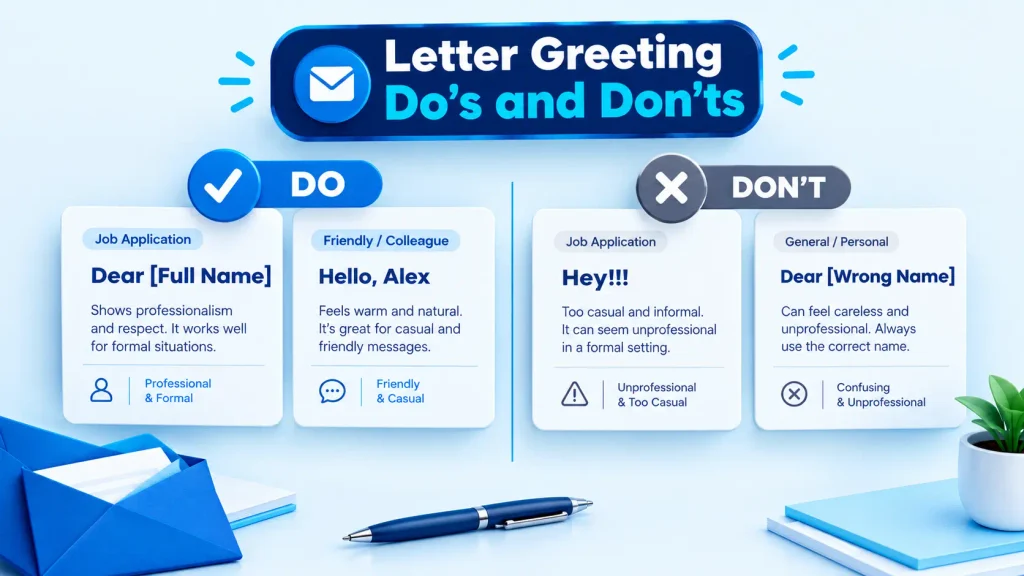
Selecting an appropriate greeting is simple once you understand the context. However, a few common mistakes can make your writing less effective.
1. Using Casual Greetings in Formal Letters
Openings such as “Hey” may feel too relaxed when contacting a university administrator, potential employer, or business executive.
How to Avoid This Mistake
Choose “Dear [Full Name]” or “Dear Hiring Manager” when the situation calls for a formal tone.
2. Choosing Overly Formal Language for Routine Emails
A highly formal greeting can feel distant when communicating with a colleague you work with daily.
How to Avoid This Mistake
Use “Hello [Name]” when you want a professional but conversational opening.
3. Using an Affectionate Greeting With an Unfamiliar Person
“My Dear” can suggest a level of intimacy that does not suit a new business contact or unfamiliar recipient.
How to Avoid This Mistake
Save affectionate greetings for people with whom you have an established personal relationship.
4. Ignoring the Recipient’s Name or Preferred Title
Misspelling someone’s name or using a title they do not prefer can make a letter seem careless.
How to Avoid This Mistake
Verify the recipient’s name and preferred form of address before sending important correspondence. If you are unsure about a title, using the person’s full name can be a practical alternative.
5. Using a Generic Greeting When a Specific One Is Available
A general greeting may sound impersonal when you can identify the intended recipient or department.
How to Avoid This Mistake
Address the relevant person, team, or department whenever possible. This makes your message more direct and helps the reader understand that it was prepared for the right audience.
Frequently Asked Questions
1. What is the best alternative to “Dear” in a letter?
“Hello” is one of the most versatile alternatives because it works in many professional and everyday situations. For formal correspondence, “Dear [Full Name]” remains appropriate, while “My Dear” is better for affectionate personal letters. Choose a greeting that suits your relationship with the reader and the purpose of your message.
2. How do you start a formal letter without saying “Dear”?
You can begin with “Greetings” or address the recipient by their role, such as “Dear Hiring Manager.” If you know the recipient’s name, “Hello [Full Name]” may also work in many professional settings. The right choice depends on the formality of the letter and the expectations of its intended audience.
3. Is “Hello” professional enough for a business letter?
Yes, “Hello” is professional enough for many modern business emails and routine workplace messages. It sounds polite and approachable without being overly formal. However, traditional business letters, legal correspondence, or messages to senior officials may call for a more formal greeting, depending on the organization and situation.
4. What can I write instead of a traditional gender-specific greeting?
You can use “Dear [Full Name],” “Dear Hiring Manager,” or “Hello Customer Support Team.” These options focus on the recipient’s name or role rather than assuming a gender or preferred title. When possible, use the recipient’s name or the department responsible for handling your request.
5. How do you address someone in a letter when you don’t know their name?
Use the most specific greeting you can identify. For example, “Dear Hiring Manager” works for a job application, while “Hello Customer Support Team” is suitable for a customer service inquiry. “To Whom It May Concern” remains an option for certain formal letters when you cannot identify an individual or department.
6. Can I use “Hey” instead of “Dear” in a letter?
You can use “Hey” in informal messages to friends, relatives, or close coworkers when that tone fits your relationship. However, it may sound too casual in a job application, formal complaint, or first email to a client. When unsure, “Hello” offers a safer balance between friendliness and professionalism.
7. What is a warm alternative to “Dear” for a personal letter?
“My Dear” is a warm, affectionate choice for a personal letter to a close friend or relative. You can also use a person’s first name on its own or write “Hello [Name]” for a more relaxed opening. Consider how you normally speak to the recipient so the greeting feels genuine.
8. Should I use “Dear” in professional emails?
Yes, “Dear” remains appropriate in professional emails, especially when contacting someone for the first time or writing in a formal setting. However, “Hello [Name]” is also suitable for everyday workplace communication. Follow your organization’s norms and the recipient’s established style to choose the most natural greeting.
You may also find these guides useful: Better Ways to Say “Detail-Oriented” on a Resume, Another Way to Say “Friendly Reminder” and Professional Alternatives to “Good Luck in Your Future Endeavors”.
Conclusion
Choosing another way to say dear in a letter depends on your audience, relationship, and purpose. “Hello” is a versatile option for everyday professional communication, while “Good Morning” and “Good Afternoon” offer courteous openings for time-specific messages. For formal correspondence, use the recipient’s full name or professional title when appropriate.
When applying for a job, “Dear Hiring Manager” is a practical choice if you cannot identify the reader. For group messages, “Dear Team” keeps your opening professional and inclusive. Meanwhile, “My Dear” adds warmth to personal letters.
The most important rule is to make your greeting fit the message. Choose wording that sounds natural, respects the recipient, and sets the right tone from the first line. Understanding the meaning of a salutation can also help you choose an appropriate opening for your letter.

The FrontiersPost editorial team writes and reviews every guide to word and phrase alternatives, with clear meanings, tone notes and example sentences for everyday, academic and professional English.