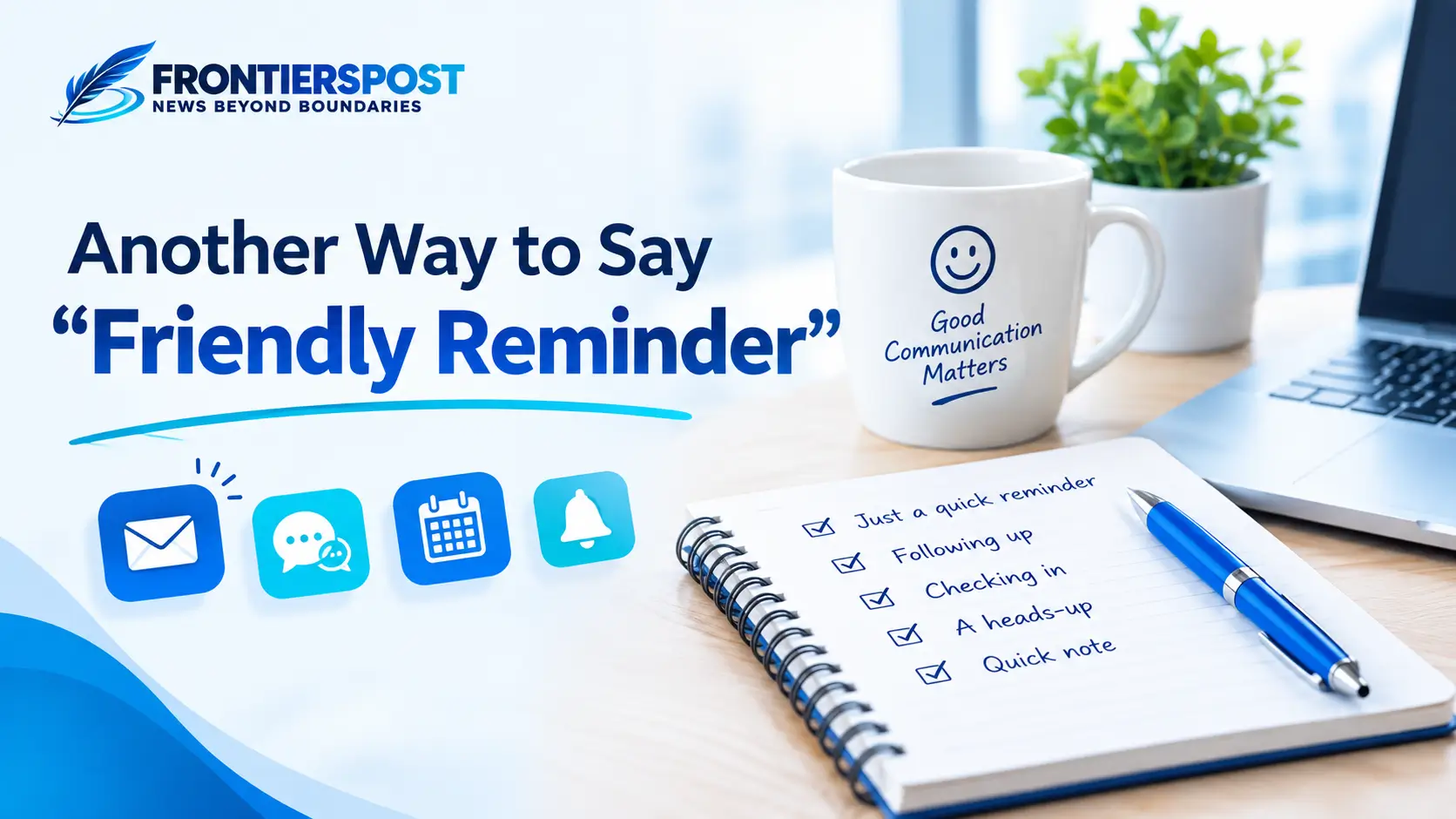
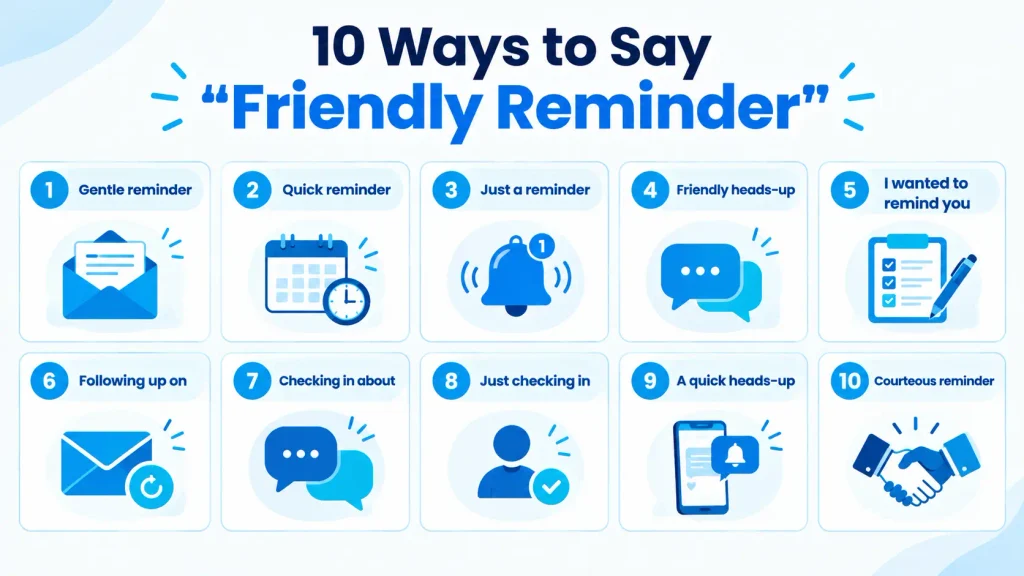
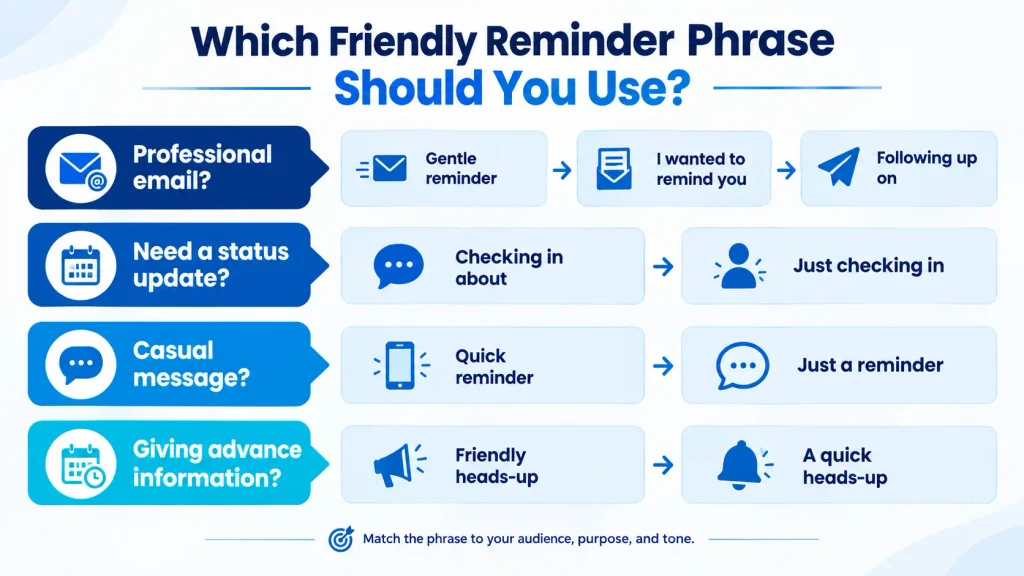
If you need another way to say “friendly reminder,” try phrases such as “gentle reminder,” “quick reminder,” “just a reminder,” “friendly heads-up,” or “I wanted to remind you.” The best choice depends on your tone and situation. For professional emails, a polite and direct phrase usually sounds more natural than repeating “friendly reminder.”
Key Takeaways
- “Friendly reminder” is a polite way to bring something back to someone’s attention.
- “Gentle reminder” works well when you want to sound courteous and professional.
- “Quick reminder” is useful for short, informal messages and emails.
- “Following up on” works especially well for professional communication.
- Choose an alternative based on the relationship, urgency, and tone of your message.
What Does “Another Way to Say Friendly Reminder” Mean?
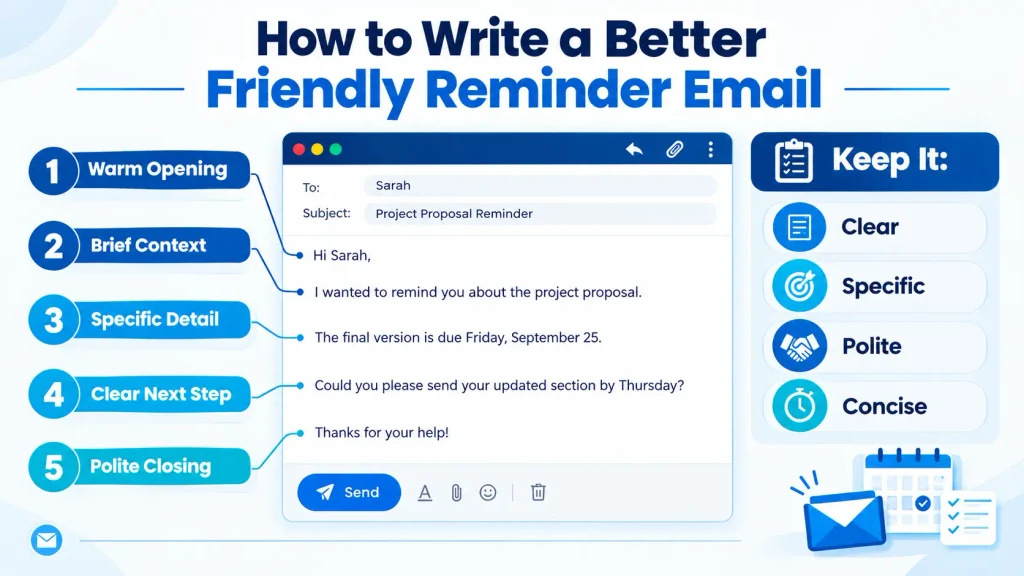
“Friendly reminder” is a polite expression used to remind someone about a task, deadline, appointment, payment, meeting, or request without sounding demanding.
It is common in workplace emails, school communication, customer messages, and everyday conversations. For example, you might write, “Just sending a friendly reminder that the report is due Friday.”
However, using the same phrase repeatedly can make your messages sound predictable. Choosing a different expression can make your communication feel more natural while keeping the reminder polite.
Why Use Other Ways to Say “Friendly Reminder”?
There are several reasons to choose a different phrase instead of repeating “friendly reminder” in every message.
- Avoid repetition: Vary your wording when sending several reminders.
- Sound more natural: Some situations call for a simple, conversational phrase.
- Match the situation: A deadline reminder may need different wording from a casual follow-up.
- Improve professional communication: A thoughtful phrase can make an email sound polished.
- Adjust the tone: You can make your message warmer, more direct, formal, or casual.
10 Best Other Ways to Say “Friendly Reminder”
1. Gentle Reminder
Meaning
“Gentle reminder” is a polite way to bring something to someone’s attention without making the message sound forceful. It is especially useful when you want to remind someone while maintaining a professional and respectful tone.
Best For
- Professional
- Formal
- Polite
- Friendly
Example 1
This is a gentle reminder that the registration form is due by Friday.
Example 2
Just a gentle reminder to send over the documents when you have a chance.
Quick Tip
Use “gentle reminder” when you want to emphasize courtesy rather than urgency.
2. Quick Reminder
Meaning
“Quick reminder” makes a reminder sound brief and straightforward. It works well when the recipient already knows about the task and you simply want to bring it back to their attention.
Best For
- Professional
- Casual
- Friendly
- Polite
Example 1
Just a quick reminder that our team meeting starts at 10 a.m. tomorrow.
Example 2
A quick reminder to complete your section before the presentation.
Quick Tip
This phrase is ideal for short emails, team messages, and everyday workplace communication.
3. Just a Reminder
Meaning
“Just a reminder” is one of the simplest alternatives to “friendly reminder.” It sounds natural and conversational while remaining polite enough for many professional situations.
Best For
- Professional
- Casual
- Friendly
- Polite
Example 1
Just a reminder that the office will be closed next Monday.
Example 2
Just a reminder to bring your completed forms to the appointment.
Quick Tip
Keep the rest of the message concise so the reminder does not sound more serious than intended.
4. Friendly Heads-Up
Meaning
“Friendly heads-up” gives someone advance notice about something they should know or prepare for. It has a warm, conversational feel and is less formal than “friendly reminder.”
Best For
- Casual
- Friendly
- Warm
Example 1
Just a friendly heads-up that the schedule has changed for next week.
Example 2
Here’s a friendly heads-up that the parking lot will be closed tomorrow morning.
Quick Tip
Use this phrase with coworkers, friends, or familiar contacts rather than in highly formal correspondence.
5. I Wanted to Remind You
Meaning
“I wanted to remind you” sounds personal and considerate. Instead of presenting the message as a formal reminder, it frames the communication as a thoughtful follow-up.
Best For
- Professional
- Formal
- Friendly
- Polite
Example 1
I wanted to remind you that your interview is scheduled for Thursday afternoon.
Example 2
I wanted to remind you to review the attached proposal before our call.
Quick Tip
This is a strong choice when you want a professional email to sound warm without being overly casual.
6. Following Up On
Meaning
“Following up on” is a professional way to reconnect about something previously discussed or requested. It focuses on the ongoing conversation rather than calling attention to the fact that you are reminding someone.
Best For
- Professional
- Formal
- Polite
Example 1
I’m following up on the information I requested last week.
Example 2
I’m following up on our conversation about the project timeline.
Quick Tip
Use this phrase when there has already been an earlier email, request, meeting, or conversation.
7. Checking In About
Meaning
“Checking in about” is a friendly and flexible way to ask for an update or bring up a previous matter. It often sounds softer than directly asking someone to complete a task.
Best For
- Professional
- Casual
- Friendly
- Warm
- Polite
Example 1
I’m checking in about the application you submitted earlier this month.
Example 2
I wanted to check in about the changes we discussed during our meeting.
Quick Tip
Choose this option when you want to encourage a response without making the message feel like a demand.
8. Just Checking In
Meaning
“Just checking in” is a casual, friendly expression used to reconnect with someone or ask about the status of something. It works particularly well when you want your message to feel conversational.
Best For
- Casual
- Friendly
- Warm
- Polite
Example 1
Just checking in to see whether you had a chance to review the proposal.
Example 2
Just checking in to make sure everything is ready for tomorrow’s event.
Quick Tip
This phrase works well for friendly professional relationships, but a more specific phrase may be better for highly formal emails.
9. A Quick Heads-Up
Meaning
“A quick heads-up” is a casual way to give someone important information before something happens. It is more about informing someone in advance than formally reminding them about an overdue task.
Best For
- Casual
- Friendly
- Warm
Example 1
A quick heads-up: the deadline has been moved to Wednesday.
Example 2
Just a quick heads-up that the client will be joining our meeting tomorrow.
Quick Tip
Use “heads-up” when the recipient mainly needs to know about a change, event, or upcoming situation.
10. Courteous Reminder
Meaning
“Courteous reminder” emphasizes respect and politeness. It has a more formal tone than many everyday alternatives, making it useful when communication needs to sound especially professional.
Best For
- Professional
- Formal
- Polite
Example 1
This is a courteous reminder that payment for the invoice is due on September 30.
Example 2
Please consider this a courteous reminder to submit your completed application.
Quick Tip
Use this phrase selectively because it can sound more formal than necessary in casual workplace conversations.
Comparison Table
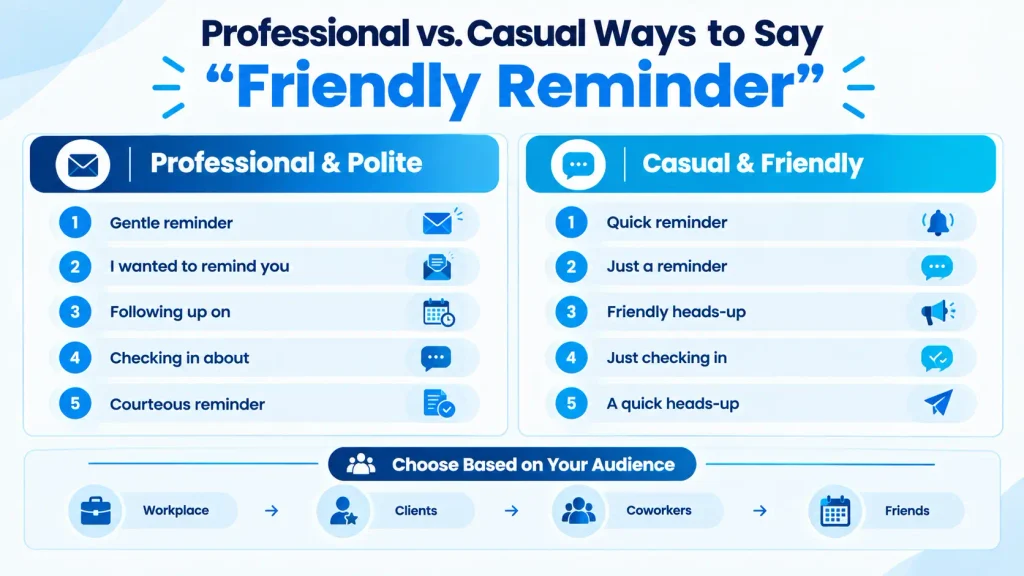
| Alternative | Best Used In | Tone |
| Gentle reminder | Professional emails, requests | Polite, warm |
| Quick reminder | Short emails, workplace messages | Friendly, direct |
| Just a reminder | Everyday reminders | Neutral, polite |
| Friendly heads-up | Informal updates | Casual, warm |
| I wanted to remind you | Professional follow-ups | Warm, polite |
| Following up on | Previous requests or conversations | Professional, formal |
| Checking in about | Status updates and follow-ups | Friendly, polite |
| Just checking in | Casual follow-ups | Warm, conversational |
| A quick heads-up | Advance information | Casual, friendly |
| Courteous reminder | Formal notices and requests | Formal, respectful |
Common Mistakes
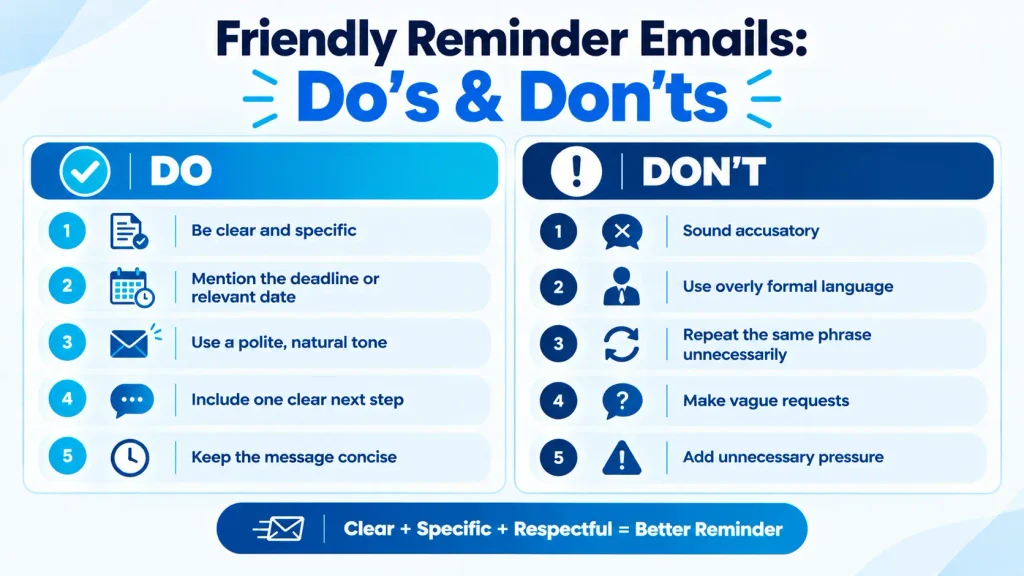
1. Using Casual Phrases in Formal Emails
Expressions such as “heads-up” can sound too relaxed in highly formal communication. Consider “gentle reminder” or “courteous reminder” when writing to a client, official, or unfamiliar recipient.
2. Choosing Overly Formal Language
The opposite problem can also make a message feel unnatural. “Courteous reminder” may sound stiff when a simple “just a reminder” would work better.
3. Repeating the Same Phrase
Starting every reminder with “friendly reminder” can make your communication feel repetitive. Vary your wording when the situation allows it.
4. Forgetting Context
A reminder about an unpaid invoice is different from a reminder about a team lunch. Consider the relationship, subject, urgency, and purpose before choosing your wording.
5. Sounding Insincere
Adding “friendly” does not automatically make a message sound friendly. A short, respectful message with a clear request often feels more genuine than overly cheerful wording.
Frequently Asked Questions
What is another way to say “friendly reminder” professionally?
“Gentle reminder,” “I wanted to remind you,” and “following up on” are strong professional alternatives. The best choice depends on the situation. “Gentle reminder” keeps the reminder direct and polite, while “following up on” works particularly well when you are referring to an earlier conversation, request, or email.
What is a polite way to remind someone?
A polite reminder can begin with “Just a reminder,” “I wanted to remind you,” or “This is a gentle reminder.” These phrases help communicate the necessary information without making the message sound aggressive. You can also soften the request by using “when you have a chance” when the matter is not urgent.
Is “gentle reminder” better than “friendly reminder”?
Both phrases are polite, so the better option depends on your context. “Gentle reminder” often sounds slightly more professional and neutral, while “friendly reminder” has a warmer, more conversational feel. Either can work in workplace emails when the rest of the message is clear and respectful.
How do you say “friendly reminder” in an email?
You can write “Just a reminder that the report is due Friday,” “I wanted to remind you about tomorrow’s meeting,” or “I’m following up on the documents we discussed.” These alternatives sound natural and help you avoid using the exact phrase “friendly reminder” repeatedly.
What is a casual way to say “friendly reminder”?
For casual communication, try “quick reminder,” “just checking in,” “friendly heads-up,” or “a quick heads-up.” These expressions work well with coworkers you know, friends, classmates, or familiar contacts. Choose the phrase based on whether you are reminding someone or simply giving them advance information.
How can I remind someone without sounding rude?
Keep the message short, specific, and respectful. Explain what you are reminding them about, mention the relevant date or action, and avoid language that sounds accusatory. Phrases such as “I wanted to remind you” and “just checking in” can make the message feel more considerate.
What is another way to say “gentle reminder” in a work email?
In a work email, you can say “just a reminder,” “quick reminder,” “I wanted to remind you,” or “following up on.” If you are asking for an update rather than reminding someone about a deadline, “checking in about” may sound more natural.
Can I use “friendly reminder” with my boss or manager?
Yes, but the wording should fit your workplace culture and relationship. “Friendly reminder” can be perfectly acceptable, but “I wanted to remind you” or “just a quick reminder” may sound more natural in some professional settings. Keep the message respectful and avoid making the reminder sound like a reprimand.
Conclusion
There are many natural ways to say “friendly reminder,” and the right choice depends on your audience, relationship, and purpose. For a professional email, “gentle reminder,” “I wanted to remind you,” and “following up on” can sound polished and respectful.
For casual communication, “quick reminder,” “just checking in,” and “a quick heads-up” create a more conversational tone. If you are giving advance information rather than asking someone to complete a task, “friendly heads-up” may be a better fit.
The key is to choose wording that matches the situation instead of relying on the same phrase every time. For a clearer understanding of what a reminder means, see the definition of reminder in Cambridge Dictionary. A clear, specific, and respectful reminder will usually sound more natural than an overly formal or repetitive one.

Sarah Mitchell is a writer and editor specializing in English usage, professional communication, vocabulary, and natural word choice. At FrontiersPost, she helps readers understand how words and phrases differ across professional, academic, and everyday contexts.