

Another way to say “we appreciate you” is “we truly value you,” “we’re grateful for your support,” or “your efforts mean a lot to us.” The best alternative depends on your relationship with the person and the situation. For professional messages, choose respectful wording; for friends, family, or colleagues, use a warmer, more personal expression.
Key Takeaways
- Use “we truly value you” to express sincere appreciation in professional or personal settings.
- Choose “we’re grateful for your support” when someone has helped your team or organization.
- Say “your efforts mean a lot to us” to recognize hard work and dedication.
- Use warm, personal phrases when thanking friends, family members, or close colleagues.
- Make your appreciation specific by mentioning the person’s contribution or positive impact.
What Does “We Appreciate You” Mean?
“We appreciate you” expresses gratitude, respect, and recognition for someone’s presence, efforts, support, or kindness. It tells the person that their contribution matters and that you do not take their actions for granted.
People commonly use this phrase at work, in customer service, in personal relationships, and in community messages. A manager might thank an employee for handling a difficult project, while a business might use it to recognize loyal customers.
The phrase can communicate more than a simple thank-you. Depending on the context, it can also show respect for someone’s character, dedication, generosity, or ongoing support.
Why Use Other Ways to Say “We Appreciate You”?
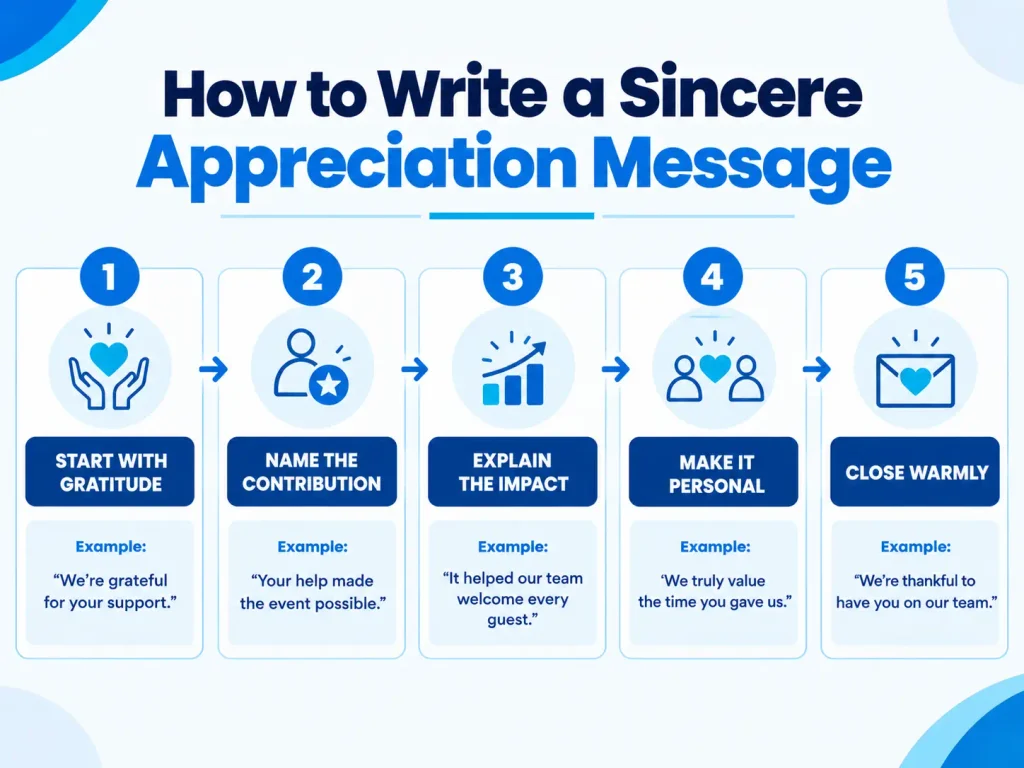
Using different expressions helps you communicate gratitude more naturally. The right wording can make your message sound more personal, professional, or heartfelt.
Consider using an alternative when you want to:
- Avoid repetition: Make thank-you messages sound fresh rather than routine.
- Recognize specific efforts: Highlight someone’s hard work or contribution.
- Match the situation: Choose appropriate wording for emails, speeches, team announcements, or personal notes.
- Express deeper gratitude: Show that someone’s kindness or support has made a difference.
- Strengthen relationships: Help colleagues, customers, friends, and family members feel valued.
The most effective expression is one that fits the person, the relationship, and the reason for your gratitude.
10 Best Other Ways to Say “We Appreciate You”
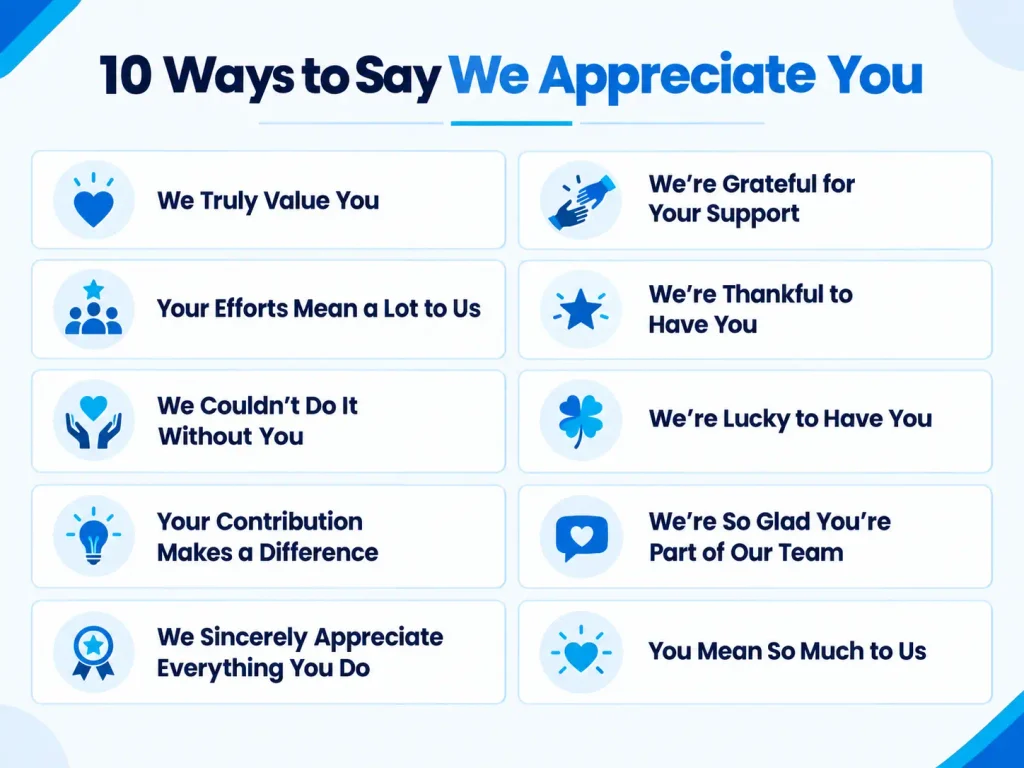
Here are ten natural alternatives for expressing gratitude in professional, friendly, and personal situations. Each phrase has a slightly different tone, so choose the one that best fits your message.
1. We Truly Value You
Meaning
“We truly value you” communicates genuine respect for someone and recognizes their importance. It emphasizes the person rather than focusing only on a single favor or task.
Best For
Professional, formal, warm, and friendly communication.
Example 1
“We truly value you and the dedication you bring to our team every day.”
Example 2
“As a long-standing customer, we want you to know that we truly value you.”
Quick Tip
Use this phrase when you want someone to feel respected and important over the long term.
2. We’re Grateful for Your Support
Meaning
This expression acknowledges the help, encouragement, or loyalty someone has provided. It works especially well when their support has helped a person, team, or organization succeed.
Best For
Professional, formal, polite, and warm communication.
Example 1
“We’re grateful for your support during the transition to our new system.”
Example 2
“Our community continues to grow because of people like you, and we’re grateful for your support.”
Quick Tip
Mention the specific support you received to make your message more sincere.
3. Your Efforts Mean a Lot to Us
Meaning
This phrase recognizes someone’s hard work and explains that their contribution has a meaningful impact. It feels personal without becoming overly emotional.
Best For
Professional, friendly, warm, and polite communication.
Example 1
“Your efforts mean a lot to us, especially during this busy season.”
Example 2
“Your willingness to help new employees settle in means a lot to us.”
Quick Tip
Use this expression when you want to recognize dedication, teamwork, or extra effort.
4. We’re Thankful to Have You
Meaning
“We’re thankful to have you” expresses gratitude for someone’s presence and involvement. It suggests that the person brings something valuable to a team, friendship, or community.
Best For
Friendly, warm, casual, and personal communication.
Example 1
“We’re thankful to have you on our team and appreciate everything you contribute.”
Example 2
“Our volunteer group is stronger because of you, and we’re thankful to have you.”
Quick Tip
This phrase is particularly effective in team messages, volunteer appreciation notes, and personal thank-you cards.
5. We Couldn’t Do It Without You
Meaning
This expression highlights how much someone’s help or contribution matters to a shared effort. It conveys strong appreciation and gives the person credit for helping achieve a goal.
Best For
Friendly, warm, professional, and casual communication.
Example 1
“We couldn’t have completed the event so smoothly without you.”
Example 2
“Your behind-the-scenes work keeps everything running, and we couldn’t do it without you.”
Quick Tip
Use this phrase when the person’s contribution has played an important role in a team achievement.
6. We’re Lucky to Have You
Meaning
“We’re lucky to have you” communicates appreciation in a warm, conversational way. It tells someone that their presence, personality, or contribution is a welcome part of a group.
Best For
Casual, friendly, warm, and polite communication.
Example 1
“We’re lucky to have you as a colleague who always makes time to help others.”
Example 2
“Our family is lucky to have you, and we never take your kindness for granted.”
Quick Tip
This phrase works best when you have an established relationship with the recipient. For a formal business letter, choose a more professional alternative.
7. Your Contribution Makes a Difference
Meaning
This phrase recognizes the positive effect someone’s work, ideas, or involvement has on a larger goal. It is especially useful when you want to explain why a person’s contribution matters.
Best For
Professional, formal, polite, and warm communication.
Example 1
“Your contribution makes a difference in the quality of service we provide to our customers.”
Example 2
“Every hour you volunteer helps our program reach more families, and your contribution makes a difference.”
Quick Tip
Whenever possible, explain the specific result their contribution has helped achieve.
8. We’re So Glad You’re Part of Our Team
Meaning
This expression combines appreciation with a sense of belonging. It helps people feel welcomed and reminds them that their presence is valued, not just their performance.
Best For
Professional, friendly, warm, and polite communication.
Example 1
“We’re so glad you’re part of our team and look forward to seeing what we accomplish together.”
Example 2
“Your positive attitude makes collaboration easier, and we’re so glad you’re part of our team.”
Quick Tip
Use this phrase when welcoming a new employee, recognizing a colleague, or strengthening team morale.
9. We Sincerely Appreciate Everything You Do
Meaning
This phrase communicates heartfelt gratitude for someone’s ongoing efforts, help, or commitment. The word “sincerely” adds emphasis, making the message sound thoughtful and genuine.
Best For
Formal, professional, polite, and warm communication.
Example 1
“We sincerely appreciate everything you do to ensure our clients receive excellent service.”
Example 2
“On behalf of the entire committee, we sincerely appreciate everything you do to support our mission.”
Quick Tip
This wording is suitable for appreciation emails, official announcements, and messages recognizing consistent effort.
10. You Mean So Much to Us
Meaning
“You mean so much to us” expresses deep personal appreciation and emotional connection. It focuses on the person’s importance in your life or community rather than a specific action.
Best For
Warm, friendly, casual, and personal communication.
Example 1
“Your kindness has carried us through a difficult year, and you mean so much to us.”
Example 2
“To all our dedicated volunteers, you mean so much to us and the families we serve.”
Quick Tip
Save this expression for relationships or situations where a heartfelt tone feels natural. It may sound too personal in a routine business email.
Comparison Table
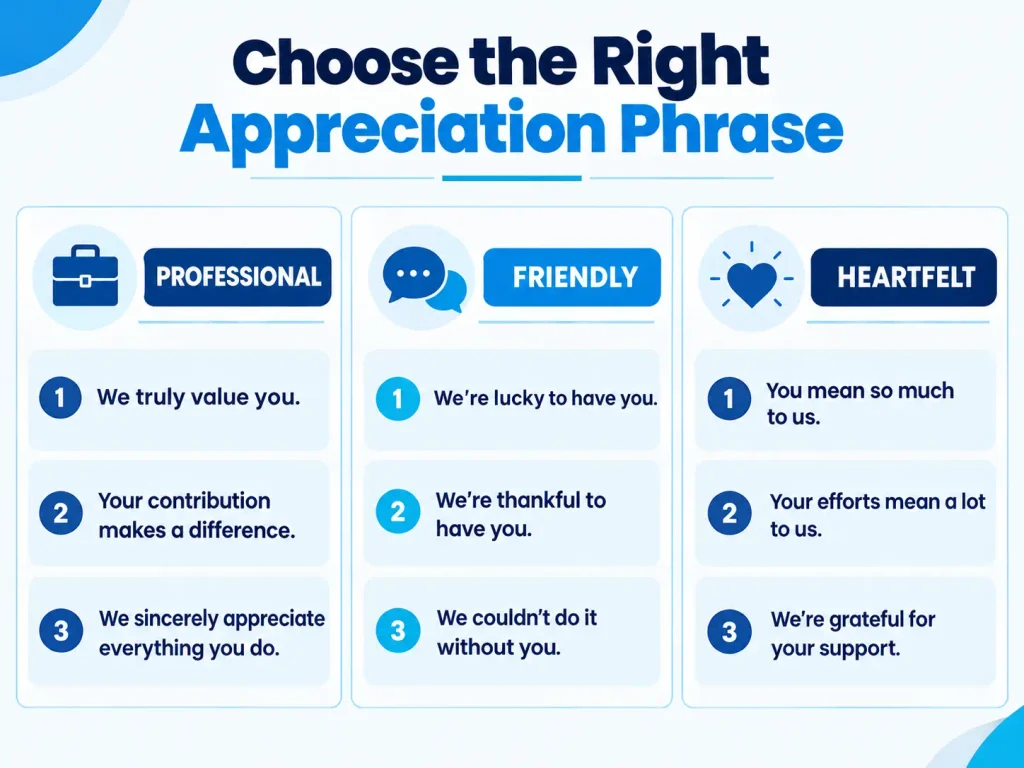
Use this table to find an alternative that matches your intended tone and situation.
| Alternative | Best Used In | Tone |
|---|---|---|
| We truly value you | Workplace or customer messages | Respectful |
| We’re grateful for your support | Thank-you emails | Appreciative |
| Your efforts mean a lot to us | Team recognition | Warm |
| We’re thankful to have you | Personal or group messages | Friendly |
| We couldn’t do it without you | Shared achievements | Enthusiastic |
| We’re lucky to have you | Team or personal messages | Casual |
| Your contribution makes a difference | Professional recognition | Purposeful |
| We’re so glad you’re part of our team | Employee appreciation | Welcoming |
| We sincerely appreciate everything you do | Formal thank-you messages | Professional |
| You mean so much to us | Close relationships | Heartfelt |
Common Mistakes When Expressing Appreciation
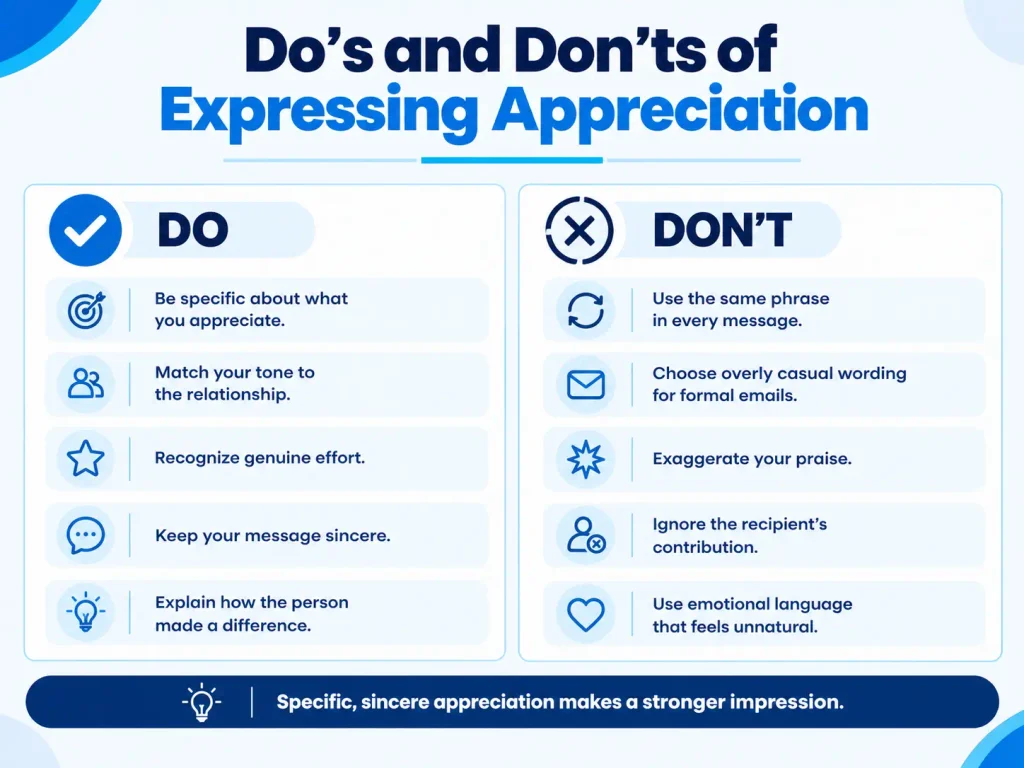
1. Using Casual Language in Formal Messages
How to Avoid It
Phrases such as “we’re lucky to have you” can sound friendly but may be too informal for certain official communications. Choose “we sincerely appreciate everything you do” for formal business messages.
2. Choosing Overly Formal Wording
How to Avoid It
Very formal expressions can feel distant when writing to close friends or coworkers. Match your wording to the relationship rather than making every thank-you sound like a business letter.
3. Repeating the Same Phrase
How to Avoid It
Using “we appreciate you” in every email or announcement can make your gratitude sound routine. Alternate between recognizing someone’s support, effort, contribution, or presence.
4. Forgetting to Explain Why You Are Grateful
How to Avoid It
General praise is less memorable than specific recognition. Instead of saying only that you value someone, mention the project they helped complete or the kindness they showed.
5. Making Appreciation Sound Insincere
How to Avoid It
Avoid exaggerated praise that does not reflect the situation. Use honest language and connect your message to a real contribution whenever possible.
Frequently Asked Questions
What is another way to say “we appreciate you”?
You can say “we truly value you,” “we’re grateful for your support,” or “your efforts mean a lot to us.” Each phrase communicates gratitude in a slightly different way. Choose one that fits your relationship with the person and explains what you appreciate about them.
Which phrase should you choose?
Use “we truly value you” for general appreciation and “we’re grateful for your support” when someone has helped you.
How do you professionally say “we appreciate you”?
Professional alternatives include “we sincerely appreciate your contributions,” “your work is highly valued,” and “we’re grateful for your continued support.” These expressions recognize someone’s efforts while maintaining a respectful tone. They work well in workplace emails, client communications, employee recognition messages, and formal announcements.
How can you make it more professional?
Address the person’s specific contribution and explain its positive effect on your team or organization.
How do you say “we appreciate you” in an email?
You can write, “We truly appreciate your time and support throughout this project.” Another option is, “Your contributions have made a meaningful difference to our team.” Both expressions sound natural in professional emails and help recipients understand that their efforts have been noticed.
What makes an appreciation email effective?
Keep it brief, mention the reason for your gratitude, and close with a sincere expression of thanks.
How do you tell employees that you appreciate them?
You can say, “We’re grateful for your dedication,” “your hard work does not go unnoticed,” or “we’re proud to have you on our team.” These phrases recognize employee contributions and can help create a supportive workplace culture when paired with specific, honest feedback.
How can managers show genuine appreciation?
Recognize individual achievements, thank employees promptly, and explain how their work supports shared goals.
What is a heartfelt way to say “we appreciate you”?
“You mean so much to us” and “we’re truly thankful to have you in our lives” are heartfelt alternatives. They express more than gratitude for a single action; they communicate affection, respect, and the importance of someone’s presence.
When should you use a heartfelt expression?
Choose warm wording for close friends, family members, volunteers, or colleagues with whom you share a personal connection.
How do you express appreciation without saying thank you?
You can say, “Your kindness means a great deal to us,” “we value everything you bring to the team,” or “your support has made a real difference.” These alternatives express gratitude without relying on the words “thank you.”
How do you keep the message sincere?
Describe the specific action or quality you value instead of relying on a general compliment.
Is “we appreciate you” grammatically correct?
Yes. “We appreciate you” is grammatically correct and natural in American English. The verb “appreciate” takes a direct object, so “you” correctly identifies the person receiving the appreciation. The phrase is widely used in personal conversations, workplace communication, and customer appreciation messages.
Is it different from “we appreciate your help”?
Yes. “We appreciate you” recognizes the person more broadly, while “we appreciate your help” focuses on a particular action or contribution.
How do you show appreciation to customers?
You can say, “We’re grateful for your continued support,” “we truly value your business,” or “thank you for being part of our community.” These expressions recognize customers’ loyalty without sounding overly personal. For stronger customer relationships, pair your message with a genuine reference to their support.
Which expression works best for a business?
“We truly value your business” is direct and professional, while “we’re grateful for your continued support” works well for long-term customers.
Writing something similar? Try Another Way to Say “Work Ethic” for Resumes, Reviews, and Professional Writing, Different Ways to Say “Make Sure” Naturally and Clearly or Another Way to Say Fast Learner on a Resume.
Conclusion
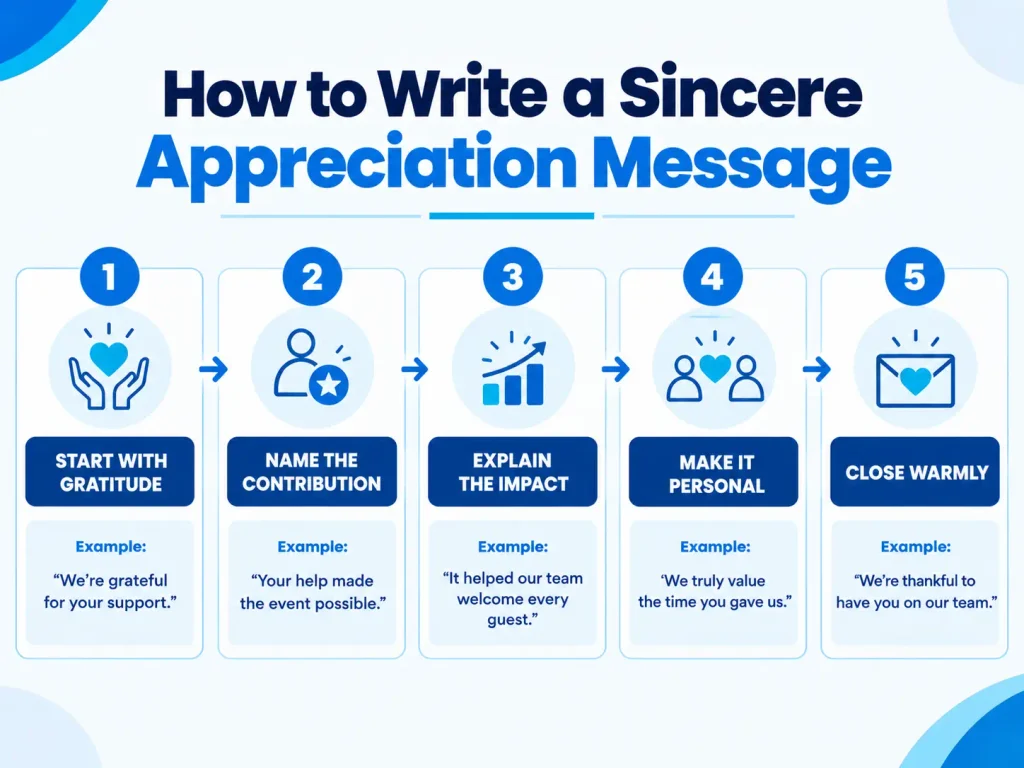
Finding another way to say “we appreciate you” helps you express gratitude in a way that feels natural, thoughtful, and appropriate for the situation. Understanding the meaning of appreciate can also help you choose the right words for different relationships.
For professional communication, “we truly value you” and “we sincerely appreciate everything you do” convey respect and recognition. When acknowledging someone’s help, “we’re grateful for your support” or “your efforts mean a lot to us” makes your message more specific. For friends, family, and close colleagues, “we’re lucky to have you” and “you mean so much to us” offer a warmer touch.

The FrontiersPost editorial team writes and reviews every guide to word and phrase alternatives, with clear meanings, tone notes and example sentences for everyday, academic and professional English.