

Another way to say “sounds good” includes “that works for me,” “sounds great,” “I’m on board,” “works for me,” and “that’s a good idea.” The best alternative depends on the situation. For professional communication, “that works for me” is clear and polished, while “sounds great” works well in friendly or casual conversations.
Key Takeaways
- “Sounds good” is a common way to show agreement or approval.
- Different alternatives can make your response more professional, friendly, or enthusiastic.
- “That works for me” is useful in professional conversations.
- “Sounds great” and “I’m in” work naturally in casual settings.
- The best phrase depends on your relationship with the person and the situation.
“Sounds good” is one of the most common ways to show agreement in everyday American English. People use it when they accept an idea, agree to a plan, or want to show that something seems suitable.
Although the phrase is natural and useful, repeating it in every conversation can make your communication feel predictable. Fortunately, there are many other ways to say “sounds good,” ranging from professional and polite to casual and enthusiastic.
What Does “Another Way to Say Sounds Good” Mean?
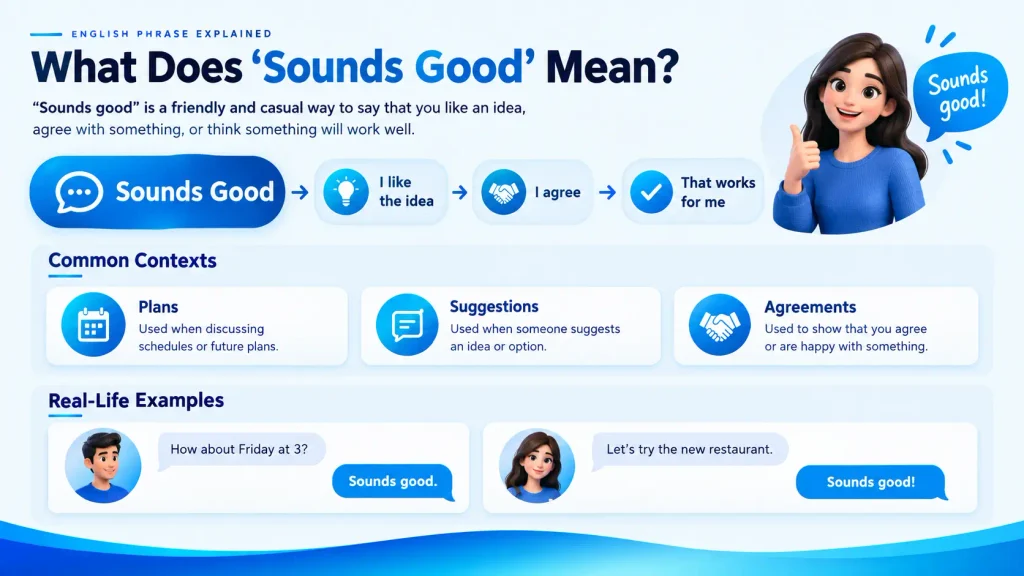
The phrase “another way to say sounds good” refers to alternative expressions that communicate agreement, approval, acceptance, or enthusiasm.
For example, if someone suggests meeting at 3 p.m., you could respond with “That works for me” instead of “Sounds good.” Both phrases show that you agree with the proposed plan.
“Sounds good” is commonly used in texts, emails, conversations, workplace chats, and social situations. However, the best alternative can change depending on your tone, relationship, and purpose.
Why Use Other Ways to Say “Sounds Good”?
Using different expressions can help your communication sound more natural and appropriate. Instead of relying on one response, you can choose a phrase that matches the exact level of agreement or enthusiasm you want to express.
Other alternatives can help you:
- Avoid repeating the same expression.
- Sound more professional in workplace conversations.
- Show stronger enthusiasm or interest.
- Make casual conversations feel more natural.
- Express polite agreement without sounding repetitive.
- Match your response to the situation and relationship.
10 Best Other Ways to Say “Sounds Good”
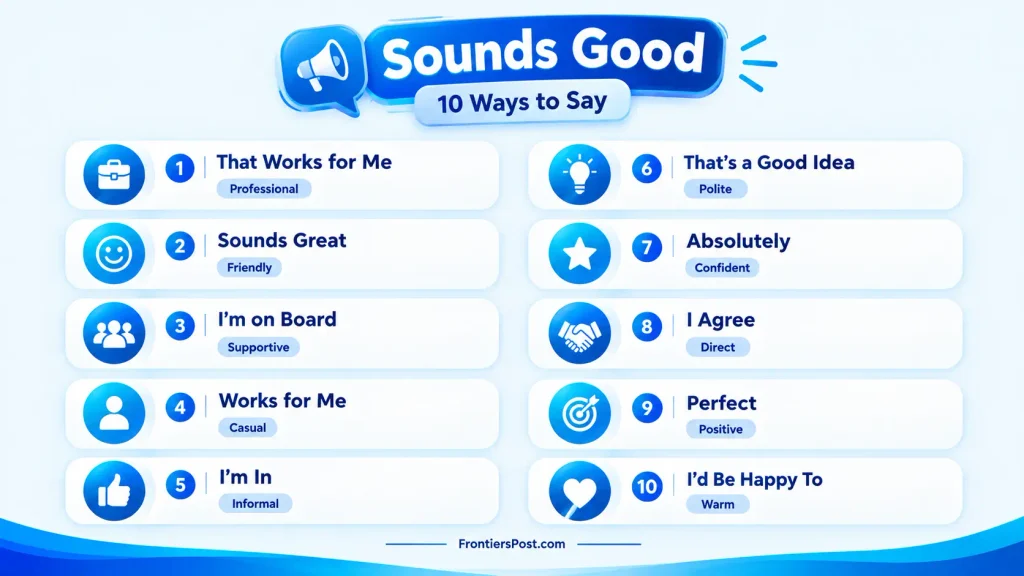
1. That Works for Me
Meaning
“That works for me” means that you agree with a suggestion, plan, time, or arrangement. It is especially useful when you want to communicate clear and practical agreement.
Best For
- Professional
- Polite
- Friendly
- Formal
Example 1
“Thursday afternoon works for me, so we can schedule the meeting then.”
Example 2
“If you want to send the draft tonight, that works for me.”
Quick Tip
Use this phrase when someone proposes a specific plan or arrangement and you want to confirm that it suits you.
2. Sounds Great
Meaning
“Sounds great” expresses agreement with more enthusiasm than “sounds good.” It suggests that you like the idea and are happy to move forward with it.
Best For
- Casual
- Friendly
- Warm
- Polite
Example 1
“Dinner at that new Italian restaurant sounds great!”
Example 2
“Your idea for the weekend sounds great. I’d love to join you.”
Quick Tip
Choose “sounds great” when you want your agreement to feel positive and enthusiastic.
3. I’m on Board
Meaning
“I’m on board” means that you support an idea, plan, or decision. It can suggest more active support than simply saying that something sounds acceptable.
Best For
- Professional
- Friendly
- Casual
Example 1
“I’m on board with the new approach to the project.”
Example 2
“If everyone agrees, I’m on board with starting next Monday.”
Quick Tip
Use this phrase when you want to show that you are willing to participate or support the plan.
4. Works for Me
Meaning
“Works for me” is a shorter, conversational version of “that works for me.” It communicates that you are comfortable with a proposed option or arrangement.
Best For
- Casual
- Friendly
- Professional
- Polite
Example 1
“Meeting at 10 a.m. works for me.”
Example 2
“We can take the earlier flight. Works for me.”
Quick Tip
This phrase is particularly natural when responding to a suggested time, location, or plan.
5. I’m In
Meaning
“I’m in” means that you want to participate in an activity or agree to a proposal. It is informal and often communicates enthusiasm.
Best For
- Casual
- Friendly
- Warm
Example 1
“You’re planning a hiking trip this Saturday? I’m in!”
Example 2
“If you’re ordering pizza for everyone, I’m in.”
Quick Tip
Reserve “I’m in” for relaxed conversations because it can sound too informal in formal business communication.
6. That’s a Good Idea
Meaning
“That’s a good idea” directly shows that you approve of someone’s suggestion. It is clear, positive, and easy to understand.
Best For
- Friendly
- Polite
- Professional
- Casual
Example 1
“Adding a short summary to the report is a good idea.”
Example 2
“Taking a break before we continue sounds like a good idea.”
Quick Tip
Use this alternative when you specifically want to compliment or acknowledge the quality of someone’s suggestion.
7. Absolutely
Meaning
“Absolutely” is a strong way to express agreement or approval. Depending on the context, it can sound confident, enthusiastic, and supportive.
Best For
- Professional
- Formal
- Friendly
- Warm
Example 1
“Absolutely. I’ll review the proposal before tomorrow’s meeting.”
Example 2
“Would you like me to help with the presentation?”
“Absolutely.”
Quick Tip
Use “absolutely” when you want to communicate confident agreement rather than simple acceptance.
8. I Agree
Meaning
“I agree” directly states that you share someone’s opinion or support their point. It is straightforward and works across many communication settings.
Best For
- Professional
- Formal
- Polite
- Friendly
Example 1
“I agree that we should give the team more time to complete the project.”
Example 2
“I agree. The revised schedule should make the process easier.”
Quick Tip
Choose “I agree” when you are responding to an opinion or argument rather than accepting a practical arrangement.
9. Perfect
Meaning
“Perfect” can communicate that a suggestion, arrangement, or solution is exactly what you want. It is brief but often conveys strong approval.
Best For
- Casual
- Friendly
- Professional
- Warm
Example 1
“Friday at noon?”
“Perfect. I’ll see you then.”
Example 2
“That location is perfect for the team lunch.”
Quick Tip
Use “perfect” when the proposed option meets your needs especially well.
10. I’d Be Happy To
Meaning
“I’d be happy to” expresses willing agreement while also adding a warm and helpful tone. It is especially useful when someone asks you to do something.
Best For
- Professional
- Formal
- Warm
- Polite
Example 1
“Could you review the document before I send it?”
“I’d be happy to.”
Example 2
“If you need someone to introduce the speaker, I’d be happy to do it.”
Quick Tip
Use this phrase when you are agreeing to help, assist, or take responsibility for something.
Comparison Table
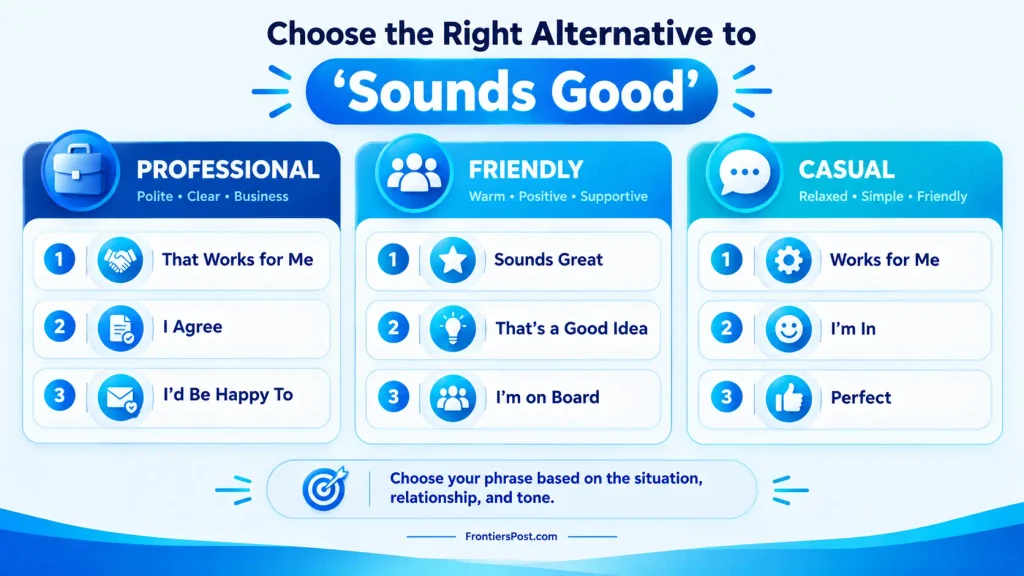
| Alternative | Best Used In | Tone |
| That Works for Me | Work, plans, scheduling | Professional, practical |
| Sounds Great | Friends, casual conversations | Enthusiastic, friendly |
| I’m on Board | Work, group decisions | Supportive, confident |
| Works for Me | Everyday conversations, scheduling | Casual, agreeable |
| I’m In | Social plans, informal conversations | Casual, enthusiastic |
| That’s a Good Idea | Suggestions and opinions | Positive, polite |
| Absolutely | Agreement and requests | Confident, enthusiastic |
| I Agree | Opinions, discussions, workplace conversations | Direct, professional |
| Perfect | Plans, arrangements, solutions | Positive, enthusiastic |
| I’d Be Happy To | Offers, requests, assistance | Warm, helpful |
Common Mistakes
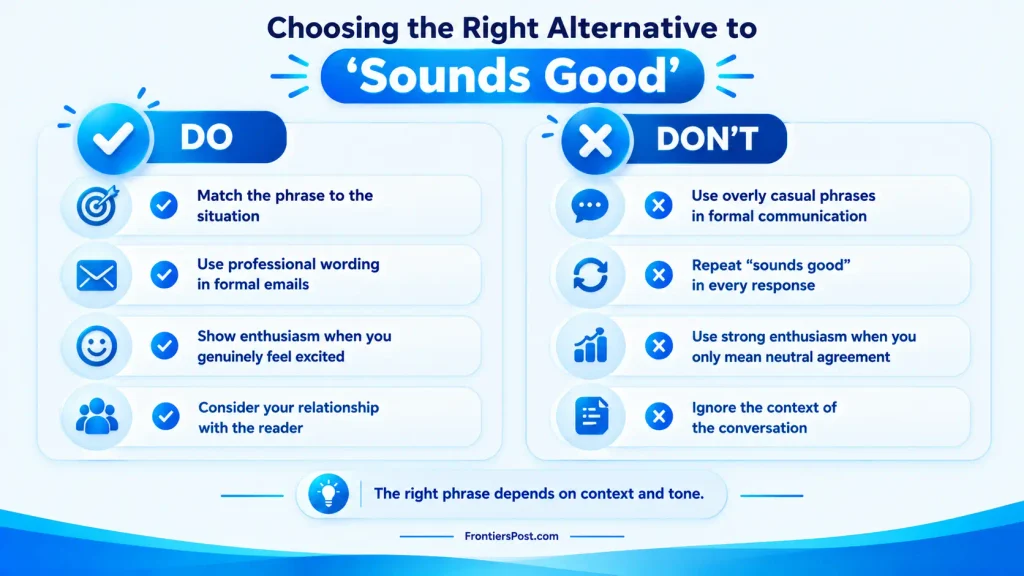
1. Using Casual Phrases in Professional Emails
Expressions such as “I’m in” may sound too informal in a business email. Choose “that works for me” or “I agree” when communicating in a formal workplace setting.
2. Choosing Overly Formal Language
Not every conversation requires polished business language. Using a phrase such as “I concur” in a casual text can sound unnatural or overly serious.
3. Repeating the Same Phrase
Using “sounds good” after every suggestion can make your responses repetitive. Vary your language based on the situation and the level of enthusiasm you want to express.
4. Forgetting Context
Some alternatives express agreement with an idea, while others confirm a plan or offer to help. Make sure the phrase actually matches what the other person said.
5. Sounding Insincere
Strong expressions such as “perfect” or “absolutely” can sound excessive if you do not genuinely feel enthusiastic. Choose a simpler response when neutral agreement is enough.
Frequently Asked Questions
What is another way to say “sounds good” professionally?
“That works for me” is a natural professional alternative to “sounds good.” You can also use “I agree,” “I’m on board,” or “that’s a good idea,” depending on the context. For workplace scheduling, “that works for me” is particularly clear because it confirms that the proposed arrangement is suitable.
What is a casual way to say “sounds good”?
For casual conversations, you can say “sounds great,” “I’m in,” “works for me,” or “perfect.” These expressions fit naturally in texts, conversations with friends, and informal messages. The best choice depends on whether you want to communicate simple agreement or stronger enthusiasm.
Is “that works for me” the same as “sounds good”?
The two phrases are similar, but they are not identical in every situation. “That works for me” usually confirms that a specific plan or arrangement is suitable. “Sounds good” can express broader approval of an idea, suggestion, or plan.
How do you say “sounds good” in a formal email?
In a formal email, you can use phrases such as “That works for me,” “I agree,” or “I’d be happy to.” For example, if a colleague suggests a meeting time, “That works for me” provides a professional and direct confirmation without sounding overly formal.
Can I say “sounds great” at work?
Yes. “Sounds great” is acceptable in many workplace conversations, especially when the environment is friendly and informal. It may work well in team chats or casual emails. For more formal communication, however, “that works for me” or “I agree” may provide a more neutral tone.
What is a polite way to say “sounds good”?
“That works for me” is a polite and versatile option. “That’s a good idea” can also work when responding to a suggestion. If someone asks you to help with something, “I’d be happy to” adds a warm and courteous tone.
What can I say instead of “sounds good” in a text?
In a text message, you can use “sounds great,” “works for me,” “perfect,” or “I’m in.” These options are short and natural for informal communication. Choose “I’m in” when you want to show enthusiasm about participating in a plan or activity.
What is the best response to “sounds good”?
The appropriate response depends on the conversation. If you are confirming a plan, “Great!” or “Perfect” works naturally. If the person is agreeing with your suggestion, you can simply acknowledge the agreement and move forward with the next detail.
Conclusion
There are many natural ways to say “sounds good,” and the right choice depends on the situation, relationship, and tone you want to create. meaning of “sounds good” “That works for me” is useful for professional plans, while “sounds great” adds friendly enthusiasm.
In casual conversations, “I’m in,” “perfect,” and “works for me” feel relaxed and natural. When someone asks for your help, “I’d be happy to” provides a warm and polite response.
Instead of automatically using “sounds good,” consider what you are actually agreeing to and how strongly you want to express your approval. Choosing the right alternative can make your conversations clearer, more natural, and better suited to the moment.

Sarah Mitchell is a writer and editor specializing in English usage, professional communication, vocabulary, and natural word choice. At FrontiersPost, she helps readers understand how words and phrases differ across professional, academic, and everyday contexts.