
If you are looking for another way to say “have a good day,” you can choose from phrases such as “enjoy your day,” “take care,” “have a great day,” “hope you have a wonderful day,” and “wishing you a pleasant day.” The best choice depends on whether you are speaking casually, writing professionally, or ending a friendly conversation.
Key Takeaways
- “Have a great day” is a natural, upbeat alternative for everyday conversations.
- “Enjoy your day” works well when you want to sound warm and positive.
- “Take care” is friendly and useful when saying goodbye.
- “Wishing you a pleasant day” fits formal emails and professional settings.
- Choose your wording based on the relationship, setting, and tone you want to create.
“Have a good day” is a common English expression used to wish someone a pleasant or enjoyable day. It is appropriate in conversations, customer service, emails, workplace communication, and everyday goodbyes.
Although the phrase is polite and natural, repeating it too often can make your messages sound predictable. Using a different expression can help you sound warmer, more professional, or more personal.
What Does “Another Way to Say Have a Good Day” Mean?
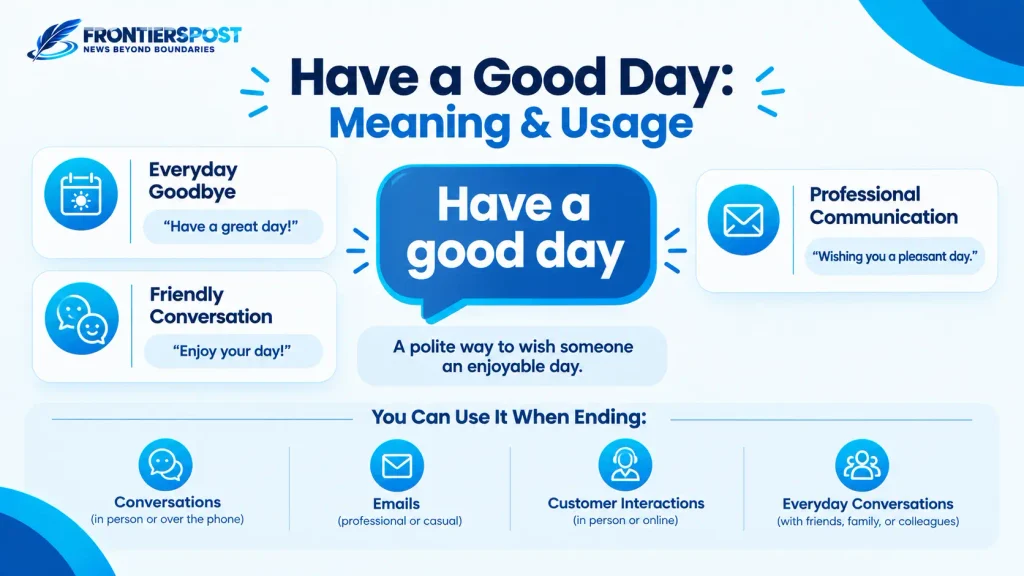
The phrase “another way to say have a good day” refers to different expressions that communicate the same basic wish: you hope someone has an enjoyable, pleasant, or successful day.
People commonly use these alternatives when ending a conversation, closing an email, helping a customer, speaking with a coworker, or saying goodbye to a friend. The right phrase depends on how formal, friendly, or personal the situation is.
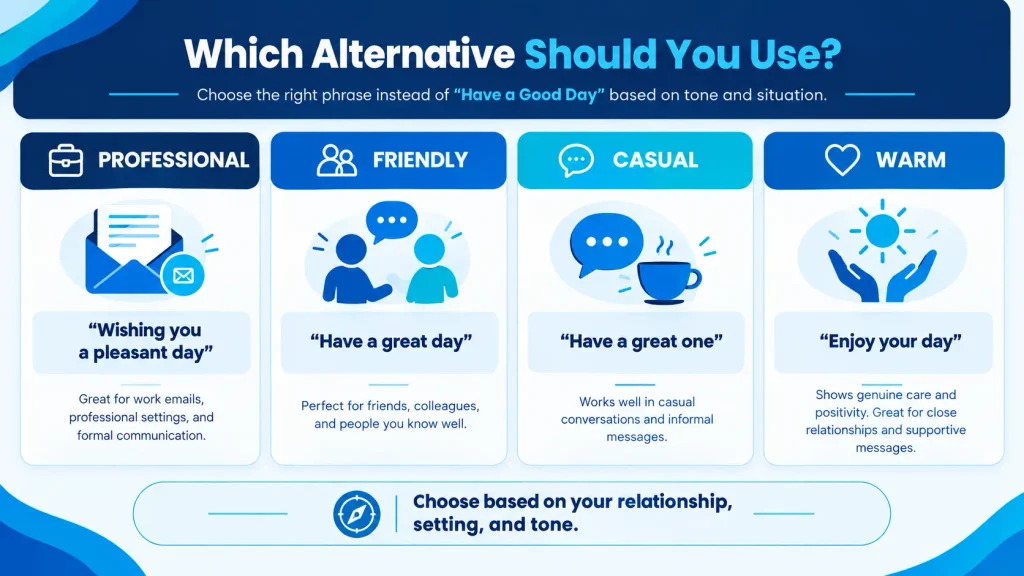
For example, “enjoy your day” sounds natural in everyday conversation, while “wishing you a pleasant day” is more suitable for professional communication.
Why Use Other Ways to Say “Have a Good Day”?
Using different expressions can make your communication feel more natural and appropriate for the situation.
You may want to use an alternative to:
- Avoid repeating the same closing phrase.
- Sound warmer or more enthusiastic.
- Match a professional or formal setting.
- Make a goodbye feel more personal.
- Add variety to emails and everyday conversations.
- Express a positive wish without sounding routine.
10 Best Other Ways to Say “Have a Good Day”
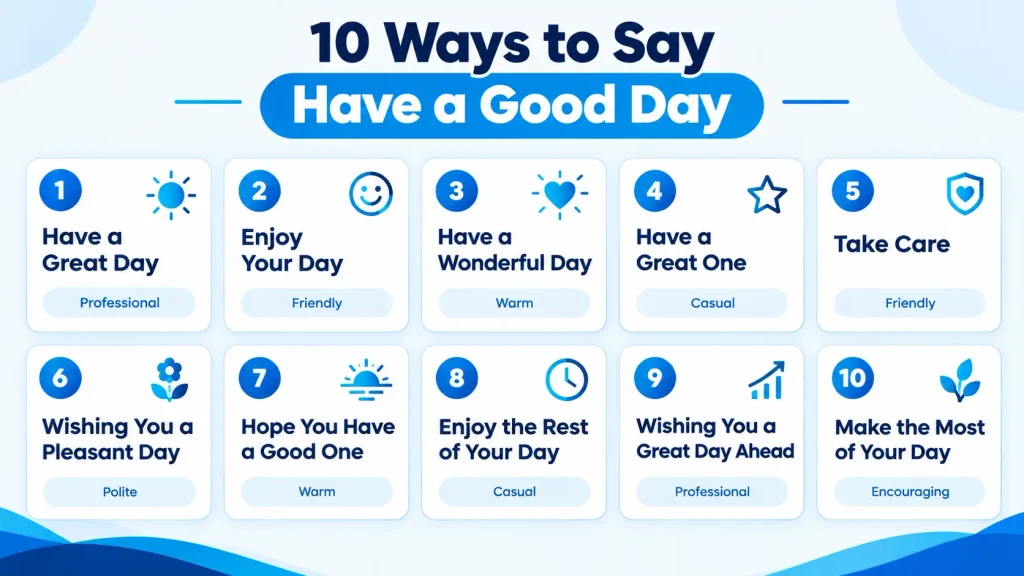
1. Have a Great Day
Meaning
“Have a great day” is a cheerful alternative that expresses a stronger positive wish than “have a good day.” It is common, natural, and appropriate in most everyday situations.
Best For
- Casual
- Friendly
- Warm
- Professional
Example 1
“Thanks for stopping by. Have a great day!”
Example 2
“I’ll send the updated file this afternoon. Have a great day.”
Quick Tip
Use this phrase when you want a positive tone without sounding overly formal.
2. Enjoy Your Day
Meaning
“Enjoy your day” encourages someone to make the most of the rest of their day. It sounds friendly and natural, especially when you are ending a pleasant conversation.
Best For
- Casual
- Friendly
- Warm
- Polite
Example 1
“Thanks for your help with the project. Enjoy your day!”
Example 2
“You’ve got everything you need, so enjoy your day and I’ll talk to you tomorrow.”
Quick Tip
This is a good choice when you want your closing to feel relaxed and personable.
3. Have a Wonderful Day
Meaning
“Have a wonderful day” is a warmer and more enthusiastic version of “have a good day.” It expresses genuine goodwill and can make a simple goodbye feel more thoughtful.
Best For
- Friendly
- Warm
- Polite
- Formal
Example 1
“Thank you for visiting our office. Have a wonderful day!”
Example 2
“I hope everything goes smoothly with your appointment. Have a wonderful day.”
Quick Tip
Use it when you want to sound especially kind without becoming too personal.
4. Have a Great One
Meaning
“Have a great one” is a casual expression used as a shortened way of wishing someone a great day. It sounds conversational and relaxed rather than formal.
Best For
- Casual
- Friendly
Example 1
“I’ll catch up with you later. Have a great one!”
Example 2
“Thanks for chatting with me. Have a great one.”
Quick Tip
Save this expression for informal conversations because it can sound too casual in formal business writing.
5. Take Care
Meaning
“Take care” is a friendly way to end a conversation while expressing a simple wish for someone’s well-being. It can work as a goodbye even when you do not specifically mention the day.
Best For
- Casual
- Friendly
- Warm
- Polite
Example 1
“I’m heading home now. Take care, and I’ll see you Monday.”
Example 2
“Thanks again for meeting with me. Take care!”
Quick Tip
Use “take care” when you want your goodbye to sound caring rather than focused only on having a good day.
6. Wishing You a Pleasant Day
Meaning
“Wishing you a pleasant day” is a more polished and formal alternative. It works particularly well when you want to maintain a courteous tone in professional communication.
Best For
- Professional
- Formal
- Polite
Example 1
“Thank you for contacting our support team. Wishing you a pleasant day.”
Example 2
“We appreciate your time and consideration. Wishing you a pleasant day.”
Quick Tip
This phrase is best for customer service, formal correspondence, and professional emails.
7. Hope You Have a Good One
Meaning
“Hope you have a good one” is a relaxed expression that communicates a positive wish without sounding overly polished. It is especially common in informal American English.
Best For
- Casual
- Friendly
- Warm
Example 1
“Thanks for grabbing lunch with me. Hope you have a good one!”
Example 2
“I’ll let you get back to work. Hope you have a good one.”
Quick Tip
Use this with friends, coworkers you know well, or people in other informal situations.
8. Enjoy the Rest of Your Day
Meaning
“Enjoy the rest of your day” is useful when the day is already underway. Instead of wishing someone a good entire day, you are specifically referring to the remaining hours.
Best For
- Professional
- Friendly
- Warm
- Polite
Example 1
“Your order will be ready shortly. Enjoy the rest of your day!”
Example 2
“Thanks for taking the time to speak with me. Enjoy the rest of your day.”
Quick Tip
Choose this phrase in the afternoon or later when part of the person’s day has already passed.
9. Wishing You a Great Day Ahead
Meaning
“Wishing you a great day ahead” expresses a positive wish for the hours that follow. It sounds encouraging and works well when you are starting or ending a brief interaction.
Best For
- Professional
- Warm
- Polite
- Friendly
Example 1
“Thank you for your quick response. Wishing you a great day ahead.”
Example 2
“It was wonderful speaking with you. Wishing you a great day ahead.”
Quick Tip
Use this when you want a polished closing that still feels warm and optimistic.
10. Make the Most of Your Day
Meaning
“Make the most of your day” is more encouraging than a standard goodbye. It suggests that you hope the person uses their time well and has a rewarding experience.
Best For
- Friendly
- Warm
- Casual
- Polite
Example 1
“You’ve worked hard this week, so make the most of your day off!”
Example 2
“The weather looks perfect for your plans. Make the most of your day!”
Quick Tip
This phrase works best when you know the person has plans, free time, or something enjoyable ahead.
Comparison Table
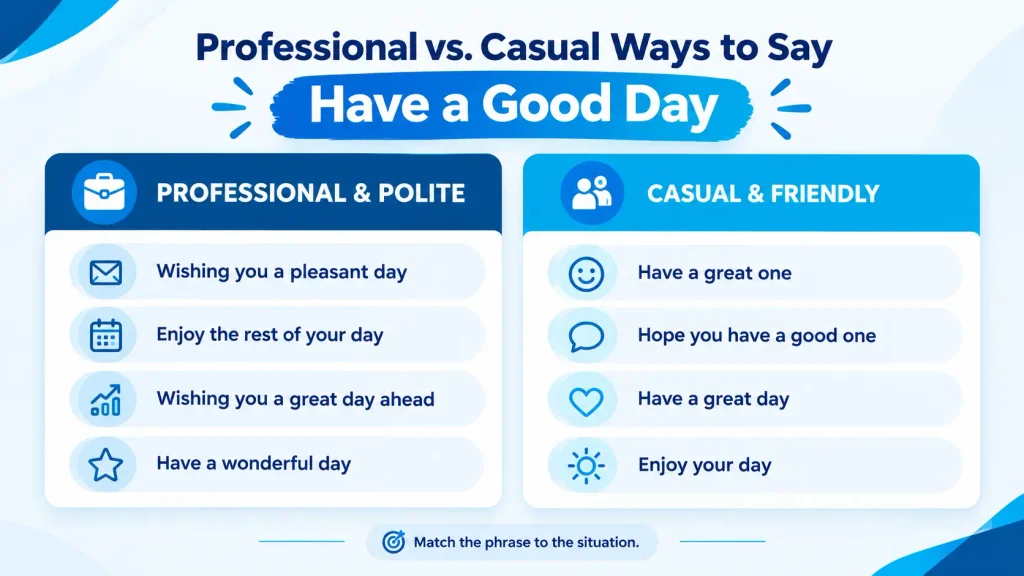
| Alternative | Best Used In | Tone |
| Have a Great Day | Everyday conversations, work | Friendly, positive |
| Enjoy Your Day | Casual conversations | Warm, relaxed |
| Have a Wonderful Day | Customer service, conversations | Warm, cheerful |
| Have a Great One | Informal conversations | Casual |
| Take Care | Goodbyes, personal conversations | Caring, friendly |
| Wishing You a Pleasant Day | Professional emails | Formal, polite |
| Hope You Have a Good One | Informal conversations | Casual, warm |
| Enjoy the Rest of Your Day | Work, customer service | Polite, friendly |
| Wishing You a Great Day Ahead | Emails, professional conversations | Polished, warm |
| Make the Most of Your Day | Friends, encouragement | Encouraging, positive |
Common Mistakes
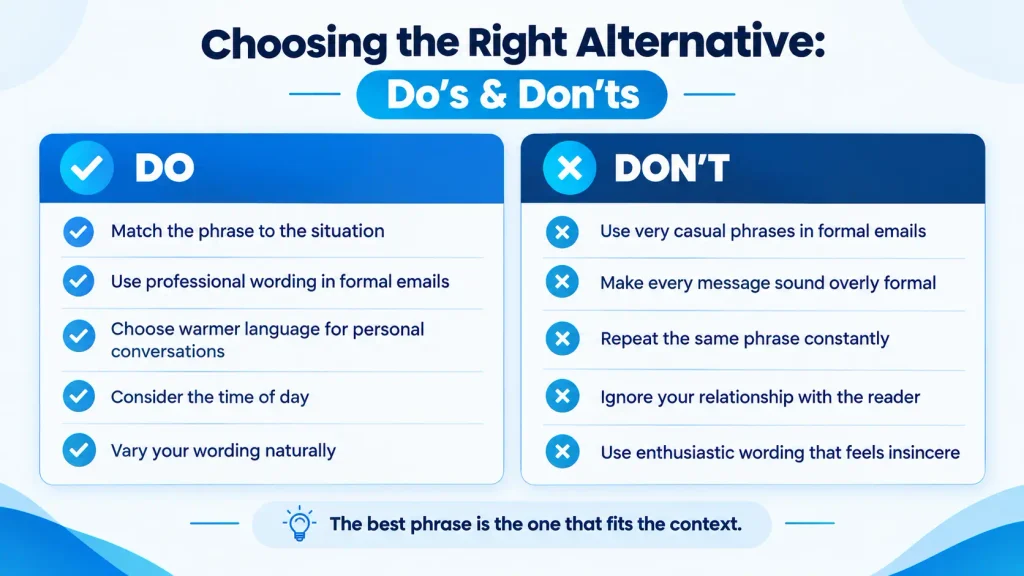
1. Using Casual Phrases in Formal Emails
Expressions such as “have a great one” can sound too relaxed in formal business communication. Choose a more polished closing when writing to clients, executives, or unfamiliar contacts.
2. Choosing Overly Formal Language
Not every conversation needs “wishing you a pleasant day.” Using formal wording with close friends or familiar coworkers may sound stiff or unnatural.
3. Repeating the Same Phrase
Using “have a good day” in every email or conversation can make your communication feel routine. Rotate your expressions based on the situation.
4. Forgetting the Context
A phrase that works at noon may not work as naturally late at night. For example, “enjoy the rest of your day” makes more sense when someone still has several hours left.
5. Sounding Insincere
An overly enthusiastic phrase can feel unnatural if it does not match the conversation. Choose wording that fits your relationship and the mood of the interaction.
Frequently Asked Questions
What is a professional way to say “have a good day”?
A professional alternative is “wishing you a pleasant day” or “enjoy the rest of your day.” Both sound courteous without being overly personal. They work well in customer service messages, workplace emails, and conversations with clients or professional contacts.
What is a friendly way to say “have a good day”?
“Have a great day,” “enjoy your day,” and “take care” are friendly choices. They sound natural in conversations with friends, coworkers, neighbors, and other people you know. The best option depends on whether you want to sound cheerful, relaxed, or caring.
How do you say “have a good day” in a casual way?
For a casual setting, try “have a great one,” “hope you have a good one,” or “take care.” These expressions sound relaxed and conversational. They are particularly useful when texting friends, chatting with familiar coworkers, or ending an informal conversation.
What is a polite way to say “have a good day”?
“Enjoy your day” and “wishing you a pleasant day” are both polite alternatives. The first sounds more natural and conversational, while the second has a more formal tone. Choose based on the level of professionalism required by the situation.
Can I say “enjoy the rest of your day” in an email?
Yes. “Enjoy the rest of your day” is a natural email closing when the message is being sent during the day. It works especially well for customer service, workplace communication, scheduling messages, and other situations where you want to sound professional but approachable.
Is “have a great one” professional?
“Have a great one” is generally more casual than “have a great day.” It can work with coworkers you know well, but it may sound too informal in a message to a client, manager, or unfamiliar business contact. In those cases, use a more polished alternative.
What can I say instead of “have a good day” to a customer?
For customers, “enjoy the rest of your day,” “have a wonderful day,” or “wishing you a pleasant day” can work well. Your choice should match your company’s communication style. A friendly but professional expression usually creates the most natural customer experience.
What is the best alternative to “have a good day”?
There is no single best alternative for every situation. “Have a great day” is one of the most versatile choices, while “take care” feels more personal and “wishing you a pleasant day” sounds more formal. Consider the relationship and setting before choosing.
Readers who used this guide also looked at What to Say Instead of “Have a Great Day”, What to Say Instead of “Have a Wonderful Day” and What to Say Instead of Hope You Had a Good Day.
Conclusion
“Have a good day” is a simple, polite expression, but using different alternatives can make your communication sound more natural and purposeful. For everyday conversations, “have a great day” and “enjoy your day” are easy, friendly choices. If you are saying goodbye to someone you know, “take care” adds a warmer touch.
For professional emails or customer communication, “wishing you a pleasant day” and “enjoy the rest of your day” offer a polished tone. Meanwhile, casual phrases such as “have a great one” work better with friends and familiar coworkers.
The key is to match your closing to the situation, relationship, and tone. A thoughtful choice can turn an ordinary goodbye into a more natural and pleasant interaction.

The FrontiersPost editorial team writes and reviews every guide to word and phrase alternatives, with clear meanings, tone notes and example sentences for everyday, academic and professional English.