

If you need another way to say “trust,” the best choice depends on your meaning and situation. Natural alternatives include rely on, have confidence in, believe in, count on, depend on, place faith in, entrust, have faith in, put your confidence in, and feel secure with. Each carries a slightly different tone or meaning.
Key Takeaways
- Rely on works well when you depend on someone or something.
- Have confidence in is useful in professional and formal settings.
- Believe in often expresses personal faith or support.
- Count on sounds natural and friendly in everyday conversation.
- The right alternative depends on context, tone, and the type of trust you want to express.
What Does “Another Way to Say Trust” Mean?
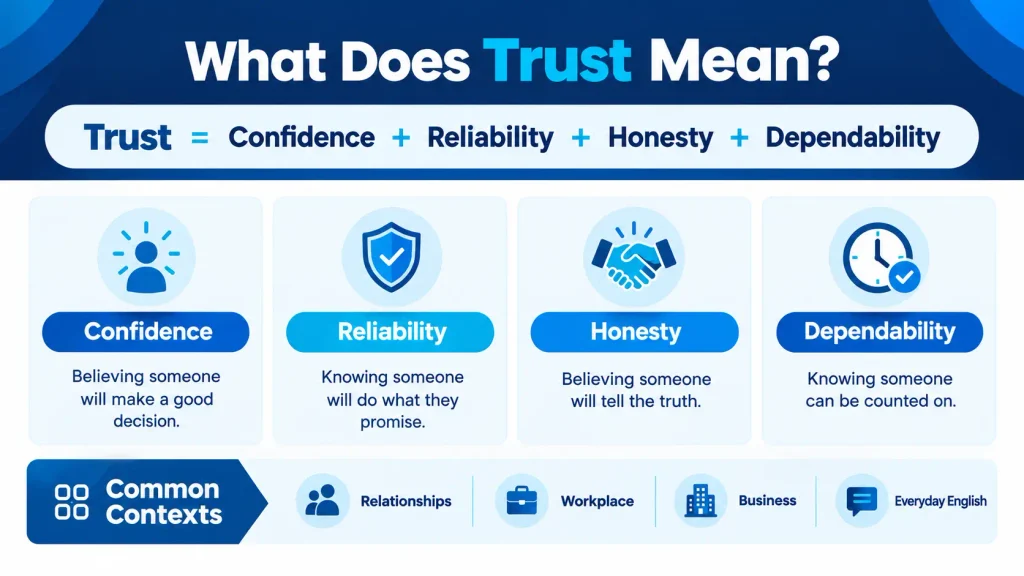
“Trust” means having confidence that someone is honest, reliable, capable, or dependable. It can describe confidence in a person, organization, decision, process, or even yourself.
People often look for another way to say “trust” when they want to avoid repetition or express a more specific idea. For example, rely on emphasizes dependability, while believe in can communicate faith or personal confidence.
The word is common in everyday conversations, professional communication, relationships, business writing, academic writing, and customer service.
Why Use Other Ways to Say “Trust”?
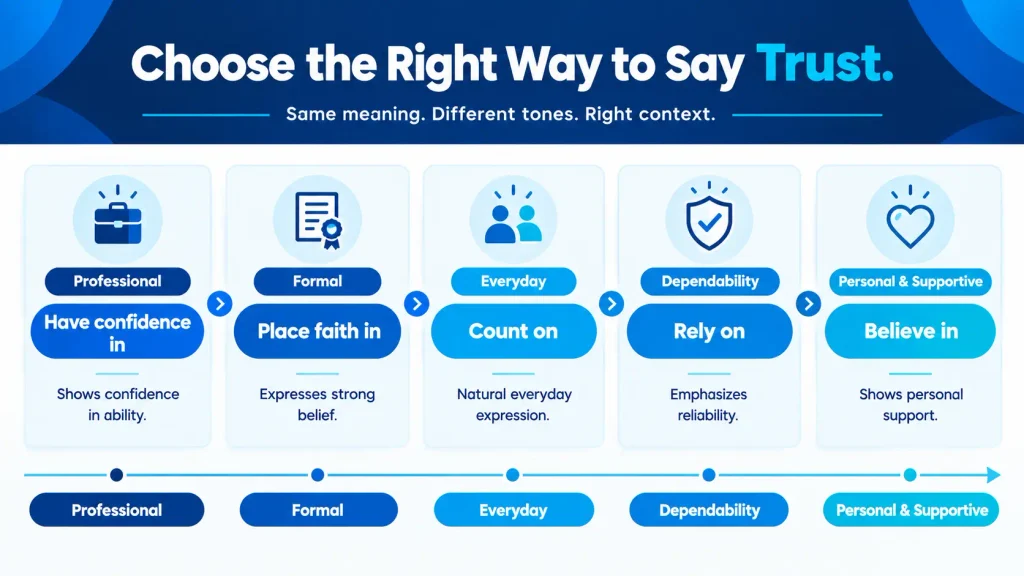
Using different expressions can make your writing more precise and natural. Instead of repeating “trust,” you can choose a phrase that better communicates your intended meaning.
Other expressions can help you:
- Avoid repetitive wording.
- Match a professional or casual tone.
- Show confidence in someone’s abilities.
- Express emotional or personal faith.
- Make workplace communication sound more polished.
- Explain exactly why you have confidence in someone or something.
10 Best Other Ways to Say “Trust”

1. Rely On
Meaning
“Rely on” means to depend on someone or something because you believe they will be dependable. It focuses more on reliability than honesty or emotional confidence.
Best For
- Professional
- Formal
- Casual
Example 1
You can rely on Maria to finish the report before the deadline.
Example 2
Our customers rely on us to provide accurate information.
Quick Tip
Use rely on when the main idea is dependability or getting consistent support.
2. Have Confidence In
Meaning
“Have confidence in” means to believe that someone or something has the ability, quality, or potential to succeed. It is especially useful when discussing someone’s skills or decisions.
Best For
- Professional
- Formal
- Polite
Example 1
The manager has confidence in her team’s ability to handle the project.
Example 2
I have confidence in your judgment on this matter.
Quick Tip
Choose this phrase when you want to sound professional and emphasize ability or competence.
3. Believe In
Meaning
“Believe in” means to have faith in someone, an idea, or a cause. It can express personal support, confidence, or a strong sense of faith.
Best For
- Casual
- Friendly
- Warm
Example 1
I believe in your ability to achieve your goals.
Example 2
She has always believed in the value of honest communication.
Quick Tip
Use believe in when your trust involves personal support, encouragement, or strong conviction.
4. Count On
Meaning
“Count on” means to expect someone to be dependable or to do what they have promised. It is a natural expression in everyday American English.
Best For
- Casual
- Friendly
- Professional
Example 1
You can count on James to help when the team needs him.
Example 2
We are counting on you to arrive on time for the presentation.
Quick Tip
Use count on for a warm, conversational way to express confidence in someone’s reliability.
5. Depend On
Meaning
“Depend on” means to need or rely on someone or something for support, help, or a particular result. It can describe both people and situations.
Best For
- Professional
- Formal
- Casual
Example 1
The success of the event depends on everyone’s cooperation.
Example 2
Many small businesses depend on loyal customers to stay successful.
Quick Tip
Choose depend on when trust is connected to practical need or reliance.
6. Place Faith In
Meaning
“Place faith in” means to put strong confidence or belief in someone or something. It has a more serious or formal tone than everyday expressions such as “count on.”
Best For
- Formal
- Professional
- Warm
Example 1
The board decided to place faith in the new leadership team.
Example 2
She placed her faith in the process and remained patient.
Quick Tip
Use this phrase when you want to emphasize strong belief, especially in serious or meaningful situations.
7. Entrust
Meaning
“Entrust” means to give someone responsibility for something because you believe they will handle it properly. It is more specific than simply saying “trust.”
Best For
- Professional
- Formal
- Polite
Example 1
The director entrusted Alex with the company’s most important client.
Example 2
They entrusted their financial records to an experienced accountant.
Quick Tip
Use entrust when someone is being given responsibility, authority, information, or something valuable.
8. Have Faith In
Meaning
“Have faith in” means to maintain confidence in someone or something, even when the outcome is uncertain. It often carries a supportive or emotional tone.
Best For
- Warm
- Friendly
- Formal
Example 1
Her parents have faith in her ability to make the right decision.
Example 2
The coach asked the players to have faith in their preparation.
Quick Tip
Use this expression when you want to highlight encouragement, hope, or continued confidence.
9. Put Your Confidence In
Meaning
“Put your confidence in” means to choose to believe in someone’s ability, judgment, or reliability. It can sound more deliberate and formal than simply saying “trust.”
Best For
- Professional
- Formal
- Polite
Example 1
The company put its confidence in an experienced project manager.
Example 2
I am comfortable putting my confidence in your expertise.
Quick Tip
Use this phrase when describing a conscious decision to support or rely on someone.
10. Feel Secure With
Meaning
“Feel secure with” means to feel safe, comfortable, or confident around someone or while relying on something. It is particularly useful when trust has an emotional or personal dimension.
Best For
- Warm
- Friendly
- Casual
Example 1
I feel secure with someone who communicates openly and honestly.
Example 2
Customers feel secure with a company that protects their personal information.
Quick Tip
Use this expression when you want to focus on the feeling of safety or emotional comfort that trust creates.
Comparison Table
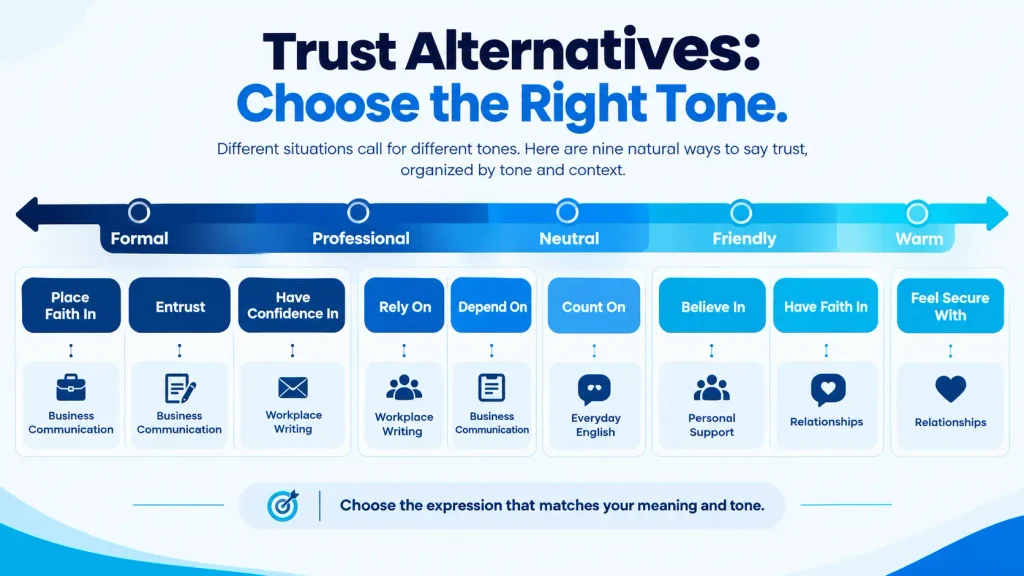
| Alternative | Best Used In | Tone |
| Rely on | Work, everyday situations | Professional, neutral |
| Have confidence in | Workplace, formal writing | Professional |
| Believe in | Relationships, encouragement | Warm |
| Count on | Everyday conversations | Friendly |
| Depend on | Work, practical situations | Neutral |
| Place faith in | Serious or formal situations | Formal |
| Entrust | Responsibility and authority | Formal |
| Have faith in | Encouragement and support | Warm |
| Put your confidence in | Professional decisions | Formal |
| Feel secure with | Personal relationships, customer trust | Warm |
Common Mistakes
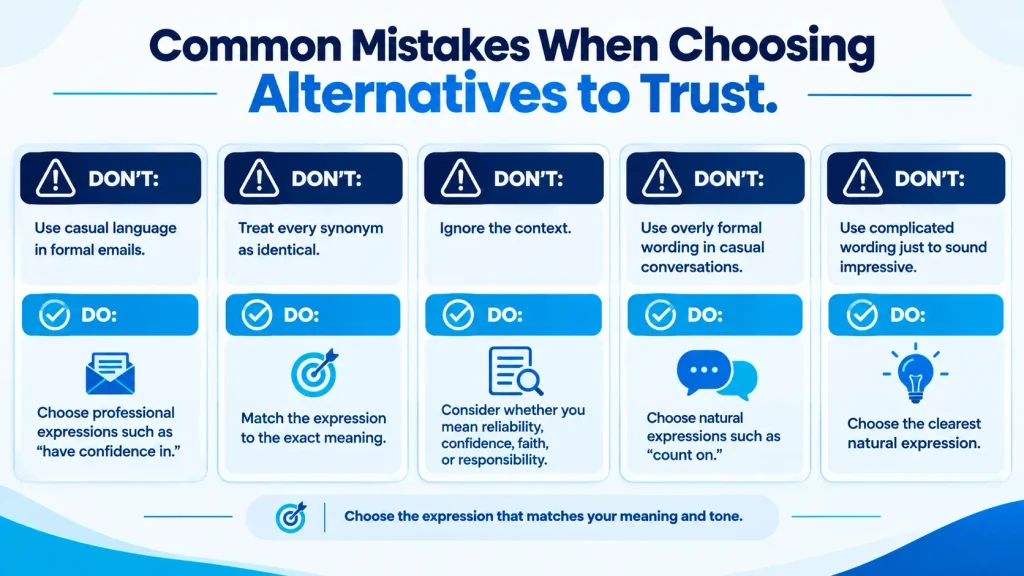
1. Using “Count On” in Highly Formal Writing
“Count on” is perfectly natural in conversation, but it can sound less formal in certain business or academic contexts. Consider rely on or have confidence in when a more polished tone is appropriate.
2. Treating Every Alternative as an Exact Synonym
These expressions are related but do not always mean exactly the same thing. Entrust, for example, specifically involves giving someone responsibility, while believe in can describe personal support or faith.
3. Ignoring the Context
The right phrase depends on what kind of trust you mean. Trusting someone’s honesty is different from relying on their ability to complete a task.
4. Choosing Language That Sounds Too Formal
Expressions such as place faith in may sound unnatural in casual conversations. In everyday situations, count on or believe in may feel more natural.
5. Sounding Insincere
Using a sophisticated synonym does not automatically make communication better. Choose wording that genuinely reflects your relationship with the person and the level of confidence you have.
Frequently Asked Questions
What is a professional way to say “trust”?
“Have confidence in” and “rely on” are strong professional alternatives. For example, “I have confidence in your judgment” sounds polished when discussing someone’s abilities, while “You can rely on our team” emphasizes dependable support.
What is another word for trust in a relationship?
Depending on the meaning, you can use believe in, have faith in, rely on, or feel secure with. For personal relationships, these expressions can communicate emotional confidence, support, dependability, or a sense of safety without repeating the word “trust.”
What is a formal way to say “trust”?
Formal alternatives include have confidence in, place faith in, entrust, and put your confidence in. The best choice depends on the sentence. Use entrust when someone is given responsibility, and have confidence in when emphasizing ability or judgment.
What is another way to say “I trust you”?
Natural options include I believe in you, I have confidence in you, I can count on you, and I have faith in you. Choose based on your meaning: “count on” emphasizes reliability, while “believe in” often sounds more personal and encouraging.
What is another way to say “trust me”?
You could say “Believe me,” “You can rely on me,” “You can count on me,” or “Have confidence in me.” The best option depends on your tone. “You can count on me” sounds friendly, while “You can rely on me” works well in professional situations.
Is “rely on” the same as “trust”?
“Rely on” and “trust” overlap, but they are not identical. Rely on focuses on dependence and reliability, while trust can also involve believing that someone is honest, loyal, or acting in good faith. The surrounding context determines which expression fits best.
What is a friendly way to say “trust”?
“Count on” is one of the most natural friendly alternatives. For example, “You can count on me” communicates that you are dependable without sounding overly formal. “Believe in you” is another friendly choice when you want to express encouragement or personal support.
How do I choose the right alternative to “trust”?
First, identify what you mean by trust. Use rely on for dependability, have confidence in for ability or judgment, believe in for personal support, count on for friendly reliability, and entrust when giving someone responsibility.
Writing something similar? Try Another Way to Say Deepest Condolences, What to Say Instead of “I Miss You” to a Friend or What to Say Instead of “I’m Sorry for Your Loss”.
Conclusion
Finding another way to say “trust” can make your communication more precise and natural. The best expression depends on what you want to emphasize. Rely on highlights dependability, have confidence in works well for professional situations, and believe in adds a personal or supportive feeling.
For everyday conversations, count on sounds natural and friendly. If someone is being given responsibility for something important, entrust is more precise. Meanwhile, have faith in and place faith in emphasize strong belief or continued confidence.
Instead of replacing “trust” with a synonym at random, consider the exact meaning and tone you need. For a clearer understanding of the word itself, see the trust — definition and meaning The right phrase should sound natural for the person, situation, and relationship.

The FrontiersPost editorial team writes and reviews every guide to word and phrase alternatives, with clear meanings, tone notes and example sentences for everyday, academic and professional English.




